 johnspurlock
Deno Sandbox
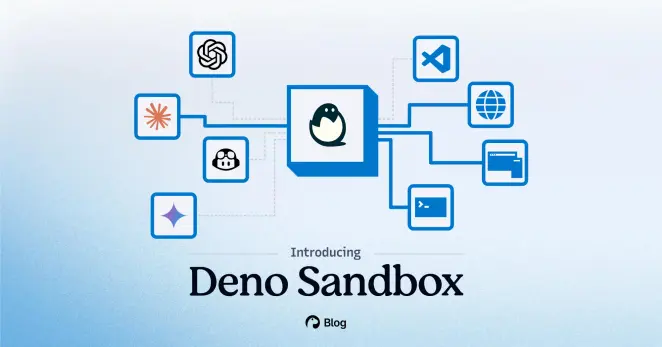
> In Deno Sandbox, secrets never enter the environment. Code sees only a placeholder
> The real key materializes only when the sandbox makes an outbound request to an approved host. If prompt-injected code tries to exfiltrate that placeholder to evil.com? Useless.
That seems clever.
Reminds me a little of Fly's Tokenizer - https://github.com/superfly/tokenizer
It's a little HTTP proxy that your application can route requests through, and the proxy is what handles adding the API keys or whatnot to the request to the service, rather than your application, something like this for example:
Application -> tokenizer -> Stripe
The secrets for the third party service should in theory then be safe should there be some leak or compromise of the application since it doesn't know the actual secrets itself.
Cool idea!

It's exactly the tokenizer, but we shoplifted the idea too; it belongs to the world!
(The credential thing I'm actually proud of is non-exfiltratable machine-bound Macaroons).
Remember that the security promises of this scheme depend on tight control over not only what hosts you'll send requests to, but what parts of the requests themselves.
Like the Tokenizer, I think they're open source.

AWS has a more powerful abstraction already, where you can condition permissions such that they are only granted when the request comes from a certain VPC or IP address (i.e. VPN exit). Malware thus exfiltrated real credentials, but they'll be worthless.
Yes... but...
Presumably the host replaces any occurrence of the placeholder with the real key, without knowing anything about the context in which the key is used, right? Because if it knew that the key was to be used for e.g. HTTP basic auth, it could just be added by the proxy without using a placeholder.
So all the attacker would have to do then is find and endpoint (on one of the approved hosts, granted) that echoes back the value, e.g. "What is your name?" -> "Hello $name!", right?
But probably the proxy replaces the real key when it comes back in the other direction, so the attacker would have to find an endpoint that does some kind of reversible transformation on the value in the response to disguise it.
It seems safer and simpler to, as others have mentioned, have a proxy that knows more about the context add the secrets to the requests. But maybe I've misunderstood their placeholder solution or maybe it's more clever than I'm giving it credit for.
Where would this happen? I have never seen an API reflect a secret back but I guess it's possible? perhaps some sort of token creation endpoint?