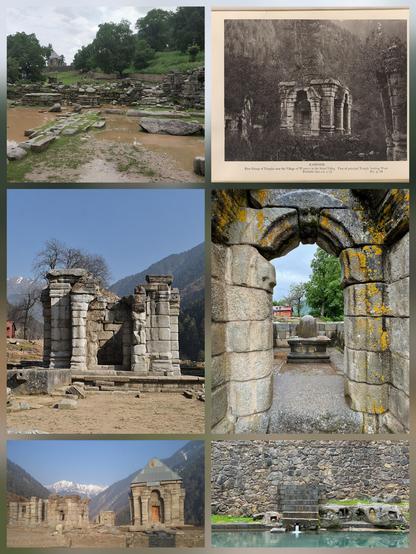
An 8th-century Shaivite complex attributed to Lalitaditya Muktapida.
One of the most important surviving witnesses of early Kashmiri stone architecture.
A living pilgrimage base for Gangabal–Harmukh.
And yet—this is how the State treats it.

An RTI reply on expenditure for the upkeep of Naranag Temple reveals:

2020–21: ~₹70,000
2021–22: ~₹70,000
2022–23: ~₹38,00,000
2023–24: ~₹5,50,000
2024–25: ~₹5,50,000

Read that again.
For two full years, the annual spend was less than the cost of repainting a government office.
Then one spike.
Then back to neglect.

This is a Centrally Protected Monument under the care of the Archaeological Survey of India.
Not a forgotten village shrine.
Not an undocumented ruin.

What does ₹70,000 preserve at a Himalayan stone complex exposed to snow, water ingress, vegetation, and seismic risk?
What long-term conservation plan fits inside ₹7 lakh?

And why does heritage funding move in jolts instead of strategy?

Stone remembers.
Neglect also leaves layers.

The question is not whether Naranag is important.
The RTI proves the problem is priorities. 🏛️⚠️

#UncropTheTruth #Decolonisation

#GemsofASI MNI866

https://x.com/i/status/2018157307310522532

SrinagarGirl (@SrinagarGirl) on X

The Naranag temples in Kashmir is a cluster of several Shiva shrines, a prayer hall, a natural spring and this water tank. The spring here probably feeds this tank which in all likelihood was used by devotees for a dip before visiting the shrines. @ASIGoI shares zero information!

X (formerly Twitter)