In honor of Meta's latest announcement, a thread on 175 years of 3D failure.

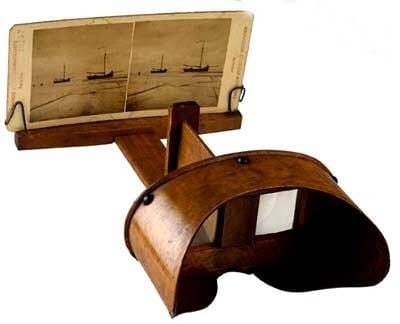
Let's first go all the way back to 1851 with the Brewster Stereoscope. No less a person than Queen Victoria was impressed, kicking off a fad that quickly sold over 250,000 units. Turns out it was not the future of photography.

1/

There was another wave of 3D during the rise of coin-operated machinery. Here, a device from 1905. 2/
By the 1940s, thanks to amazing technical advances, the future arrived not just for postcards but for education. The US military bought 100,000 viewers and 6 million reels to educate soldiers and sailors. 3/
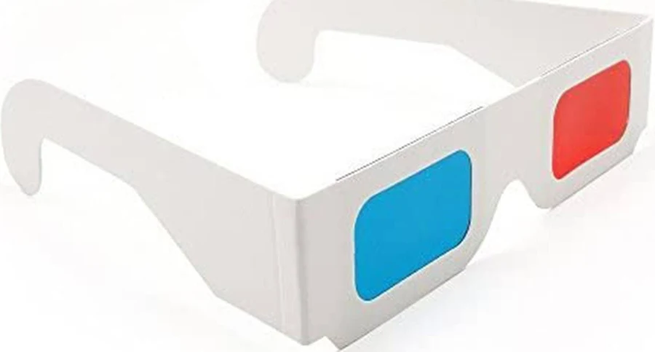
Then in 1952-1954 came the future of movies: anaglyph (aka red/blue) 3D. 4/
The crash of that was enough to get people to forget about stereoscopic 3D for a generation. But in the 1990s as personal computers became ubiquitous and the early Internet created excitement, computers became powerful enough to render 3D graphics in real time. Rendering 3D worlds on 2D monitors was wildly popular, but interactive stereoscopic 3D was seen as the future of fun. And also of work! 5/
We then needed 20 years to forget about that before the next 3D future arrived: Movies! Again! This one ran circa 2009-2013. As we know it ultimately didn't pan out, but it was enough to touch off two more fads involving stereoscopic 3D. 6/
With 3D movies back in fashion, electronics manufacturers wasted no time taking the obvious next step: 3D TV. One CES these were everywhere, and the next one they weren't. 7/
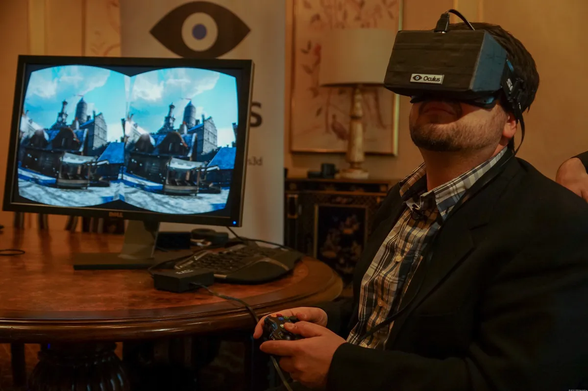
But the big new future that came out of 3D movies was virtual reality, round 2. Starting in 2010 or so there were many stabs at this, all funded by rafts of ZIRP investor money. 8/
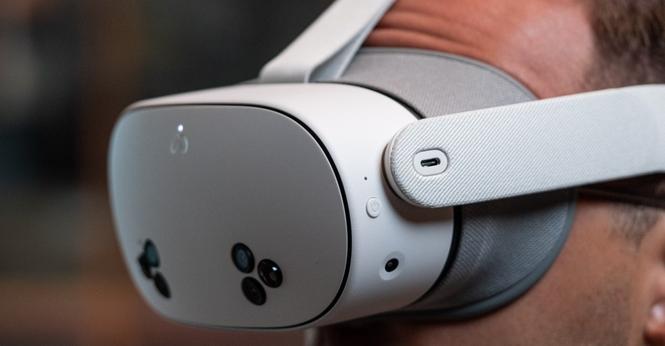
I'd put the peak of this era in 2021, when Mark Zuckerberg renamed Facebook to Meta, because a VR universe, the metaverse, was the future of both play and work. 9/
This era is clearly in retreat with mass Meta layoffs and killing products that were, only a few years ago, the future of both Meta and the world: https://www.theverge.com/tech/863209/meta-has-discontinued-its-metaverse-for-work-too
10/
Meta has discontinued its metaverse for work, too

Meta is discontinuing Horizon Workrooms and Meta Horizon managed services, amidst its many VR layoffs.

The Verge
Now as people have already pointed out, stereoscopic 3D has never been totally dead. Look, for example, at this graph of the proportion of movies in 3D. It's kept bumping along. https://stephenfollows.com/p/how-are-3d-movies-performing-at-the-box-office 11/

My point here isn't "3D bad". It's that for 175 years or more, people have been thinking "2D success + stereoscopic 3D technology = the future".

It's not a dumb hypothesis, really. People do process (a relatively close portion of) the world with binocular vision. Seems possibly important. 12/

My objection is that otherwise smart people, over and over and over again, make big investments in that hypothesis without ever understanding why it has failed so many times before. Facebook's VR losses alone are above $75 billion dollars.

Stereoscopic 3D is a cool novelty, but at this point I'd be amazed if anything serious ever comes out of it. And if it does, it will be because somebody really looked at the failures and pursues products people actually care about. Because so far, every time, people get bored and quietly go back to the thing that was already working for them. 13/

Here we move from history to speculation, but I think the real reason this doesn't matter is that humans are extremely good at reconstructing mental 3D from visual 2D.

It doesn't appear to be well studied, but human binocular vision mainly works well up close, and peters out around 50 feet.

But anybody can look out a window and have a decent 3D model in their heads extending out hundreds, even thousands of feet. 14/

My grandfather was blind in one eye from 12, but you never would have known it; he just lived his life. My understanding was that it was more a field-of-view problem for him than anything involving depth perception.

You can try it now yourself. Close one eye and go get a snack or a book from the shelf. How much does binocular vision matter at 1 foot, 10 feet, 30 feet? /15

Or we can look at seeing entertainment in person versus on a screen. People have many reasons for going to see live performances, but never once have I heard somebody say they went to a play or a concert because they wanted it to be in 3D. 16/
So in sum: 175 years of history shows that stereoscopic 3D is a fun toy and a very bad basis for a sustainable industry. If we all work together, we can create another 40 year gap in money wasted on unachievable 3D futures, just like we had between the first wave of movies and the first wave of VR. But everybody keep making the fun novelties, please! 17/17

@williampietri one i think should come back is lenticular postcards. they can't be that expensive to make nowadays.

my parents had this one when i was growing up:

https://www.hippostcard.com/listing/apollo-16-astronaut-john-w-young-lm-orion-us-flag-moon-3d-lenticular-postcard/46073132

Apollo 16 Astronaut John W Young LM Orion US Flag Moon 3D Lenticular Postcard | United States - Other, Postcard

For sale is this Continental (6 x 4 in) size lenticular postcard. Pictures shown below are of the actual postcard that is for sale. Any defects not readily visible in these scans will be listed after this sentence.S ...

HipPostcard
@prozacchiwawa I love those! I was just looking at getting some of those printed for the museum I'm starting. They're not cheap, but a number of places will happily do them!

@williampietri I think every company wants their technology to become "the next iPhone" and aren't happy with a fun thing that people use ~2% of the time.

It's annoying because I found some pretty good uses of 3D screens for visualising scientific data and also showing it to the public.

@sjb For sure. And what really gets my blood up is that investors will happily destroy a company with a good niche product in order to take a swing at a giant success.
@sjb @williampietri Great thread. This is what interests me about the upcoming steam frame. I think valve has shown with the steam deck and prior VR headsets that they are content to build a successful niche product. If they wanted mass market adoption, they would be making deals to sell steam decks at major retailers, but it's still only OEM online ordering. I think they care about VR because they think it's cool, not because they want to build the metaverse or whatever.
@sjb @williampietri Meanwhile Apple's public goal when they released the iPhone was to reach 1% market share.

@williampietri Wasted? I guess in the big picture, yes, but it kept my bills paid for a year or so.

https://petapixel.com/2018/09/28/red-and-facebook-unveil-manifold-a-3d-and-360-vr-camera/

RED and Facebook Unveil Manifold, a 3D and 360° VR Camera

RED and Facebook have unveiled Manifold, a new VR camera for shooting 3D and 360° imagery. It's a "first studio-ready camera system for immersive 6DoF

PetaPixel
@williampietri ack. But the flip side of your argument is that this idea is sufficiently fascinating that it had 175 years of staying power. That by itself is an indication that there's *something* there. Even if nobody has figured out how to build a sustainable business or long term engaging experience around it yet.
@BuschnicK History suggests that what is there is a fun novelty effect that is not actually useful for anything. There is not always a pony in there somewhere.

@williampietri wasted money is not an indicator of usefulness. Maybe the market is way WAY smaller than the largest companies on Earth dreamed it to be yet that means nothing on how productive or fun the tool itself is.

What is wrong are the relentless promises of "changing everything" or "shaping the future of thought" or implying it's for everyone. It's not. Maybe it's "just" for some architects in only part of their workflow, maybe it's "just" for some students only when they play with a simplistic chemistry model, maybe it's "just" for an artist sculpting something that is dynamic at a medium scale, etc, etc.

Maybe it is useless for 99% of people during 99% of the time... and yet still absolutely amazing for the others sometimes.

That's absolutely terrible for those humongous business who only aim at 1B+ users/customers ... and that's OK.

@utopiah Sorry, where did I saw wasted money was an indicator of uselessness?
@williampietri Looked to me that the list of commercial failures was made to establish a pattern, a lot of commercial failures, so no sustainable industry and "money wasted on unachievable 3D futures". Should it be interpreted as bad investment but still positive somehow for the greater good? Seems I didn't get the point

@utopiah As the thread indicates in a few places, I think 3D has some fine novelty uses, and other people have chimed in to point out niche practical uses. And that's great.

But those could all have been achieved without the enormous waste, by these or other means. If "somehow for the greater good" justified the investment, it wouldn't be waste.

@williampietri my guess is a 3d hypecycle for TVs again to sell 8k TVs because nobody wants them and 4k per eye might convince some people to upgrade and the movie industrie can relicence all the content. The zuck will probably fully bet on AR glasses with vision despite them having some physics limitations with contrast, fov, weight, battery life,...
But I love to play around with all these toys. I own anaglyph glasses, a valve index and will buy a steam frame. Despite being very niche and failing for a long time it's fun to observe the enhancements of the tech. HL Alyx is the most immersive entertainment experience I had in my life and that was 5-6 years ago or so

@jrt Oh, for sure. Last month I was at the Musee Mechanique and really enjoyed using the coin-op stereoscopes. As novelties they're great. And the technology is always interesting.

But I think you're spot on about industrial incentives being at the heart of a lot of the waste.

@williampietri some of the 3D films I've seen has been a cinematic experience unlike anything else.

James Cameron's Avatar (the first two)

I know a lot of people dislike them for various reasons, but they are different. And i think that's also part of the problem; they went to great lengths to make an enjoyable experience that has that depth, and that was part of the production cost, and they didn't try to circumvent that.

For many other films it's something that's slapped on after

@williampietri and nor would i want every film to be 3D, why should they be? The last Viking? How could 3D possibly add to the experience
@rasmus91 "Coming soon to a theater near you: Sophie's Choice, IN 3D!"
@rasmus91 @williampietri This is particularly true because by viewing it in 3D you are often losing on some other things like contrast, sharpness or colour rendition. Most movies at that time were made stereoscopic in post process and the effect was too subtle or even weird.
@williampietri nice thread. I remember (back in the 90s?) when there was "hidden 3D" posters everywhere. I still can't see those images.
@eco_amandine Right? Such a huge fad. I could never get them to work either.
@eco_amandine @williampietri What are we supposed to see there? I can see something but it is not something easily recognisable for me.
@eco_amandine @williampietri This is indeed a shoe, before another shoe and a weird cut-out in the background.
@williampietri
Conclusions:
1. Our brains are already quite good enough at modelling 3D from 2D data, especially given time.
2. Capital does inadequate levels of research, and prefers to speculate.

@holdenweb Well put!

And honestly, as a startup person, I'm ok with speculation. But what I want is intelligent speculation. Why waste billions to learn lessons you could have had with a little study? Or even worse, to yet again not learn those lessons!

@williampietri “Wasteful” doesn’t even begin to describe capitalism’s preference for competition over collaboration, particularly in this day and age.
@williampietri I have a great fondness for this kind of 3D stuff, it might be my favourite fad. It has a really reliable 30-year cycle which is somehow the perfect length for each fresh attempt to feel really quaint and adorable before it's even got off the ground.
@molybdomantic What a lovely way to look at it!
@williampietri It would be amazing if there was a good, inexpensive 3d system that didn't require glasses or headsets. The little screens on the back of the FinePix Real 3D (https://en.wikipedia.org/wiki/Fujifilm_FinePix_Real_3D) looked great despite being tiny. Vantage point is always tricky, but something tablet sized for viewing 3D video/images/games would be fun for the average person, I think.
Fujifilm FinePix Real 3D - Wikipedia

@williampietri A few comments. First, 3D research left a trace very easy to follow in... patents. The classes are G03B35/00 to G03B35/26. This is the international classification: https://www.wipo.int/classifications/ipc/en/ITsupport/Version20170101/transformations/ipc/20170101/en/htm/G03B.htm

If you search in these classes, you will indeed find out that 3D is in fashion every 20-30 years and then quickly fades away. 1/n

G03B

@williampietri There are also some patents in television systems, so H04N13/00 to H04N13/04 and H04N15/00. 2/n
@williampietri Now the question is "why did 3D always fail?". A few obvious reasons were already given but, for cinema, there is another reason: it restrict the cinematographic language. A big part of telling a story is about guiding the eye of the viewer to what is important. Photography and cinema uses depth of field to that effect, but in 3D everything must be sharp front to back.
This also means that lots of light is needed so that a small aperture can be used. 3/n
@williampietri Then, again, 3D was always sold as a novelty. The public wanted to see monsters jump out of the screen. That made it relatively frustrating for directors.
For example, Wim Wenders made quite a few 3D movies recently, but the public found that "it was almost 2D". 4/n
@williampietri
my favourite use of 3D is my brother's 3D tv would let us play a split-screen computer game and the TV wouldn't need to split the screen, we could each wear a pair of glasses and see our avatar's view on the ful size of the TV. the 3D films got old pretty soon, but the only thing that stopped us playing computer games is publishers largely stopped producing locally hosted multiplayer games.

@williampietri

I love 3D toys. I for one do not want to pour cold water on exuberance for them.

* 3D movie hype was directly informed by the TV manufacturing industry searching for growth after the move to hi def flat screens from CRTs plateaued
* ViewMaster fairy tales were magic when I was small
* IMAX 3D Jurassic Park was magic when I was big
* Nintendo 3DS was distinguishable from magic but pretty fun
* PSVR 3D Blu Ray was appropriate technology that we shouldn't leave by the wayside
* 3D audio augmented reality is an underdeveloped branch on the tech tree
* Open Source investment archiving and displaying all of the above needs support

How about we focus on the present, urgent problem of tech industries that get overwhelmed by hype capital? The metaverse is not the fault of 3D enthusiasm. Blame for that lies with sector monopoly - Facebook was too big to grow and they needed something, anything, to meme into a hype cycle.

@octarine_wiggle I love 3D toys too, but as you can see from the thread, stereoscopic 3D hype was a key part of big wastes of money long before Facebook. And Facebook was relatively late to the current 3D/VR bubble, coming in 4 years after Magic Leap and Palmer Luckey, so we can hardly blame their monopoly for that.

@williampietri I think your thread successfully makes the case for stereoscopic 3D as a rule-of-thumb indicator of investor hubris, but that latecomer status bolsters my point that Facebook was motivated by a search for its next hype cycle rather than a technological fascination.

Note that Facebook also had earlier been hyping small screen video, to the detriment of many investors in that content.

Compare and contrast with 70mm film. Ben Hur wasn't just ambitious because it was shot with fancy lenses. But because it was ambitious it used them and so was marketed as a point of differentiation. So I think stereoscopic 3D is more of an expression of hubris rather than a cause, which yields novel cultural artifacts along the journey to niche status and so I'm not mad at that.

@octarine_wiggle I don't think Facebook was cynically looking for the next hype cycle. I think Zuckerberg drank the kool-aid, jumping into a hype cycle that was already in progress. But I don't think 3D is innocent here. 3D provides a very powerful novelty effect, leading a lot of people (investors, but also customers) to say, "This will change everything!"

They are wrong every time, but I have not seen a cognitive trap that's worked this many times or over such a long historical period to draw massive investment. The closest I could come is perpetual motion, which has regular eruptions, but as a society we've developed immunity to it. One could possibly argue for the Ponzi scheme, but I'd argue that's too broad to qualify, as each Ponzi scheme is about some specific business idea.

@williampietri just gonna rudely chime in as someone who until recently had no binocular vision (and still has very little) and state that yeah, in my experience lack of it MOSTLY doesn’t affect daily life: essentially it’s like watching TV, as you say, depth can be inferred from the 2D information you’re presented.

HOWEVER: the world is a hell of a lot more visually interesting and easy to navigate with it. And now I can catch things when they’re thrown at me.

@astronomerritt Ooh, fascinating! Thanks for responding. How did you come to start getting it?

@williampietri I have severe amblyopia (or lazy eye), and because vision in one eye is so much worse than the other, my brain simply switches off the bad eye in favour of my good eye. I was what is called “functionally blind” in my left eye, rather than physically blind.

Turns out VR headsets force my brain to use the eye it usually ignores. The first time I put one on was the first time I ever saw in 3D. I cried. Got one for myself. Started using it pretty frequently… and found that my brain has started using my left eye a little even when I’m not wearing the headset. My left eye’s vision has even improved a bit because my brain isn’t so violently opposed to using it any more! My optometrist is very excited. I now measure as having the lowest possible level of depth perception, but I DO have it.

This actually happens with a number of people with amblyopia to the point therapeutic treatments are in development using VR headsets, or were last time I checked.

@astronomerritt Hey, that's awesome! Now there's a great use for stereoscopic 3D.
@williampietri Don’t get me wrong, I agree with your thread, I don’t think 3D tech is ever really going to be a Big Thing in most people’s lives and trying to push it on folk is likely to fail. But it does have its niche uses and as you say, it can be a fun toy 😊