 Prof. Emily M. Bender(she/her)
Really enjoyed this fantastic piece by Sonja Drimmer and Christopher Nygren:
https://www.publicbooks.org/four-frictions-or-how-to-resist-ai-in-education/
Here are few favorite pull quotes of mine + one little quibble at the end:
🧵>>
Really enjoyed this fantastic piece by Sonja Drimmer and Christopher Nygren:
https://www.publicbooks.org/four-frictions-or-how-to-resist-ai-in-education/
Here are few favorite pull quotes of mine + one little quibble at the end:
🧵>>
"It is in this context that we must consider the newfound praise of AI in education. AI boosters promise that the technology will find greater efficiencies in education; but this is less about the functionalities of AI itself, and far more about eviscerating the public nature of public education."
>>
"This conception of education is antithetical to the transactional and antihuman program of “optimized” and “efficient” delivery of learning outcomes, promised by proponents of AI’s incursion into the space of education."
>>
That last point, about learning in community, really resonates with me. It connects with what I say in this piece for UNESCO:
https://www.youtube.com/live/l-OWi6VoMng?t=4250s
(Written version available here, pp.41-45: https://unesdoc.unesco.org/ark:/48223/pf0000395236 )
>>

And what MJ Crockett says here about studies in cognitive science missing a lot (specifically, in their case around thick empathy, but it applies in education too) by focusing on empathy (resp. education) as something that happens in individual minds.
https://papers.ssrn.com/sol3/papers.cfm?abstract_id=5862422
>>
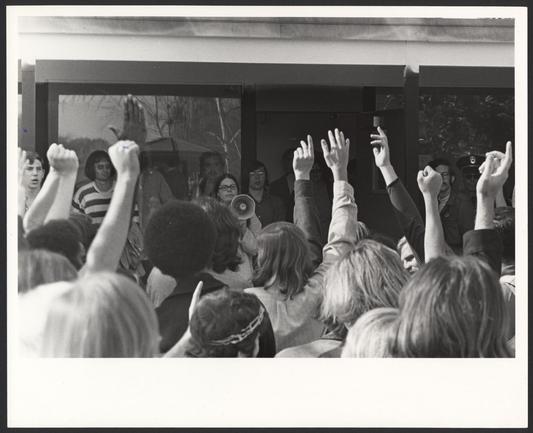
Okay, now for the little quibble. Drimmer and Nygren begin their piece by taking us to an historical example of resistance to the use of computing resources for military purposes.
>>
They then contrast that to the present moment, saying:
"And this, in turn, made the potential targets of resistance clear; indeed, it was relatively easy to organize protests in front of large mainframe computers, located in very specific facilities and locations. Now, however, computation is distributed. And this makes the targets to resist so diffuse that the shape of direct action becomes difficult even to conceptualize."
>>
In fact, the computation is (again) highly concentrated, but off-campus, in the form of data centers, especially hyperscale data centers. And these are important locations of resistance --- especially the folks organizing to prevent their construction.
>>
None of this invalidates Drimmer & Nygren's points, and indeed we need both the friction and person-to-person work they recommend on campus AND organized resistance to data center construction.
>>
Anyway, read the whole essay. It's truly excellent.
https://www.publicbooks.org/four-frictions-or-how-to-resist-ai-in-education/
 Sasha
Sasha