Do you remember NFTs? I remember NFTs. They exploded onto the scene in 2020 and were *everywhere* in the public discourse. At their peak in 2021, there were something like $25 billion in NFT sales globally. There were NFT Super Bowl ads. Jimmy Fallon had Paris Hilton on his show to awkwardly shill for NFTs.

And then, by 2022, 2023 at the latest, the bubble had burst and NFT market had lost up to 99% of its value.

Blessedly, I never have to think about those fucking Bored Apes ever again.

I remember thinking, when NFTs first appeared, that they were so obviously a scam, but also a vague sense of surprise that such an obvious scam was proliferating while we were still living through the previous blockchain-related scam, cryptocurrency. And since the NFT bubble burst, we moved on absurdly quickly to the next tech scam-bubble, AI.

1/
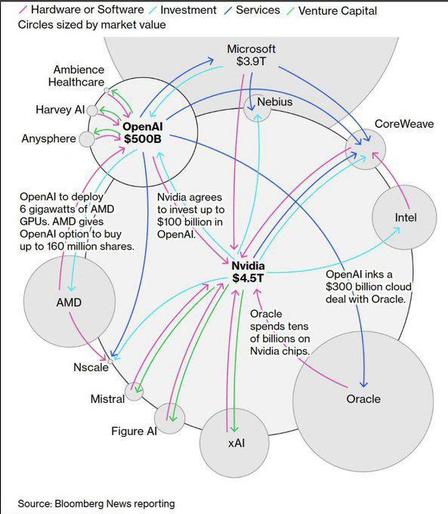
An unavoidable feature of late stage capitalism is The Scam. Scams are not new, obviously, but they have become omnipresent in our lives and the economy.

In 2024, Facebook—one of those players in the AI scam bubble—estimated that 10% of its revenue came from selling ads to scammers for scams and banned goods (https://www.reuters.com/investigations/meta-is-earning-fortune-deluge-fraudulent-ads-documents-show-2025-11-06/).

Across the world, but especially in remote parts of Southeast Asia, there are entire cities that have cropped up, devoted entirely to scamming, populated mostly by enslaved people who were themselves scammed by fraudulent job offers and trafficked into scamming (https://www.theguardian.com/technology/2025/dec/02/scam-state-multi-billion-dollar-industry-south-east-asia).

Obviously, technological changes are at least partly to blame for this. The means of scamming—global telecommunications, the digitalization of services, a constantly-connected global population, the proliferation of AI slop—are cheaper and easier for scammers to access, and thus more lucrative.

But does technology alone explain why scamming is such a prevalent feature of the global economy, or why we are whipsawing from one speculative global asset bubble to the next so rapidly?

2/

I suspect that technological change alone can’t explain the simultaneous emergence in cities literally devoted to scamming in places like the Thai-Burna border and proliferation of scam asset bubbles in places like the US.

Instead, I’ll point to an intrinsic feature of capitalism: the tendency of the rate of profit to decline.

Capitalism is competitive. Capitalists cannot rest on their laurels, since competitors are always ready to snap up market share. So capitalists are compelled to constantly increase and intensify activities that can generate profits.

But profit is a signal to competitors that there is market share to be gobbled up—by selling a better product, or a cheaper product, or otherwise interfering with their competitors.

So profit in any competitive capitalist market should tend towards zero. If a capitalist is collecting income in excess of costs, some competitor is going to try to collect some of it instead. And a capitalist who fails to compete risks being driven out of business and losing their capital ownership, becoming—like the rest of us—a worker subject to the rule of and exploitation by capitalists.

Capitalists can, of course, try to ameliorate these effects of competition by trying to expand into new markets, or create new markets for new goods and services, or by squeezing their workers and suppliers, or using the extra-economic powers against their competitors.

3/

Or, capitalists can attempt to consolidate their control of markets by cooperating with, or even merging with, their competitors.

And this is precisely what we see in the actual economy, alongside the explosive growth of the scam economy: corporate consolidation.

> “We collect data on the size distribution of all U.S. corporations for 100 years. We document that corporate concentration (e.g., asset share or sales share of top businesses) has increased persistently over the past century. Rising concentration was stronger in manufacturing and mining before the 1970s, and stronger in services, retail, and wholesale after the 1970s.”

https://bfi.uchicago.edu/working-paper/100-years-of-rising-corporate-concentration/

4/

It’s a trope among capitalist ideologues that rising capitalist wealth does not make the poor poorer; rather, capitalists are increasing the overall amount of wealth available to be owned, making everyone better off, or at least no *worse* off.

But that’s not really true, because as the wealthiest among us continue to expand their ownership, they don’t merely accumulate dollars in accounts or material luxuries, but rather ownership of the assets that allow people to be productive in the first place. As the rich get richer, they not only own more stuff, but also the capacity to make more wealth.

Consider that, in 2020, billionaires increased their wealth by $3.9 trillion (https://www.businessinsider.com/billionaires-made-39-trillion-during-the-pandemic-coronavirus-vaccines-2021-1) while the rest of us became $3.7 trillion poorer (https://www.businessinsider.com/workers-lost-37-trillion-in-earnings-during-the-pandemic-2021-1).

This isn’t just a case of a bunch of people buying a bunch of stuff from those billionaires. Instead, those billionaires exploited our desperation not to sell us anything but to buy up all our assets in a fire sale, taking even more control of our productive capacity.

5/

Billionaires made $3.9 trillion during the pandemic — enough to pay for everyone's vaccine

The increase in wealth of the 10 richest billionaires could pay for everyone worldwide to get the COVID-19 vaccine, per an Oxfam report on inequality.

Business Insider

The world’s wealthiest one percent now own more than the poorest 95% of us.

https://www.oxfam.org/en/press-releases/worlds-top-1-own-more-wealth-95-humanity-shadow-global-oligarchy-hangs-over-un

Just three investment firms are the largest shareholders in 40% of all publicly listed firms in the United States.

https://theconversation.com/these-three-firms-own-corporate-america-77072

Globally, our food, our media, our medicines—virtually every aspect of our lives—are controlled by an ever-smaller number of conglomerates.

https://www.independent.co.uk/news/business/analysis-and-features/these-10-companies-control-everything-you-buy-a7400971.html

This kind of wealth inequality is not assailable through economic means. Once you are as wealthy as these people, you can never stop being wealthy. There is effectively no act of market competition someone could undertake to topple their status, no risk the wealthy could take that would cost them the status of being super-wealthy. Their wealth is self-reproducing (or, rather, we are compelled to constantly reproduce it for them).

6/

World’s top 1% own more wealth than 95% of humanity, as “the shadow of global oligarchy hangs over UN General Assembly,” says Oxfam | Oxfam International

Oxfam International

So if you are a small-time capitalist, or would like to become a capitalist, your opportunities to survive as a capitalist are small and becoming smaller.

Because even the most innovative or visionary capitalist can hope to aspire, at best, establishing some venture that will be bought up by one of these major firms, either to consolidate that firm’s control over the market or just to shut it down to eliminate the competition.

https://insights.som.yale.edu/insights/do-companies-buy-competitors-in-order-to-shut-them-down

Capitalists do not only compete with the laboring class for control of the laboring class’ output; they also compete among each other for shares of control of that output. And, right now, the richest of the rich are winning that competition, accumulating not just wealth but also the chance at even trying to accumulate wealth in the future.

As the rich get richer, in other words, it’s harder for anyone else to get rich. Inequality diminishes social mobility, even among our wealthy elites:

https://economicsfromthetopdown.com/2023/10/13/the-great-gatsby-curve-among-americas-uber-rich/

7/

Do Companies Buy Competitors in Order to Shut Them Down?

A study co-authored by Yale SOM researchers Florian Ederer and Song Ma suggests that “killer acquisitions” by pharmaceutical companies are potentially limiting the number of new treatments available.

Yale Insights

The proliferation of scam culture, then, is not just a product of technological change but also a rational response to late stage capitalism.

Capitalists compete, which risks profits.

In response, capitalists have chosen consolidation to mitigate the effects of competition, which has driven ever-increasing wealth inequality.

That inequality makes it harder for anyone not at the top, even less-successful capitalists, to get ahead.

And so some capitalists have turned entrepreneurially to scamming as a way of an asserting control over the income produced by workers that they could not control through the traditional process of owning firms and assets.

Because those are all already owned by the richest of the rich, or soon will be.

The AI bubble will burst eventually and cause immense suffering when it does, but just as NFTs weren’t the last major global scam, AI will just be replaced by yet another scam, and another, and another, until capitalism eventually collapses under its own weight.

https://newrepublic.com/post/192132/ocasio-cortez-everything-feels-like-scam

8/

AOC Perfectly Sums Up Everyone’s Mood: Everything Feels “Like a Scam”

Representative Alexandria Ocasio-Cortez sat down for an interview with NPR, where she talked about her frustrations with the current moment.

The New Republic

Last month, I put up a thread about the global decline of electoral participation and parallel rise in protests, which I attribute to the inability of electoral processes to meaningfully effect change under late stage capitalism.

https://kolektiva.social/@HeavenlyPossum/115496186176374261

I suspect the scam economy is the product of the same processes: the system no longer works the way it was supposed to, or has been advertised, and so people are increasingly stepping outside that system to try to make things happen.

For some people, that means ignoring a broken and useless electoral system that keeps producing the same bland candidates who can’t getting anything done, and rioting instead. For other people, that means ignoring a broken and useless economic system that keeps expanding the same handful of firms and enriching the same handful of super-elites, and stealing whatever they can by whatever means they can.

These are fundamentally the same process: the collapse of a global political-economic order that has dominated for the last couple centuries but is running out of gas.

Things are getting weird and they’re going to keep getting weirder.

9/

HeavenlyPossum (@[email protected])

In July 2024, the UK Labour Party won a sweeping electoral victory, claiming 411 of 650 seats in parliament and ending 14 years of Conservative Party governance. A year later, Prime Minister Keir Starmer was polled as the least popular prime minister on record and Labour was on track to lose the next general election. While some of this, surely, can be attributed to the uniquely anti-charisma of Starmer, an empty suit’s empty suit, I suspect there’s something else going on. https://www.telegraph.co.uk/politics/2025/09/27/starmer-least-popular-uk-prime-minister-poll/ 1/10

kolektiva.social
@HeavenlyPossum

What I don't understand then is why the biggest tech companies, which, are probably the biggest companies ever, are in on it: they're the ones hoarding wealth, they don't have to find a way against the "big ones" ?

@rakoo

My best guess is that they gambled trillions of dollars on the belief that they could own a technology that would let them rule the world forever and the gamble failed. Their technology has no profitable use-case. So they have to double-down on keeping the bubble inflated because they will lose trillions when the bubble does inevitably burst.

@HeavenlyPossum or they just need to stay long enough until capitalists and imperialists do what they know best when their time is up: war

We're dangerously climbing that path unfortunately