 LadyButterfly she/her
Spill

There was a day, 18th April 1930, where the BBC reported no news. It really shocks me because of how different the times are now. I can’t imagine there’s any minute that doesn’t have dozens news stories running
I can’t imagine there’s any minute that doesn’t have dozens news stories running
Honestly, that’s your choice. My advice; limit your news to 2 - 3 “channels”, set them up that you have to “open them” (no by-the-side) and have days where you just don’t do that.
Yes, i’m easily stressed.
Oh I don’t read much for news. A local paper (which is in a language I barely know), a little on here but most in blocked, and The Onion type publications sometimes.
I still can’t imagine that a news source says “there’s not news now, have some piano” in 2025
A few months ago my mother was cleaning the home of grannie who died, and there it was found. An old cookbook, handwritten by grannie, the book it self had a stamp on it (as in caved in leather) that it was made in 1910. from the words of my grandfather this book was given to grandmama by grand grandma.
The mindblowing thing is that this handwriting book which survived both world wars, the fall of communism and the turmoil afterwards, still has easier to follow instructions than most recipes today I see, also no about me and my life section
To provide some context and a good book to read more on this:
Historian Louise Levathes, in When China Ruled the Seas (2008), argues that “the Ming voyages were primarily a diplomatic mission to incorporate Indian coastal states into the Chinese tributary system; the Sultan of Calicut and the ruler of Cochin accepted Chinese titles and protection in exchange for regular tribute and trade privileges (tax exemptions)”.
I wouldn’t take say that this mean that India came under China’s sphere of influence. The kingdoms of the Malabar coast acted as the gateway into India for over a millennia and was a plutocratic hub where foreign influence (Arab, European, African) was not uncommon.
In fact it was common for the Kingdoms of the Malabar coast to pay tribute to multiple domestic and foreign polities in order to secure tariff exemptions.
This was also the port through which significant trade occurred between India and the Roman Empire which led a prominent Roman (Pliny the Elder, writer of Naturalis Historia) to remark
‘It is quite surprising that the use of pepper has come so much into fashion,’ Pliny wrote, ‘especially when you consider that in other substances which we use, it is sometimes their sweetness, and sometimes their appearance that has attracted our notice; whereas, pepper has nothing in it that can plead as a recommendation to either fruit or berry, its only desirable quality being a certain pungency; and yet it is for this that we import it all the way from India! Who, I wonder, was the first to make trial of it as an article of food?’
In confirmation of such grumbles, two south Indian dynasties, the Pandyas and the Cheras, went as far as sending embassies to Rome to discuss the balance-of-payments problem and the inability of the Romans to pay their various Indian debts.
According to some recent calculations, customs taxes on trade with India may have generated as much as one-third of the entire income of the Roman exchequer.
The history of the Ming Treasure Fleet and Zhang He is absolutely fascinating and I will be reading more on it! It is important for everyone to expose themselves to non Eurocentric historical narratives to arrive at a more complete and balanced worldview.
Human beings have been around, in their current state of intellectual capacity for well over 100,000 years.
Looking at all that we’ve accomplished in just the last 10,000 years of known history…it is not unreasonable to assume that we could have accomplished just as much several times over already…but for whatever reason the knowledge of those accomplishments have been repeatedly erased from history.
That’s actually not true. Even steel girders will dissolve to rust within a few hundred years, if left to the elements. Fossils are a 1 in a million occurrence that require precise conditions in order to happen. In conditions that are less than ideal, there would be zero evidence of anything we have built in the last few thousand years without constant maintenance.
Only stone endures long enough to last longer than that, and we tend to harvest stone to build new things, every time we find old things made out of it. So everything that would have otherwise lasted, could have easily been recycled so many times over, that it’s completely unrecognizable now. Except for the few, rare structures that we see today, and have little to no explanation for, other than speculation based on vague 3rd person accounts.
We don’t. But I find it hard to believe that not one person in 90,000 years of human history, never came up with a single advancement similar to the ones that happen all the time now. Our brains were just as developed as they are now, for that entire time.
It is inconceivable that we only started using them in any significant capacity, just recently.
We didn’t jumpstart using our brains like that in recent time only. There may have been a few Albert Einsteins in the stone age but if they couldn’t spread their ideas, then that civilization did not have that knowledge. Leather tanning and meat conservation can be discovered easily, but it has to be rediscovered every time there’s a new group of 20 people, it doesn’t get transfered to be improved upon over the centuries.
The problem your reasoning is missing is scale. We know you can’t build the Great Pyramid if your busiest cultural center is a village of 200 people in the closest 100 km and they couldn’t communicate.
@Archangel1313 Look into Islamic scolars, a lot of scientific discoveries done in Europe after the middle ages were made hundreds of years earlier by them. Then I guess their dark ages started, making a lot of knowledge "lost". On te other hand, you should keep in mind two things, the first is that knowledge is incremental, everything we know is built on previous knowledge. The other is that while humans were around a long time, they were not in the big numbers of today. As a consequence they didn't need farming, they could always travel further to new lands for finding food and shelter.
Not this “erased from history” crap again. There was no grand ancient civilization that existed and was wiped out before the Sumerians came around 4,000 BCE. You know how we know? Because 1) there would be archaeological evidence and there is none 2) they would have had to invent agriculture and that would’ve left evidence behind via genetics in modern plants of human-guided cultivation 3) they would have used all the same energy resources we have, so timber, peat, coal, oil, etc. and that would have significantly altered the environment in such a way as to leave a record - not to mention it would mean there would be no coal or oil left for us and 5) we have archaeological evidence of early humans during this time - and they were hunter/gatherers leading basic subsistence lives as evidenced by the wear on their bones and teeth and the radioactive signatures in their bones of what they ate.
So why did it take almost all of the last 100,000 years for civilization to happen? Because without the stability provided by agriculture, doing anything more than surviving is really fucking hard. Not to mention the repeated ice ages and other things that made long term progress impossible.
there probably was a long time before humans developed sophisticated language.
Homo Erectus was the longest living human ever, lasting about 1.5 million years before going extinct about 115,000 years ago. Their bones have been found on Crete, which means that they likely had the intelligence to walk out of Africa and build a boat or raft for island-hopping from Greece. However, even building a raft requires a sophisticated language. So our ancestors have been conversing for a very long time. They also harnessed fire and invented cooking, so Homo Sapiens aren’t all that special.
Proto human ancestors were also far more capable than we give them credit for. There is archaeological evidence that, possibly as far back as 2.5 million years ago, human ancestors were harvesting specific types of stone in one location before transporting it over seven miles away to a different location where it was being processed. That is vastly beyond the complexity of what most people think homosapiens were capable of only 100k years ago.
People didnt have to build a society in the exact likeness of modern humanity for it to be vastly complex and advanced in its own right
Or sometimes the technology is there, but we’re just not ready. For example, a very rudimentary steam engine existed in ancient Rome, and was described by others as early as 30BC. While it was highly unlikely to happen because the infrastructure/materials were limited, imagine where we’d be now if the Industrial Revolution had happened in Ancient Rome.
It also makes me wonder if there’s anything around today that’s considered some oddball quirk of physics that might change the world in the future when we’re ready to use it.
imagine where we’d be now if the Industrial Revolution had happened in Ancient Rome.
Considering how much we destroyed the biosphere since the Industrial Revolution, we’d probably have gone through a postapocalypse until all the old tech disintegrated and we’d go back to where the romans where in 500 BCE.
Recently I read a comment on here saying that French was older than English. I also randomly remembered that I learned that several countries in Europe are actually younger than the US. Italy feels like it’s older than the US but the country wasn’t unified till the 19th century.
Anyway I’m getting sidetracked. The point is that I decided to look into when the French started regulating language and discovered that English is older than French.
Now, Vulgar Latin, from which French and other romance languages originated is older than Old English. However, since it’s the source of the other Romance languages which aren’t French, I’d say it doesn’t count as French.
The oldest Old French we have is from 842AD, but old English fragments are as old as the 5th century.
Early modern french seems to date back to the 1500s (“Paris Latin” was still a thing during this time), but Early Modern English predates 1500 in the beginning of the vowel shift.
Now the end of the English vowel shift probably happened after the Académie française was first established; however, common people in France at the time did not speak this formalized French. Furthermore, the work of the Academy was ended and the academy abolished during the Revolution. It was only after 1816 that the academy was restored and the idea of having a single unified language was supported by the French government. Late modern English (current English) was established by that point.
Anyway long story short, English is older than French if only by a century or two through their histories. This might not seem like a big surprising time difference, but it was a bit of a shock to me.
Interesting. I think the real question about “is it the same language?” is whether modern readers can still understand it.
For early modern English (think Shakespeare) then most modern speakers can. You’d probably have a basic understanding from reading, although missing some nuance. A lot of the jokes in Shakespeare come out better when they’re performed, so you’d probably have a better understanding of it in the theatre.
For middle English (think Chaucer) then you’d struggle a bit. Vocabulary and grammar have changed a lot. Might have a few passages in the Canterbury Tales that make sense unaided, but in general, not really.
For early English (think Beowulf) ha ha, fat chance. Even scholars of early languages don’t understand everything in it, there’s a few words the meaning of which are lost, but in general about one word in fifty even looks familiar and it’s probably a false friend.
So I’d probably put English at ‘about 500 years old’.
How far back modern French speakers can understand French would be interesting. I can understand a fair amount of Latin from my knowledge of Spanish; and unlike eg. William the Bastard invading England and introducing a whole pile of new vocabulary, the French have the advantage of never having been invaded by the French ;-)
A lot of the jokes in Shakespeare come out better when they’re performed
Some of Shakespeare’s puns actually don’t work unless one uses the pronunciations of his time period.

This is a very arbitrary way of looking at the problem and you won’t see serious linguists claiming this sort of stuff. Latin branching off into a variety of languages and Old English not branching off doesn’t change anything about the relationship between Latin and French as opposed to OE vs. Modern English. They’re a “parent” and “child” language, and whehter they have any “siblings” is a consequence of their geographical distribution (occupy more space > changes in language not reaching all areas equally > divergence into dialects and languages). Besides, OE is also a parent of Scots, so you actually can’t count it as an unambiguous ancestor of Modern English.
Comparing a district in Paris actively using Latin and English undergoing the vowel shift is mixing up internal and external linguistic phenomena.
All the stuff about Académie is not relevant for determining the identity of a language. Institutions tend to have only surface-level effect on language (spelling, prescribing some words, etc., hardly anything that can create or end a language).
Fair points, I’m not a linguist. I mostly was just going off the dates I could find for old-early-middle-modern periods for each language.
The end of the vowel shift was what seemed to separate early-modern from late-modern English, and the establishment of the academy marks the beginning of modern regulations on the French language. As such I thought those were good enough markers to compare the current versions with each other.
Anyway good point about old English also being the source of a language that isn’t English. And yeah I mean trying to gauge the age of a language is bound to be arbitrary since languages don’t abruptly change. Kind of a ship of Theseus situation. At what point did one language become another? Are they the same because we call them all English or are they different because old English and modern English don’t appear to be the same language?
I always found it super interesting that you can sort of see the class divide in English based on the French and Germanic roots, especially when it comes to food and farming. For example:
Cow = Germanic (Kuh), Beef = French (Boeuf)
Hen = Germanic (Henne/Huhn), Poultry = French (Poulet)
Sheep = Germanic (Schaf), Mutton = French (Mouton)
Wheat = Germanic (Weizen), Flour = French (Farine/Fleur in old French)
It’s not all words of course, but there are quite a few ones where you can see that the people who grew the food used the Germanic, and the people who ate the food used the French.
The oldest Old French we have is from 842AD, but old English fragments are as old as the 5th century.
I bet those Old English fragments were way easier to understand for speakers of Old Saxon that for a 1500s English speaker.
Yeah, that’s definitely true
I realized in like 4th grade that I could parse various Latin languages okay just from knowing some Spanish. I thought old English would be the same or easier… nope. Beowulf still looks more like Icelandic than English
 frank
frank
 jupyter_rain
 PhilipTheBucket
 caseyweederman
 Hellfire103
 Brave Little Hitachi Wand
 This is fine🔥🐶☕🔥
 dexa_scantron
 Rayquetzalcoatl
 𝔄 𝔰𝔢𝔫𝔱𝔦𝔢𝔫𝔱 𝔭𝔦𝔢𝔠𝔢 𝔬𝔣 𝔠𝔥𝔢𝔢𝔰𝔢
 geekwithsoul
 ToastedRavioli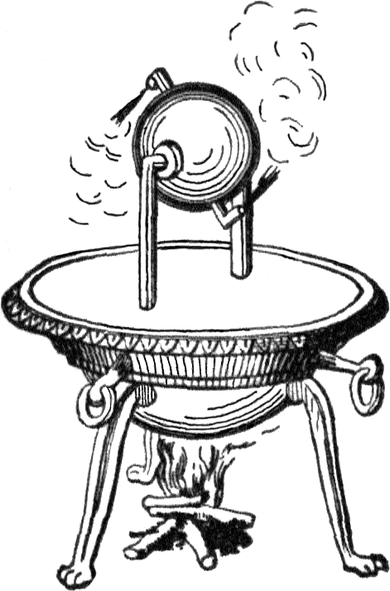
 Captain Aggravated
 addie
addie ɯᴉuoʇuɐ