"Humans aren’t very efficient movers—until you put us on a bicycle, when we become some of the most energy-efficient land travelers in the animal kingdom.": https://www.scientificamerican.com/article/a-human-on-a-bicycle-is-among-the-most-efficient-forms-of-travel-in-the/


@lalonsander

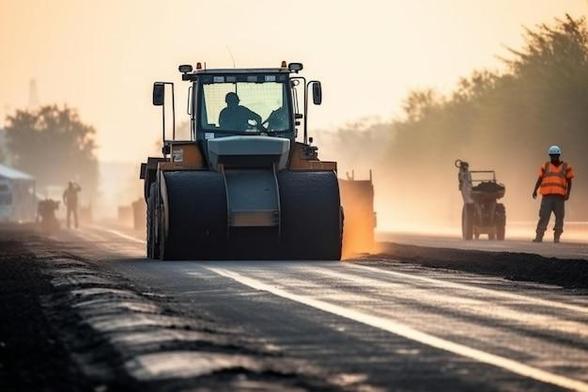
How about the energetic cost of creating the road for this "human on bicycle" ?

Serious and real question.

@mrv

I don't think a MTB needs significantly more energy to drive on dirt than a normal bike on asphalt/concrete

@lalonsander

@Starkimarm @mrv @lalonsander even dirt single math is a maintained infrastructure too.
@Starkimarm I never tried to measure it (and I'm not sure how I would have), but when I rode a bike with hybrid tires a lot, the difference seemed significant to me.
@wesdym
I think it depends what you call significant, but the above graph is in log scale.
@mrv @lalonsander That’s a picture of an automobile road. Bicycles can ride just fine on dirt.

@mrv @lalonsander

1) It looks like your image is showing the construction process for an automobile road, not a bicycle trail

2) When it comes to bike lanes, which I think is what you're talking about, we only need those because of cars having seized and earmarked that space

3) In many places, the natural terrain is fine for riding without being modified. And when modifications do become needed, a dedicated bike trail requires far less effort to construct than a road for vehicles.

@kboyd More to the point, a surfaced roadway for bicycles (including motor-assisted) requires a far shallower preparation, little or no reinforcement, and suffers less weight-caused distortion or damage (such as potholes) over the same time. So it uses less material and energy both initially and over time.