
Do you have a J-Link compact and wonder why it only works with _some_ USB-C cables? I looked into why that is 🤬
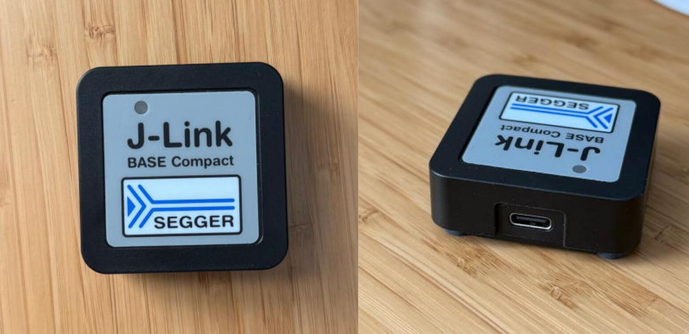
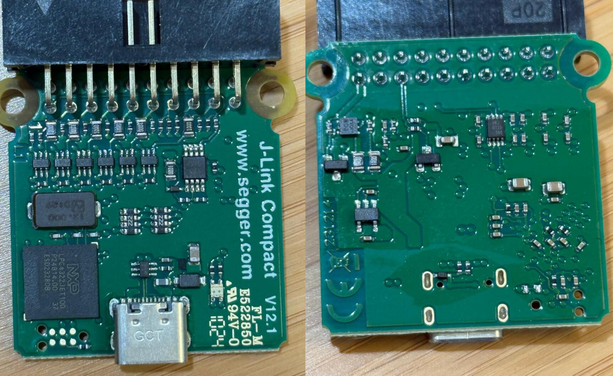
https://alvarop.com/2025/09/j-link-compact-usb-c-issues/

@alvaro I'd guess the 2 x 10k vs 1 x 5k is a BoM optimisation? But yeah it's funny to see this in the wild on a board presumably designed after the first production rev of Pi 4
@wren6991 @alvaro yea smells like 2x10K parallel being on purpose to save the extra reel and they only ever intended to short the CC lines together.
Wild to still see this error being made 10y into USB-C adoption, really wonder where that comes from, there gotta be some wrong guidance around this somewhere.

@timonsku @alvaro Because an engineer sees this circuit in the spec and says "oh so I only need one of them". It's almost irresistible.

Also the same shortcut is correct in other areas, like in theory the sink detects orientation of CC1/CC2 to select the correct D-/D+ pair, but every USB 2.0 board I see just shorts the two pairs together. As far as I know this is valid.


@wren6991 @alvaro Not sure if D-/D+ orientation detection is even suggested, the standard calls for it to be shorted in normal circumstances. For the high speed pairs its mandatory to detect orientation
@timonsku @wren6991 @alvaro as far as I understand the standard, for usb 2.0 it is mandatory to short the d+, and d- pins together. I couldn’t find a way to make this conform to the usb c standard: https://hackaday.com/2021/03/22/cursed-usb-c-when-plug-orientation-matters/
Cursed USB-C: When Plug Orientation Matters

One of the selling points of the USB-C plug is that supposedly there is no way to incorrectly insert it. As [Pim de Groot] shows with a ‘Cursed USB-C 2.0 Device’, reality is a bit more …

Hackaday
@mifune @wren6991 @alvaro my theory is that they are separate pins because they are easiest/best to short on the PCB. You need the pads in the connector for rotational symmetry and having them be individual pads happens by default due to how the construction works. Shorting them in the connector is rather complex manufacturing wise/an additional step and you can't do it in the cable without extra cables or creating an excessive stub via the plug+connector