What do we have here? NEC PC-9821 laptop (non-PC compatible from Japan that can run Windows and a special MS-DOS version), running a rare variety of Linux called Plamo Linux/98. Linux 2.4.22, XFree86 4.3, and some Slackware compatibility. More screenshots - but from the screencapture device - will follow 🧵
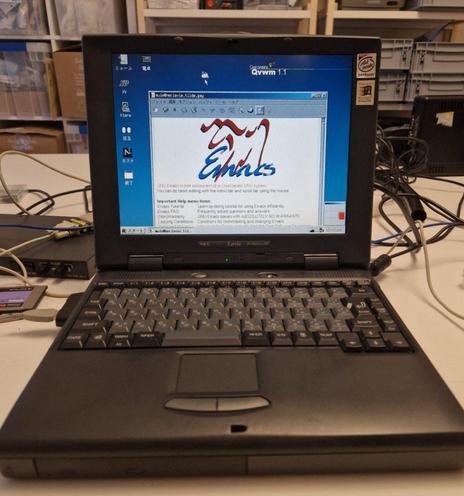
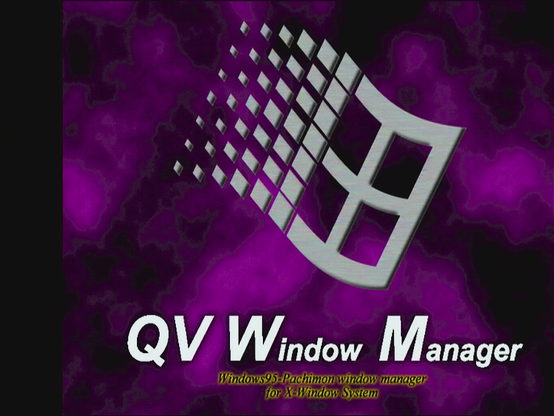
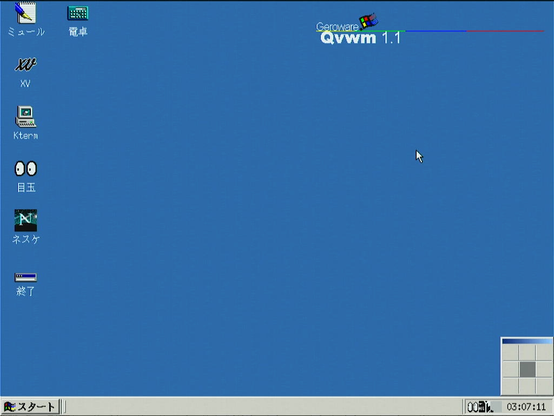
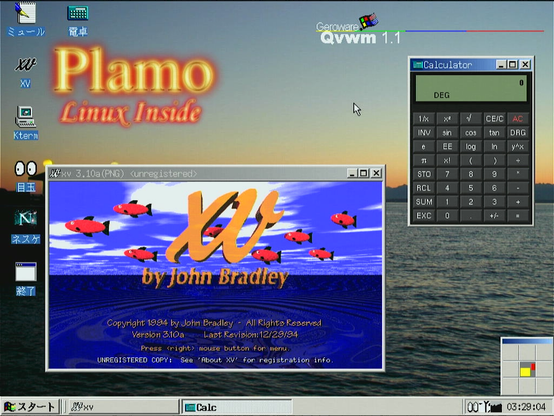
Plamo Linux comes with an unusual window manager that is definitely not copied from Windows 9x, and doesn't have any icons from Windows 3.x. Geroware Qvwm is all animated, and thus fairly slow on a non-accelerated video.
You need to watch the video to appreciate how restless this window manager is! I don't think it's common for Japanese computing, by the way, just feels very hacker-y. "Hey I made these icons animated for fun! Also there's Oneko!"

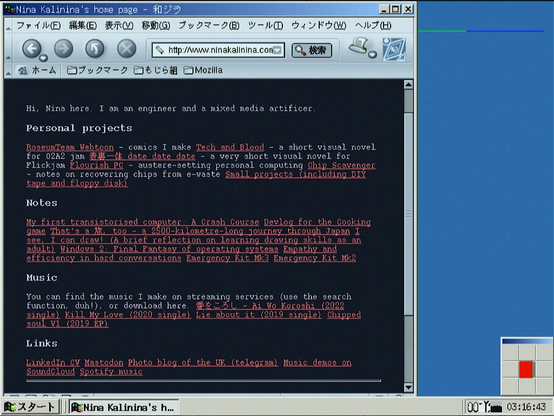
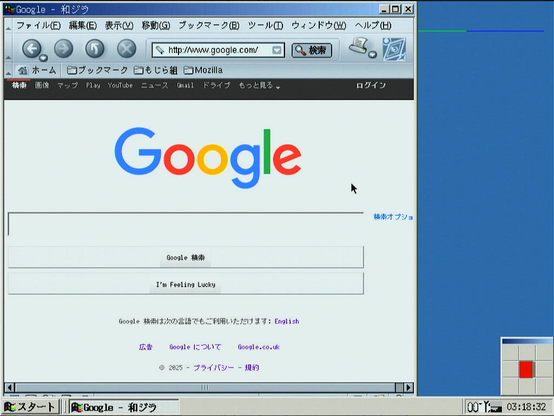
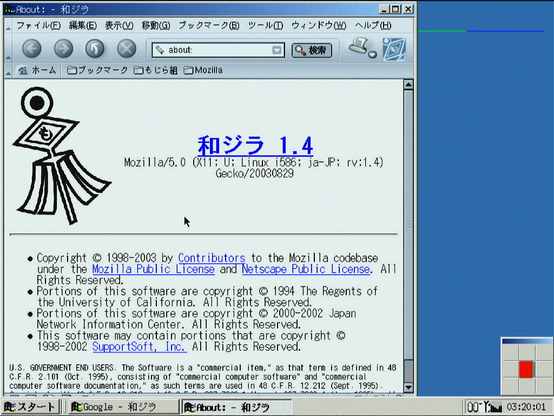
"Netscape" button opens Wazilla - Japanese flavour of Mozilla. It can sort of open my home page, and Google.co.jp still works in it. Of course it can show Japanese characters!

The staff with kana "Mo" on the logo hints that 和ジラ might be a multi-level pun. Gecko/20030829 hints at the build date.

Of course, no modern cryptography.

Standard apps are not too strange. Emacs has a doctor that can make you feel better!
There are some games on the CD; Contrib CD has NScripter port so you could play Higurashi on Linux.
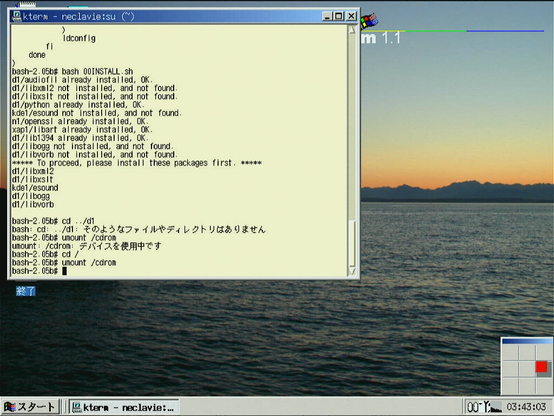
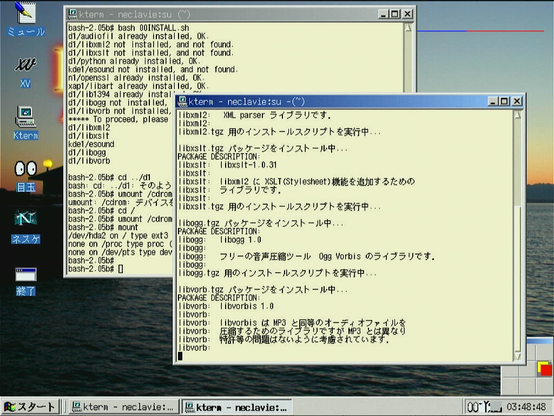
I want to install GNOME, which is done with a lovely script called 00INSTALL.sh. It reported that I miss a few packages.
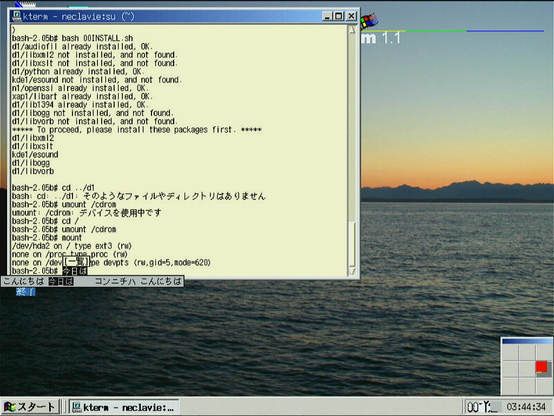
It is a Japanese computer, so it allows input in Japanese. Pressing XFER will enable Canna (or something? But I only have Canna installed) that allows entering Japanese phonetically, and convert to kanji as needed. That's how you get こんにちは converted to 今日は!
The dependencies were installed, time to try the GNOME install script again! Each package is installed by feeding tgz to the `installpkg` tool, by the way - there's no centralised package manager, or I didn't find it (I did not read the fm, and I should have)

@nina_kali_nina If it's a fork of mid-90s Slackware, there's no such thing as a centralised package manager.

`installpkg` would be it. Things were very simple back then.

@stuartl it's early 00's Slackware, it seems - but yeah, it is very simple