 Matt Blaze
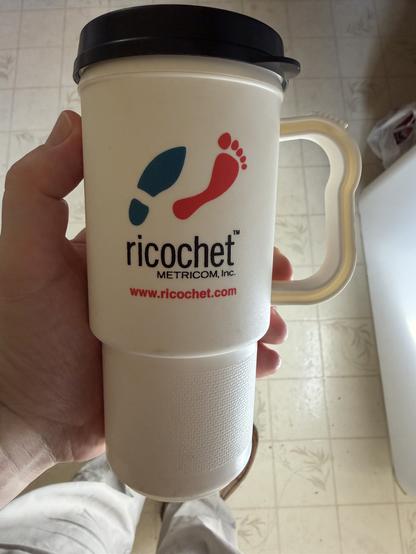
@alice Based on the label and the form factor, I'd say it's a (vestigial) Metricom "Ricochet" repeater. This was a low-speed 900 MHz wireless ISP that served various metropolitan areas until 2001.
Looks like the power cable has been removed.
@alice Based on the label and the form factor, I'd say it's a (vestigial) Metricom "Ricochet" repeater. This was a low-speed 900 MHz wireless ISP that served various metropolitan areas until 2001.
Looks like the power cable has been removed.
@mattblaze @alice Ricochet predated USB ports. And was much slower than we're used to now.
Economy 2.4 Kbps $2.95 per month
Standard 9.6 $9.95
Executive 19.2 $19.95
Premier Unrestricted $29.95
Subscribers to the Standard, Executive and Premier plans may rent a Ricochet portable wireless modem for $20 per month. Alternatively, subscribers to any service level may purchase modems for $495. There is also a one-time activation fee of $95.
@_the_cloud @alice The earlier (and bricker) black modem used serial, but the later (smaller) gray modem had USB. As I said it was much slower than we're currently used to, but at the time, it was really great. (I believe the prices and speeds you're quoting were from the time the service was introduced. It got faster and cheaper by the time they went belly up in 2001).
As I recall, some ex-employees managed to get things back up and running in lower Manhattan post-9/11.
@mattblaze @alice Agreed on the box ID.
I was an ardent Ricochet customer back in the day.
In '98 I velcro'd the radio modem to my laptop lid for always-on portable internet. It worked with my Psion 3C, too.
Another dedicated Ricochet was in my failover connection rotation for home internet (slower but more reliable than DSL or dial-up at the end of a long, shitty copper run).
The final modem generation usually got 40-90kbps.
@mattblaze @alice Blimey that brings back memories. We connected an office in Palo Alto with Ricochet because you could buy the box over the counter; getting ADSL from Pac Bell would take several weeks.
The company paid for a year's service but I think Ricochet turned up its toes a few months later.
 Alaric Snell-Pym
 Ken McLeod
 Mark Eichin
 Val Delane
 prl
prl Scanner
 Paul Zawada