 big awoo notation
I want to see if the thoughts of others align with mine.
An FPGA toolchain should optimise for:
An FPGA toolchain should optimise for:
highest worst-case Fmax
highest average Fmax
highest best-case Fmax
Poll ended at .
@lofty If I'm comparing RTL changes for fmax then I'll usually do ~100 runs and take the median. Seems reasonable because 8 runs aiming for median frequency should have only a 0.4% chance of all failing. Most client machines have 8 parallel threads of execution available these days.
I don't particularly care about the mean because if I get a worst-case result then you can bet I'm re-rolling, so the tail values don't matter.
I don't think it's *good* that seed sweeping is the optimal way of using the tools, but the fact is it reduces variance as well as increasing expected fmax.
__attribute__((constructor)) to install a SIGSEGV handler to just quietly "make the problem go away" a la https://people.csail.mit.edu/rinard/paper/osdi04.pdf (might also need to shim signal(2) and sigaction(2) to make sure it stays in place in case the Serious Enterprise Software tries to install its own crash handlers).
 Luke Wren
 mei
mei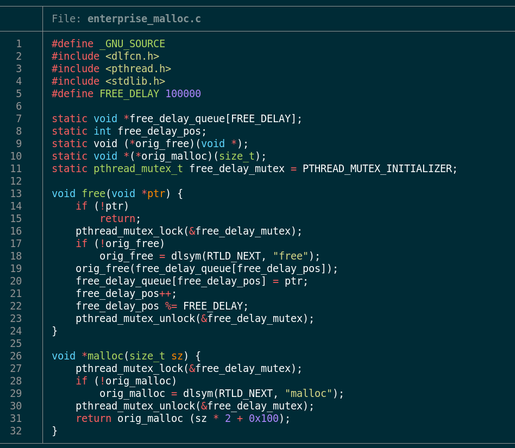
 zev
zev