
I want to see if the thoughts of others align with mine.

An FPGA toolchain should optimise for:
highest worst-case Fmax
61.4%
highest average Fmax
27.3%
highest best-case Fmax
11.4%
Poll ended at .
@lofty Depends how many parallel jobs I am allowed to submit to get that golden seed 😅
@wren6991 I'm computing distributions of 100 runs, so

@lofty If I'm comparing RTL changes for fmax then I'll usually do ~100 runs and take the median. Seems reasonable because 8 runs aiming for median frequency should have only a 0.4% chance of all failing. Most client machines have 8 parallel threads of execution available these days.

I don't particularly care about the mean because if I get a worst-case result then you can bet I'm re-rolling, so the tail values don't matter.

I don't think it's *good* that seed sweeping is the optimal way of using the tools, but the fact is it reduces variance as well as increasing expected fmax.

@lofty Also bear in mind my comparison point here is Vivado which has a >> 0.4% chance of just segfaulting for no apparent reason, so I find that kind of probability acceptable
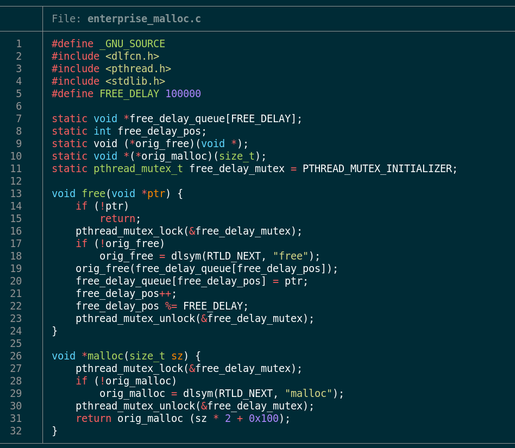
@wren6991 @lofty one trick i've seen for dealing with fpga toolchains that i really like is to LD_PRELOAD this bad boy. makes them much less flakey.
@mei @wren6991 Isn’t there also UB in this code? There isn’t a capacity of the queue and therefore it does free non allocated memory which is technically UB. Also the position isn’t initialized and it could be out of bounds on the first free call.
@TheAlgorythm @mei C guarantees implicit zero initialisation of variables with static storage duration, though it's bad style to rely on it because the same does not apply to automatic storage duration. So the free of empty queue is avoided by the null check, and the position is initialised to zero.
@mei @wren6991 Oh, ok. Didn’t know the exceptions of static.