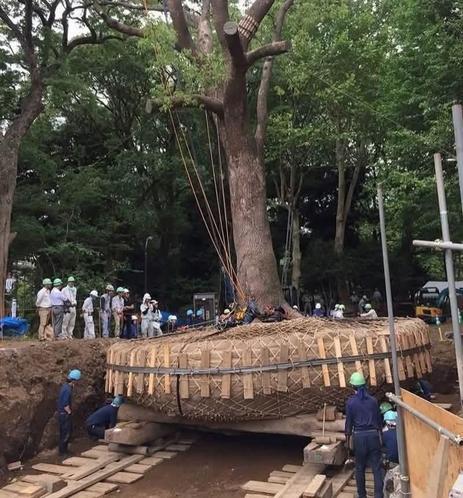
In Japan, trees in the path of urban development or road construction are often relocated rather than cut down. This reflects the country’s deep respect for nature and commitment to environmental preservation.

Using specialized techniques, experts carefully bind and protect the roots before transplanting the tree to a new location.

This approach ensures the preservation of greenery while allowing infrastructure projects to move forward.

#archaeohistories

@archaeohistories Native English speakers are nowhere near this civilised.
@archaeohistories 👆 I had a real giggle at this, @David , after your recent exasperation with the hyper-pruning of trees in your area. 🤣

@sister_ratched This "info" comes back regularly online, and I think any resident of Japan seeing it is torn between laughing and wanting to retch. Another of these Orientalist BS about Japan, this magical and perfect and pure country.

@archaeohistories please, don't share stupid things like this.

@archaeohistories

In Germany they simply cut them down, especially if they're obstructing motorized vehicles ways.

Every tree this size produces around 300 litres of Oxygen average per day year round by absorbing Carbon Dioxide and cleaning air from fine dust and other nuising agents.

Trees of this size are irreplacable, every one of them.

@archaeohistories

The good is often a matter of will, because where there is a will, there is also a way.

#Japan #Asia #EnvironmentalProtection #Trees #DoGoodThings

@archaeohistories Japans "respect for nature" is fairly selective. It's more a matter of tradition, aesthetics, superstition and religion than actual ecological values. I.e. they are one of the few nations who still hunt whales and veganism is so rare outside Buddhist temples, a lot of people never even heard of it.
@tauli @archaeohistories Since the Fukushima Daiichi incident, their electricity production from "clean" coal is on the rise as well.
Na, das wäre doch mal was! @Umweltbundesamt