At the historical fashion forum in Historic Deerfield today and tomorrow! Not doing the full liveblogging thing, but I will be popping in to share stuff from time to time.
You can virtually register at any time to get zoom access to the talks, btw: www.historic-deerfield.org/events/fall-... #DressHistory

Fall Forum - Fashioning the Bo...
Fall Forum - Fashioning the Body: Dress in New England 1600–1900 - Historic Deerfield

Fashion has garnered great interest in recent decades and research into the history of clothing has yielded new insights into culturally embedded ideas around self-styling and the body. Yet, few studies have explored New England’s relationship with styling the body and fashionable dress. This forum will convene a group of experts in the field to explore the rich history of dressing the body and self-presentation in this region.

Historic Deerfield
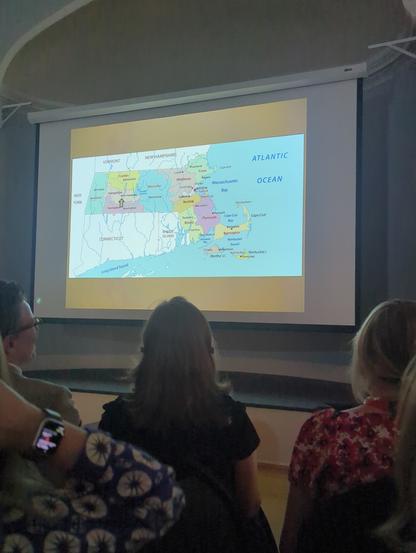
First up: Embodying the Domestic: Embroidered Gowns and Sartorial Culture in Colonial Massachusetts and Connecticut by Livy Scott, PhD candidate at MIT.
In 1976, a scholar declared that it must be English because of the fineness of the embroidery, but the Wadsworth gown is said to be made by its original wearer and there is considerable evidence that it is homemade work.
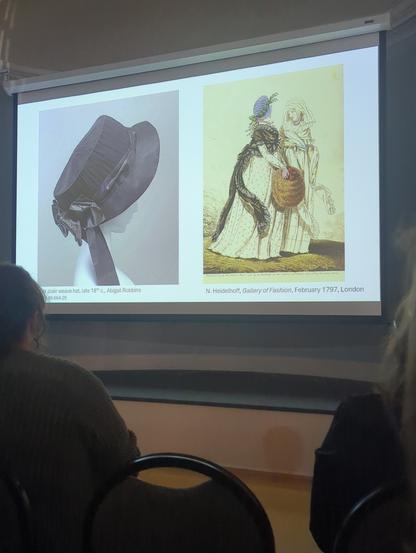
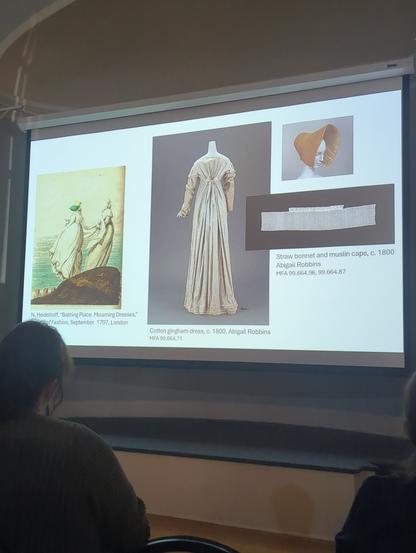
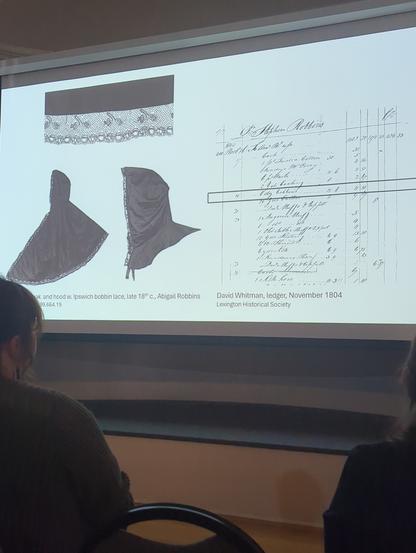
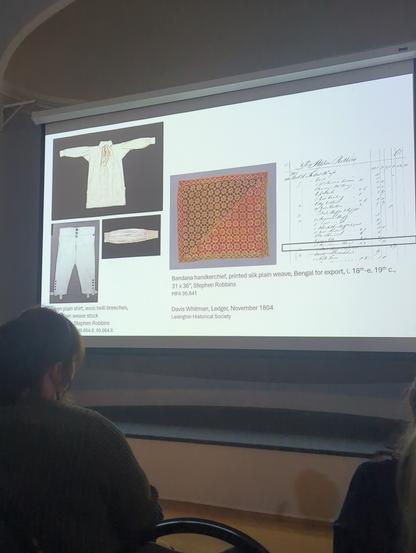
The Robbins Family of East Lexington: Fashioning Themselves and the New Nation, by Jennifer Swope, curator of textiles at the MFA Boston (@mfaboston.bsky.social)
Extant clothing worn by Abigail Winship Robbins! 🗃️🪡
And more!
Abigail's fashionable hat.
Yet more of her clothes! This is incredible. I am wildly jealous.
This is like Mary Poppins's carpetbag.
And her husband Stephen's clothes.
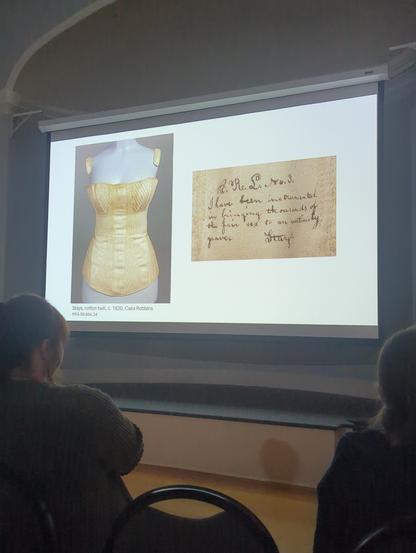
They have a bunch of Robbins family clothing, go to the MFA's website and search the surname, but here's Caira's corset. (Named for the Ça Ira, pronounced Cay-Ira.)
Post coffee break, we have Emily Whitted of the University of Massachusetts Amherst, with Patching Fashionable Forms: Early American Textile Repair in New England. 🗃️🪡
Interesting - she suggests we think about the element of risk in imperfect/blatant mending rather than just the aspect of thrift, which is a Whole Thing when it comes to New England history.
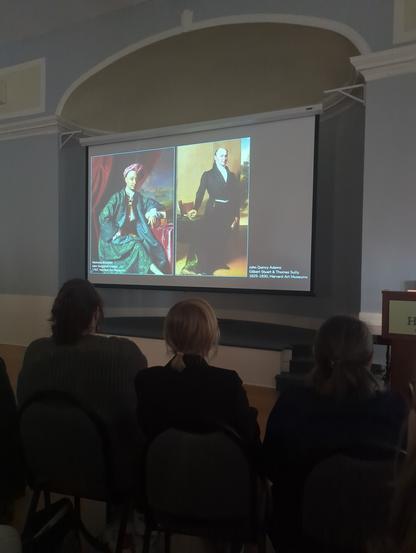
Last before lunch, Chloe Chapin of Harvard with "Devotees to Fashion": Masculine Fashionability in New England, 1790 to 1820.
Suggestion that Trumbull's famous painting of the signing of the Declaration retroactively projects the plainer contemporary aesthetic back (while retaining overall 1770s construction) - interesting!
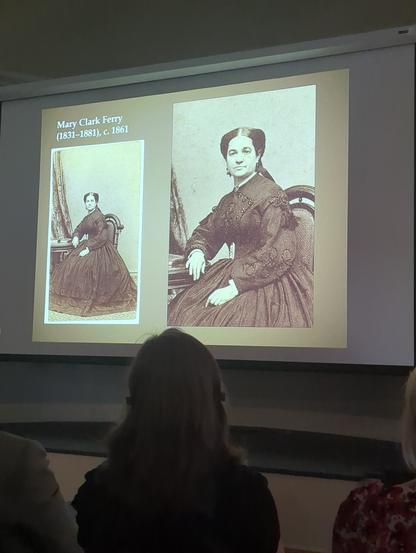
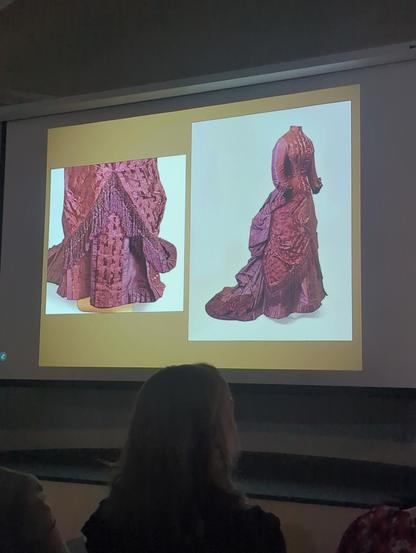
And back from lunch with Lynne Bassett, The Latest Paris and New York Fashions: Ferry & Dickinson, Northampton Dressmakers.
Mrs. Ferry:
One of their dresses!
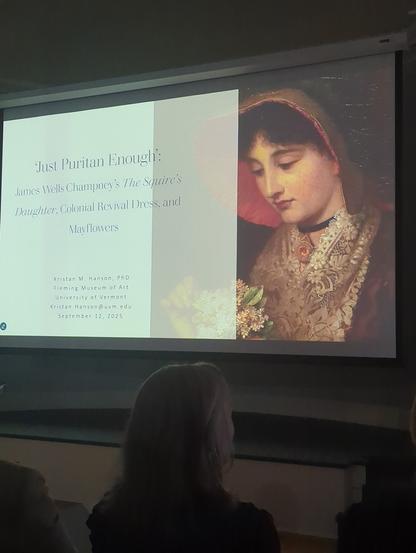
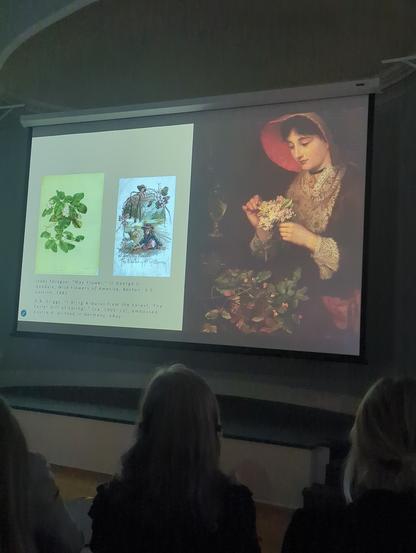
Kristan M. Hansen at the Fleming Museum of Art, speaking on Just Puritan Enough: James Wells Champney's Squire's Daughter, Colonial Revival Dress, and Mayflowers.
Oh, very cool, I would never have realized that she's messing around with May flowers.
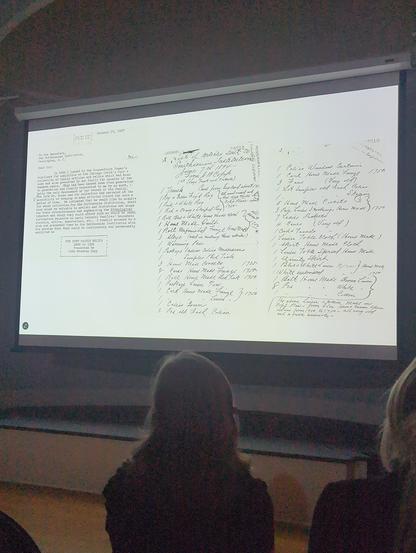
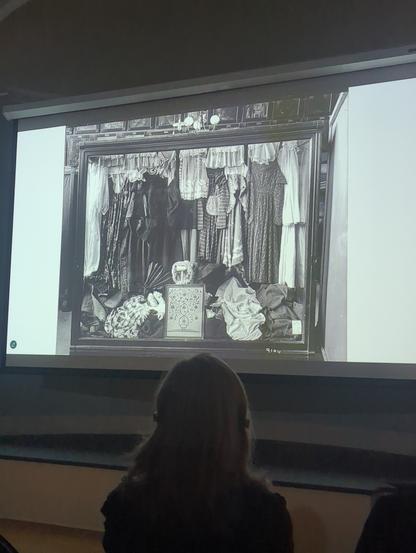
Dr. Laura Johnson (NMAH), on The Copp Family's New England Clothing, 1750-1840, and Colonial Revival Collecting.
An early display of the collection 😬😬😬
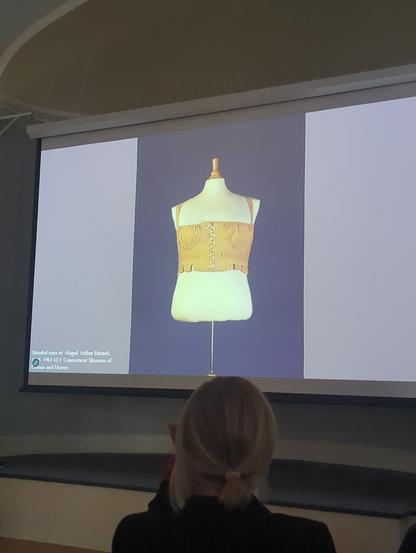
Okay, penultimate paper: How to Leave Off Corsets and Not Fall to Pieces? Inventive Boston Women and Dress Reform Waists in the 1870s, by Kristina Haugland, formerly of the PMA.
Intriguing pattern for one of Olivia Flynt's bust supporters.
An extant Equipoise waist!
And the final paper: Haute Couture and Fashionable Taste in Hartford, 1850-1900, by Ned Lazaro of the Wadsworth Atheneum.
This is considered to be a walking costume in peasant style:
He admitted that Pingat is better than Worth. I like him. Anyway, tagging in the #DressHistory feed again now that I'm at the end of the thread!