Malicious javascript compromise on npmjs.com

These packages, about a billion downloads prior

supports-hyperlinks
chalk-template
simple-swizzle
slice-ansi
error-ex
is-arrayish
wrap-ansi
backslash
color-string
color-convert
color
color-name

Thread follows.

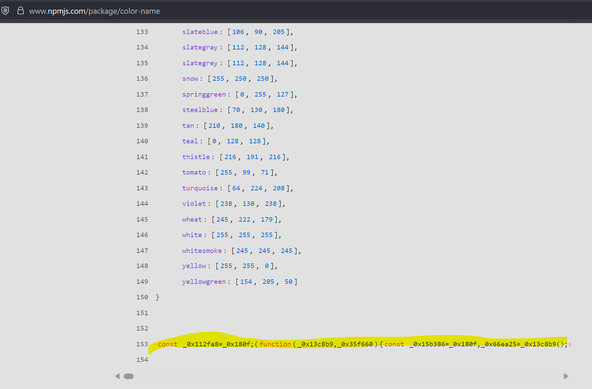
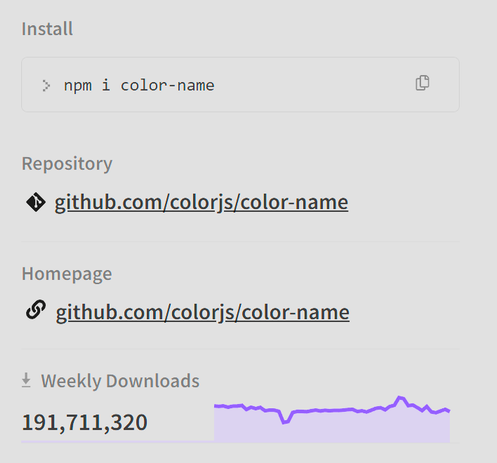
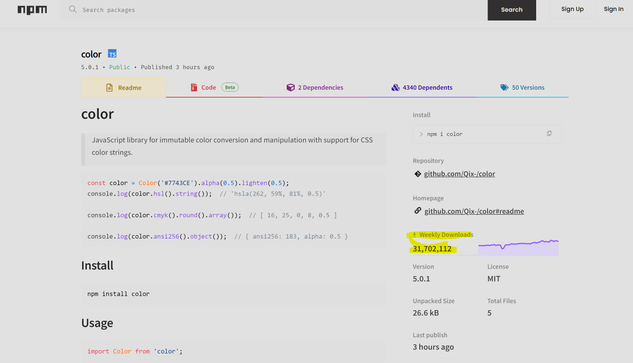
Example change and download stats on one of the 12 packages changed, incident started about 2 hours ago.
Example copy of one of the inserted JS: https://pastebin.com/bwLZrq02
Malicious JS in NPM libraries - Pastebin.com

Pastebin.com is the number one paste tool since 2002. Pastebin is a website where you can store text online for a set period of time.

Pastebin
Just reported to NPM, they work on it.
derekheld (@[email protected])

A bunch of packages published by qix in NPM just got backdoored it looks like. Obfuscated code was added like two hours ago. #threatintel #npm

Infosec Exchange
It's a cryptocurrency wallet drainer, RIP a load of devops dudes crypto.
NPM on it, some packages nuked, more being nuked

If you want an idea of scale of trojan attempt - 'color' alone had 32m downloads in a week, the combined attempt was pushing a billion due to upstream dependencies.

Hunt tip: look for registry.npmjs.org in proxy logs, package names are in the URLs.

additional backdoored packages

ansi-styles
debug
chalk
supports-color
strip-ansi
ansi-regex
has-ansi

Weekly download stats for impacted packages prior to incident

ansi-styles (371.41m)
debug (357.6m)
backslash (0.26m)
chalk-template (3.9m)
supports-hyperlinks (19.2m)
has-ansi (12.1m)
simple-swizzle (26.26m)
color-string (27.48m)
error-ex (47.17m)
color-name (191.71m)
is-arrayish (73.8m)
slice-ansi (59.8m)
color-convert (193.5m)
wrap-ansi (197.99m)
ansi-regex (243.64m)
supports-color (287.1m)
strip-ansi (261.17m)
chalk (299.99m)

Total 2674m

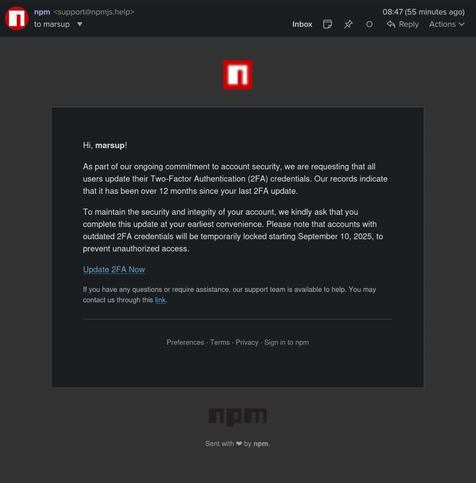
Phishing email sent to maintainers, they basically targeted people with 2FA by getting them to.. reset their 2FA.
@GossiTheDog It's incredible that high profile targets like npm or GitHub STILL aren't enforcing Security Keys...

@leoluk @GossiTheDog Draconian systems that limit who can write and publish code are NOT the solution here.

The solution is not having LPMs (language package managers) that pull code from unvetted package repositories in an automated manner, and languages that encourage using thousands of random garbage microdependencies rather than well-vetted, versioned libraries.

@dalias @GossiTheDog Security Keys aren't draconian, they're easy to use and there's plenty of open source implementations (both software and hardware). Since LPMs aren't going to disappear overnight, they're really the only practical solution to such targeted phishing attacks.
@leoluk @GossiTheDog Mandating having a "something you have" is draconian and exclusionary of anyone who can't securely have things but can securely know things.

@leoluk @GossiTheDog We should not be placing the burden of "users don't get hit with malware" on maintainers locking down their workflows in ways that might be exclusionary or inaccessible.

Instead, the platforms that want to deliver unvetted code as part of a "supply chain" 🤮 need to get their act together and find a way that newly-published unvetted code doesn't end up as part of anyone's build, but instead goes through multiple layers of delay where it's only available to people who intend to be testing an unvetted bleeding edge and understand the dangers. With channels to request rapid review of tiny security-critical changes when needed for expediting them.

@leoluk @GossiTheDog For the most part, none of these packages have any need for new versions to appear in anyone's builds for *months* if not years after publication, unless someone *specifically* has read the changes to the new version and sees a new feature they want from it.

LPM platforms should be designed around this basic principle that updates are mostly unwanted.

The only way anyone should ever get unexpected updates is if there's a serious security problem, in which case there should be a description of the problem and a small comprehensible patch prominently displayed.

IOW LPMs and similar platforms should behave like Debian Stable.

@dalias @leoluk That approach doesn't work. Suppose you're on version X, and as time goes by versions X+1, X+2... are released. You don't upgrade.

Then they release version X+N which contains a security fix you do need. By delaying your upgrades you now have a pile of unrelated changes to include, at exactly the wrong time.

Regular Releases Reduce Risk – Government Digital Service

GOV.UK came out of beta just over two weeks ago. In that time we've released over 100 updates. I want to talk a little about how we do that, but mainly to focus on why this approach makes for more