 Nick Lockwood
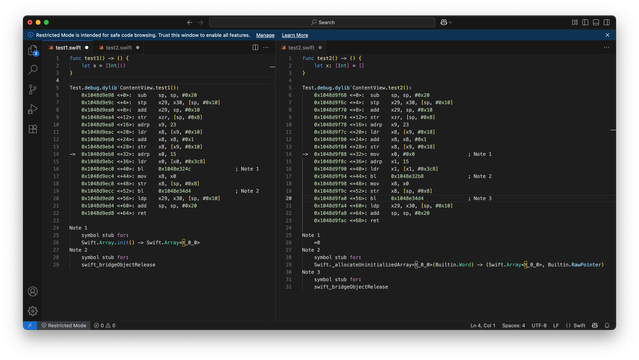
Can anyone confirm if there is actually a runtime performance cost to using
let foo: [Int] = []
vs
let foo = [Int]()
As suggested here: https://github.com/nicklockwood/SwiftFormat/issues/1887#issuecomment-3209626590
I'd be surprised if the compiler doesn't just optimize this out somehow, but I don't actually have any basis for that assumption.

[New Rule]: A standard style for empty collection inits · Issue #1887 · nicklockwood/SwiftFormat
Barring other considerations, these two forms mean the same thing for Array and Set: let x: [Int] = [] let x = [Int]() let y: Set<Int> = [] let y = Set<Int>() I don't see a rule to allow preferring...
 João Pinheiro