
1/

I have been looking at Web Monetization.

Partly because I am curious. And, partly because I may implement them for CrowdBucks.

One part of Web Monetization are "Payment-Pointers".

They aren't URLs. But sort of URL-like, in that they point somewhere.

For example, my web-site is:

https://reiver.link

Then I could let people people pay me with this Payment-Pointer:

$reiver.link

#CrowdBucks #FediDev #Fediverse #PaymentPointer #WebMonetization
Charles Iliya Krempeaux (@reiver)

2/

The Payment-Pointer:

$reiver.link

Would resolve to the HTTP-URL:

https://reiver.link/.well-known/pay

And, that (HTTPS-URL) would return some type of JSON document.

#CrowdBucks #FediDev #Fediverse #PaymentPointer #WebMonetization

Payment Pointers

Payment Pointers are a standardized identifier for payment accounts. In the same way that an email address provides an identifier for a mailbox in the email ecosystem a payment pointer is used by an account holder to share the details of their account with a counter-party.

Payment Pointers

4/

One thing that seems missing is — what is supposed to be returned from the HTTPS-URL that a Web Monetization Payment-Pointer resolves to?

What are the fields in the JSON?

...

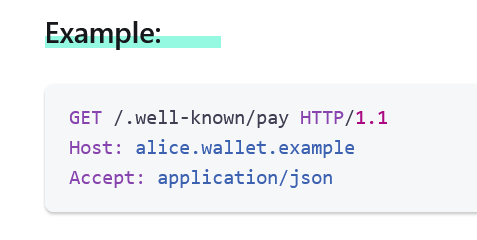
I assume it is JSON because of an example HTTP request here (that does NOT show the response):

https://paymentpointers.org/flow/#example

.

#CrowdBucks #FediDev #Fediverse #PaymentPointer #WebMonetization

@reiver https://www.auspayplus.com.au/wp-content/uploads/2024/06/NPP-API-Framework-v5.0.pdf references example implementation zips that include json schema for things...

@LovesTha

Perhaps I missed it, but — which page of that PDF shows an example JSON structure from the response of a Payments-Pointer?

@reiver it doesn't but describes a zip attachment that should a company the doc that includes the schema. It is tantalisingly close to giving you what you are looking for.