I read this article today and quite liked it

https://www.drewlyton.com/story/the-future-is-not-self-hosted/

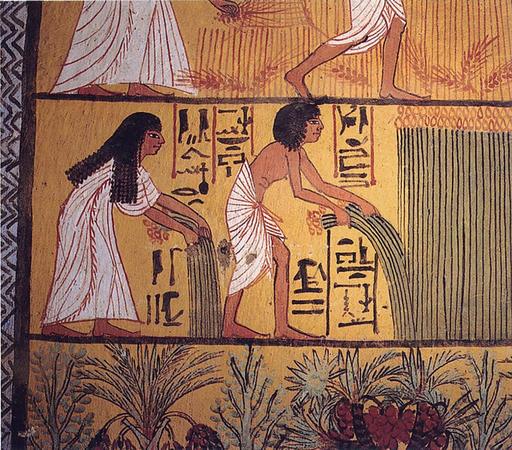
An analogy came to mind when reading it: if the cloud is feudalism, self hosted is sustenance farming.

Sustenance farming… Well, it sucks, it’s brutal, it’s awful. No wonder people want centralized infrastructure! Groceries aren’t a concept in sustenance farming, neither is something like “food sensitivities”—you just die or accept the feudalism because you have no other choice.

Some people happen to like sustenance farming and the idea of living fully off the grid! But they’re not normal. That’s fine, but it’s not workable for most people and carries an enormous amount of unstated privilege. For example: the person in the article casually buying a server and dropping a few thousand dollars on it, setting up several complicated systems in it, and “only” spending a few weeks of free time doing so? Privileged. Fun hobby if you like that, though!

The bad part, in my opinion, is that our only choices are currently techno fascism… Or the sustenance farming that killed almost everyone who attempted it. That’s not a great set of choices and it doesn’t have to be like that.

I liked the reference to community clouds in the ending of the article. It reminded me very much of Common Pool Resources that Elinor Ostrom talks about, or the emergent strategy of adrienne marie brown. I need to read more Ursula Franklin, but I suspect her writing is right at home here too.

I’d like to live in a world where communities uplift and support each other and are able to do so. I’m doing my best to help make that a reality, even if I’ve had to spend the last year or two putting my own mask on first :)


The Future is NOT Self-Hosted

In a world where corporations have detached buying from owning, one man attempts to do something radical: build his own cloud.

Drew Lyton
@hazelweakly subsistence farming in practice almost always involves a community of local farmers trading crops

@onekind Oh for sure. You often can’t actually survive without it. But most of the subsistence farming in western cultures quickly developed abusive power structures and turned into feudalism and/or slavery rather than sustainable communities.

That said: we know how to build those sustainable communities now, and we know what it looks like. All that’s left is to grow awareness and resolve around making it a reality. Of course, that’s the hard part, so I don’t want to diminish the monumental task that it will be; we’d be lucky as a species if this took less than a few centuries

@hazelweakly well, no, most English villages sustained commons arrangements for hundreds of years before the Enclosures Act that forced many to relocate to cities and seek industrial jobs.

you are right that 'patch-working' (Kibria's term) is the only way to make a living under conditions of precarity. it re-emerges again and again as a pattern in economic organisation (see Neuwirth).

when you talk about 'quickly develop[ing] abusive power structures' are you thinking of modern attempts at commoning, like hippie communes?

@onekind Most of my information on agricultural evolution that I was referring to here came from this series which I found fascinating. But I don’t have a deep enough background to comment super thoroughly. That said, I had in mind the time period roughly covered in this article series (and geographical location) which would predate the enclosures act by hundreds of years at a minimum

https://acoup.blog/2020/07/24/collections-bread-how-did-they-make-it-part-i-farmers/

Collections: Bread, How Did They Make It? Part I: Farmers!

Thanks to our helpful volunteer narrator, this entire post series is now also available in audio format! This essay will hopefully be the first post in a series (II, III, IV, A) covering some of th…

A Collection of Unmitigated Pedantry
@hazelweakly Over a thousand years. This blog is so great, thank you for sharing it with me! So I'm particularly interested in what the author has to say about resilient farming — the agricultural *and social* strategies that were used to manage risk. If you take that collective perspective and think about a village as a system you get a very different view of these arrangements than if you start with individual liberty in mind.