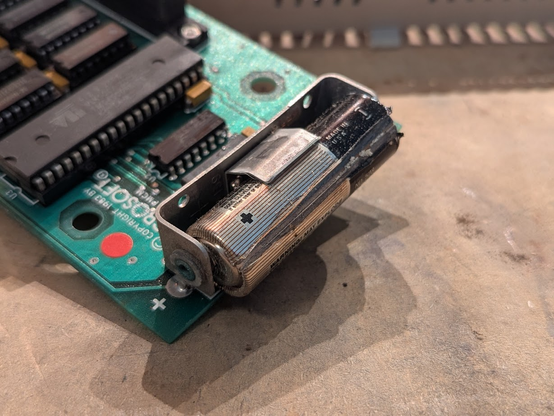
latest pickup: a very obscure Microsoft product -- the PCjr BOOSTER!
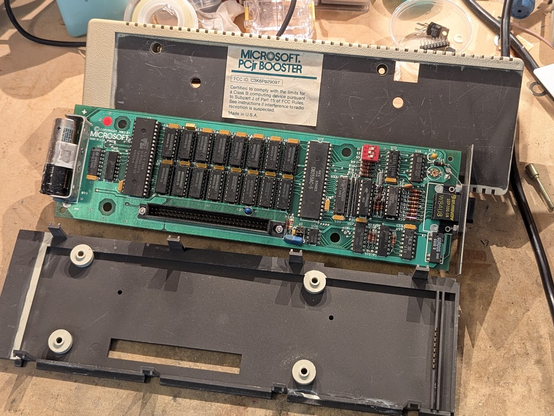
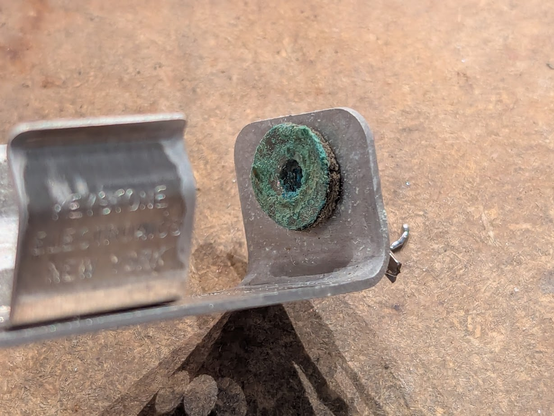
the battery is very nasty indeed. it needs to come out and i need to remove the corrosion on the holder.
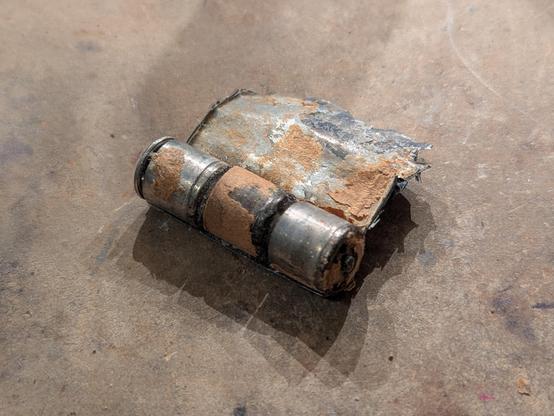
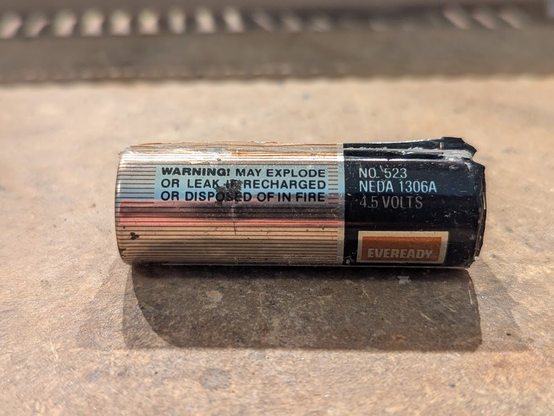
it's a NEDA 1306A cell! 4.5V.
green fuzz!
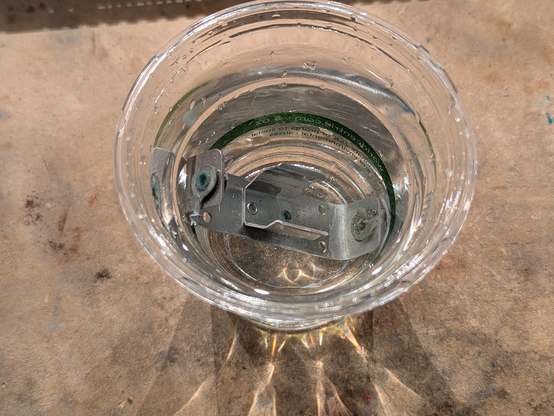
you can see the leaked alkaline chemical react with the vinegar here.
huh turns out the 1306 4.5V cell is just three 1.5V batteries in a trench coat
@tubetime Always has been.

@RueNahcMohr @tubetime ive Always wondered, how did it come down to this?

To the point it's cheaper to manufacture 3x1.5v cells in a specialized format, instead of just doing the whole 4.5v pack

@ozone89 @RueNahcMohr @tubetime Cell voltage is determined by chemistry. If you want a multiple of that voltage, you build a battery by putting a number of cells in series inside it. A 90V battery for vacuum tube radios, for example, had 60 AA cells inside.

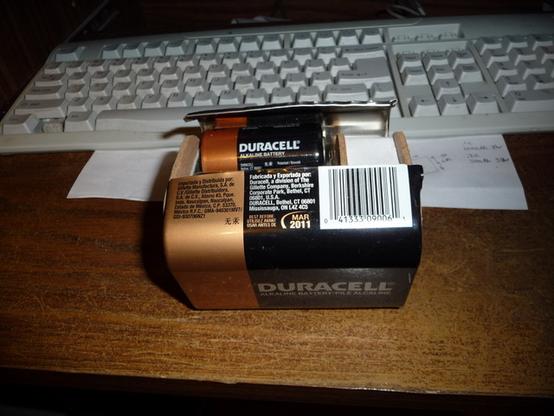
What I find funny is that Duracell didn't see a benefit to making C cells without the markings to make that lantern battery. I guess they sell few enough lantern batteries that it isn't cheaper to build different C cells for them.

@ozone89 @RueNahcMohr @tubetime If I remember correctly, 6V lantern batteries used to be made from 4x carbon-zinc F cells. Then when alkaline cells came around, they could get about the same capacity (and probably build them cheaper) using 4x C cells instead, and filling the empty space with cardboard. It's a shame the didn't fill the battery volume with alkaline F cells and provide a bunch more capacity.

Disclaimer: I might be misremembering the "F" cell designation.
@ozone89 @RueNahcMohr @tubetime I low-effort tried to find a good teardown image of one of the old tube radio batteries such as the ones used with radios like AN/PRC-6, AN/PRC-10, etc, because they're kind of mind-blowing the first time you see them. But I failed. The ones I've been inside were potted with tar and generally badly corroded, so they're not very photogenic in a teardown anyway. Just imagine 60x AA cells in series for 90V and 45V (via a center tap) plate voltages, a bunch of C or D cells in parallel for 1.5V filament voltage, and a few more small cells in series for a -4.5V bias voltage. All packed in tar, wrapped in green cardboard, and with a wacky multi-pin connector.
@NF6X @ozone89 @RueNahcMohr i've torn some of these apart so i know what you mean.
@tubetime @ozone89 @RueNahcMohr I find it interesting how 9V batteries were previously a stack of rectangular carbon-zinc cells packaged in wax, then turned into 6x metal cylindrical AAAA alkaline cells, and then turned back into a different variant of stacked construction with plastic packaging. I wonder if there were any other variants which I missed?
@NF6X @tubetime @ozone89 @RueNahcMohr the new “USB rechargeable” batteries are a Li-Po pouch and a buck or boost converter for the required voltage. I tore one open a while ago. They give exactly that voltage until the Li-Po undervoltage lockout kicks in and they deliver 0V. Definitely not suitable for things where you want a low-battery warning, like smoke detectors.