Protocols matter, even to users

Protocols actually are important to users, even if they don't know it, and never will.

If there is a platform vendor, a company that owns the protocol and has the exclusive right to move it forward (because they own all the users basically) then progress stops. There's only one way for the platform to work.

That's why all these systems are such careful emulations of Twitter. Because they all practically speaking did the same thing that Twitter did, they have APIs but no one but them can be in the driver's seat.

If this were the web, as open as it was in the 90s and early 00s, such a vacuum would never last, it would quickly be filled by individual developers and startups. For me this is not theoretical, I've actually worked in this kind of ecosystem three times in my career. And I've also tried to get things done in a platform controlled by a big company, such as Apple, Microsoft, Google, IBM, and many more. I probably have done more of each kind that anyone else alive! So believe me, the protocols do matter.

I could write a few books about that. πŸ˜‰

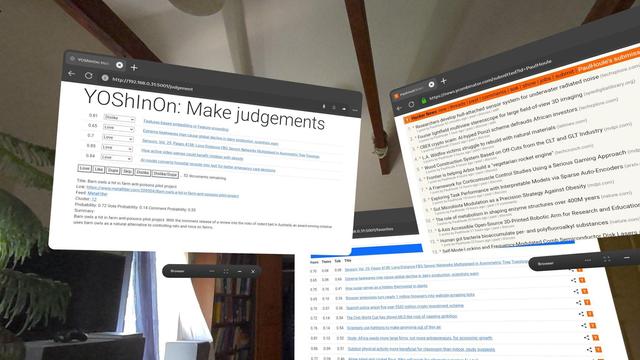
@scripting if that were the case why is XMPP exclusively for soldiers and police and why are failing RSS readers still failing with the same failing user interfaces that have been failing since 1999? I mean... there's this, but people would dismiss it out out of hand because it's an algorithmic feed and with those windows in the air looks like it came out of a bad 1990s movies
@scripting for one things feed items are not properly reified in RSS which breaks the principle of "see something once, why see it again?" which is necessary if you've got a high volume feed but people think you're a psycho killer if you say things like that -- RSS has two polling speeds, too fast and too slow and it's possible to have both at the same time

@UP8 @scripting

seriously this sounds interesting, but i don't really know what you're saying.

rss is what it is. the problem there was it was captured by a bunch of companies that wanted to own it, and there was no cooperation.

as you probably know i had a front row seat for that greed fest. it was awful.

i'm saying we'll never see anything new as long as you have dominant platform vendors. i'm not saying that you always get great stuff from the open web.

@UP8 @scripting

on the other hand i can still build applications with rss and no one can shut me down.

and podcasting worked out pretty well, and as you know that is rss too. ;-)

so it's a mixed bag, and you have to really want to work together, not just say you are.

@davew @scripting this person has an interesting case study of hobby web publisher at war with hobby RSS feed consumers where no rate of polling really makes everyone happy; that "poll once every 24 hour" solutions is glib considering that many say cacheing is the hardest problem in computer science: add state and a stateless system becomes orders of magnitude less reliable

https://rachelbythebay.com/w/2024/05/27/feed/

@davew @scripting what RSS has going for it is that so many sites and applications 𝑠𝑑𝑖𝑙𝑙 publish RSS feeds despite how many obituaries have been written for RSS! I really like https://superfeedr.com/ for head-end infrastructure, it is great to consume 100 feeds from arXiv, π‘‡β„Žπ‘’ πΊπ‘’π‘Žπ‘Ÿπ‘‘π‘–π‘Žπ‘› and such but too expensive to consume 2000 indy blogs -- don't want a Rube Golderbeg machine to slow down my ADSL or get in fight with Rachels
Superfeedr - RSS Feed API & jQuery RSS API | Push Service

Superfeedr : Real-time feed API - RSS and Atom over PubSubHubbub and Websub. Superfeedr pushes RSS feeds in real-time for both publishers and subscribers, with open protocols and APIs.

Superfeedr