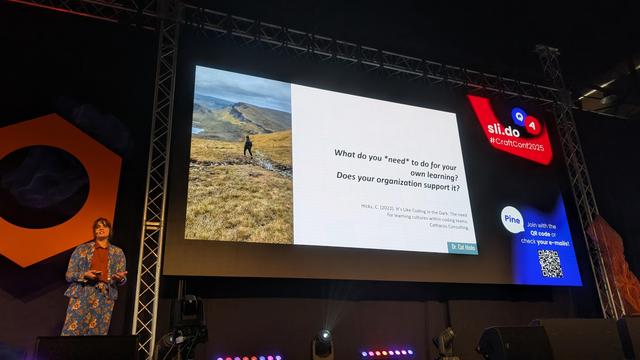
So excited for my girl @grimalkina's talk at craft! I'm in the front row and will be live posting it! πŸ’–

How are we doing at "being technical"? @grimalkina - looks at how technical teams work, finds it fascinating!

Questions for engineers:
- what does your work help people do?
- how many people a day does your people help?

50:50 split on how people feel about this.
@grimalkina
Huge split between managers and devs in perception of this from @grimalkina's large scale studies. Managers answer around 75% yes, devs around 25%.
How devs are feeling about things - ai threat, code review anxiety, are we seen as people? @grimalkina
Software devs are seen as braina in jars - @grimalkina
What a fascinating question! @grimalkina gathered people and watched them do their top of mind tasks. Triaging, solving bug, ramping up in codebase.
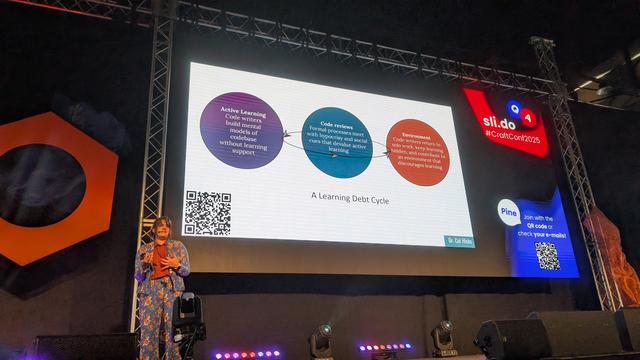
People had deep sophisticated strategies for learning, organizations did not give a shit. Sometimes even works against it. This creates a learning debt cycle. @grimalkina
In the most toxic versions people get a message they need to keep their heads down. Don't share the learnings. This has even bigger effects on the next people, especially juniors. @grimalkina
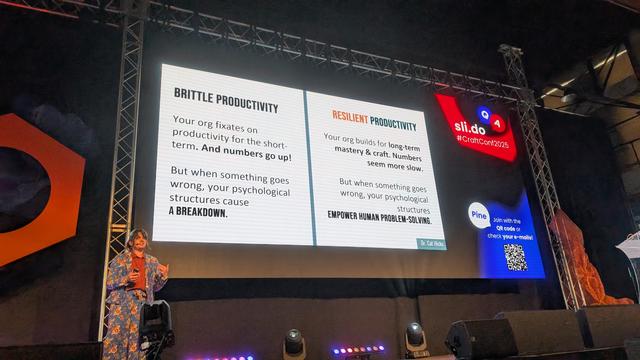
Brains in jars organization creates "brittle productivity". When things go wrong, it goes badly wrong. How can we get to resilient productivity? When something goes wrong, the psychological structures empower human problem solving.
@grimalkina
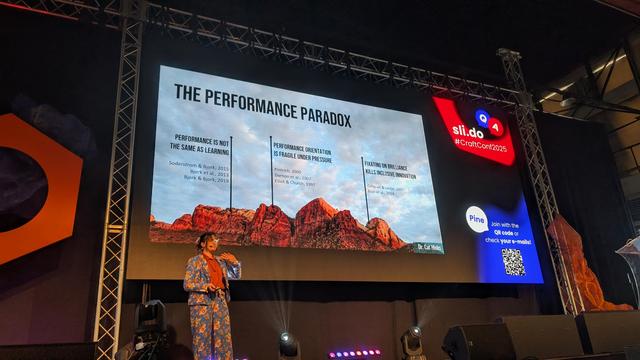
Why do we get pulled into short term performance cycles?
- short term performance is not long term learning. Think measuring test vs real world performance.
- performance orientation - being fixated on making grade - is fragile under pressure. It works for a while but eventually you start to learn challenging situations. Bad for innovation.
- if believe in power of brilliance / brilliance is required, fields kill innovation. Think need to weed out people who are not "born brilliant". Assholes weed out other people. Compassionate people weed out themselves.
@grimalkina
Cat's law! @grimalkina is not pulling punches.
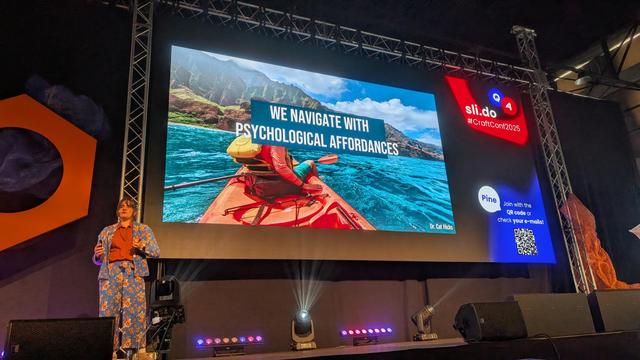
Psychological accordances - like a kayak allows you to explore the ocean, psychology also uses affordances. @grimalkina
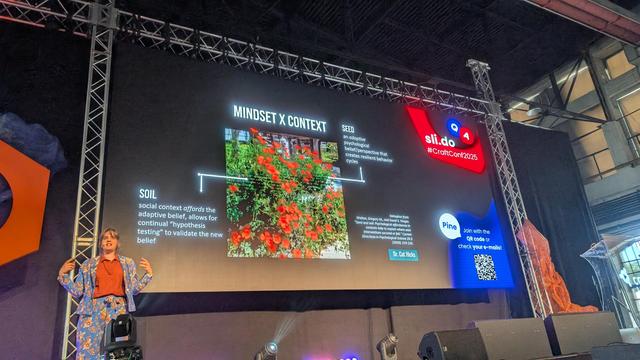
Seed is the belief - like wanting to overcome code review anxiety. Soil is the reinforcement, the environment. Does it enable? @grimalkina
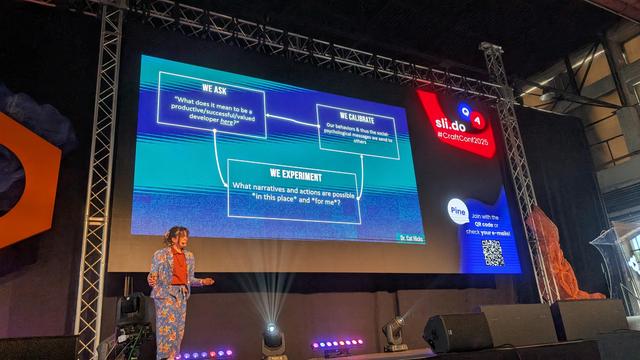
We are constantly conducting little tests and calibrating our expectations. Calibration creates the possibility of change. "We only have a culture because we are all changing it all the time" @grimalkina
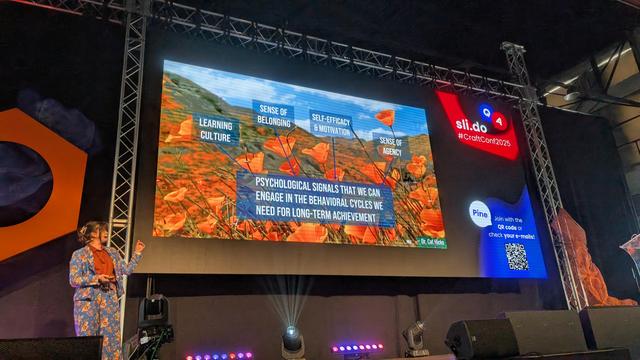
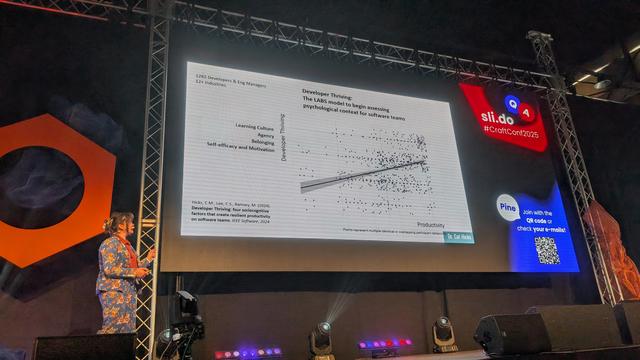
Massive lit review found these four affordances that help teams create long term achievement. This is developer thriving!
- learning culture
- sense of belonging
- self-efficacy and motivation
- sense of agency @grimalkina
Developer thriving is correlated with productivity! @grimalkina
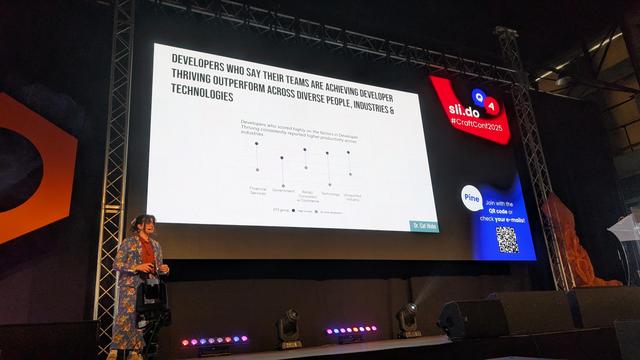
Findings hold across demographics and industries @grimalkina

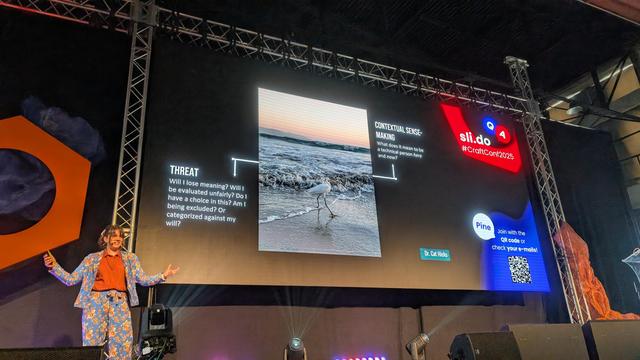
We are navigating a shifting environment. Threat happens as psychological beings in the world. Identity threat! Are you going to be categorized, is your work going to lose meaning, are you going to be evaluated in a way you don't agree with?

Contextual sense making, asking what it means to be a software engineer. AI skill threat is an example.
@grimalkina

High standards for the study. Thai is what good science looks like! @grimalkina
Found high rates of AI skill threat. @grimalkina
Asked questions to elicit if teams had a contest culture. Discouraging messages. Brains in jars teams. @grimalkina

Look at whether teams are in contest culture or thriving culture. Twice as likely to have AI skill threat in a contest culture. @grimalkina

Even people without imposter syndrome will have higher skill threat in a contest culture.

Being pro social doesn't mean you have to like going to parties πŸ˜‚ it's about your work helping people 90% of devs believe this @grimalkina
The stereotypes we have about devs have a cost and that cost is measurable. @grimalkina

A very persistent belief, @grimalkina "I think it's very boring and super wrong".

Also have this belief about math. Individual explanations are cognitively inexpensive. American culture is individualistic and it impacts the industry.

Meritocracy messages make people more biased. @grimalkina
Cycle times vary widely. Both for organizations and individuals. Even for individuals, past cycle time does not predict future cycle time. Amount of time coding does hold though! @grimalkina
Look less at individuals and more at organizational factors @grimalkina
πŸ˜‚ @grimalkina
Workshop shows meaningful change in code review anxiety and other psychological safety factors @grimalkina
Break the brains in jars model! Protect ecosystems of problem solving! @grimalkina
@cate @grimalkina Managers might be willing to try the 'shared jars' model, if it reduced overheads. :-/

@cate @grimalkina really appreciate the live posting and am excited to check this one out when the recording is up.

Thanks for doing this work and presenting it @grimalkina

@cate @grimalkina Thanks for sharing this Cate, and as always thank you Cat for your incredible work. And for presenting in that SUIT! omg I fcking love the colours and pattern. We need more awesome fits from presenters!!!
@jimgar @cate never let it be said I don't like to stand out 🀣 thank you!! @analog_ashley was the final decision maker for this conference outfit when I was packing πŸ₯°
@cate @grimalkina Thank you for the live coverage! This is all very interesting and I hope a video will be posted, too?