@ai6yr

🤦
Oh, FFS.

Finally applied some logic & took the time to compare/contrast the pole saw with the other saws.

WTF #MilwaukeeTool.

I've got pics & an explanation to share later, but I'm on a break from fruit tree pruning time right now.

Short version is excellent construction of flawed design.

(Yeah, I know you don't really care - but too bad. You can mute me this evening if I actually get around to ranting.)

@phpete Oooh, I would LOVE to know, this kind of stuff is great. Learning from bad designs for stuff is so illuminating. PLEASE do share!!! I actually do love this stuff and would enjoy it.

@ai6yr

As you wish!

Based on a bit of flabbergasted Google sleuthing, I've come up with the following TL;DR

Actually leaking oil (not drips, normal spray that's condensed, or other general messiness) from a...

Stihl, Husqvarna, echo, shindaiwa, or poulan pro - Problem.

Craftsman, poulan, Ryobi, or homelite - expected to varying degrees.

I will now explain.

@ai6yr

Some pertinent facts:

Most homeowner through farm and ranch (also called property owner depending on brand) bars are laminated sheets of metal.

The bar has a groove for the chain. That's obviously where we want the oil to stay.

Regardless of the mechanism, chainsaw oil reservoirs are positively pressured at least - on bigger saws a decent pump is used.

The chain is tightened on the bar by use of an adjustable stud which is in a hole of the bar.

@ai6yr
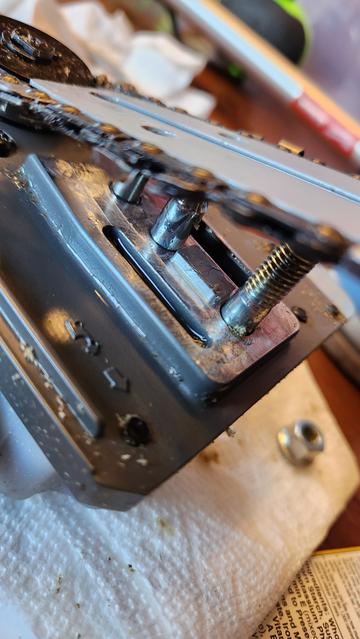
The 'trough' in the 1st attached photo is how the oil gets out of the reservoir.
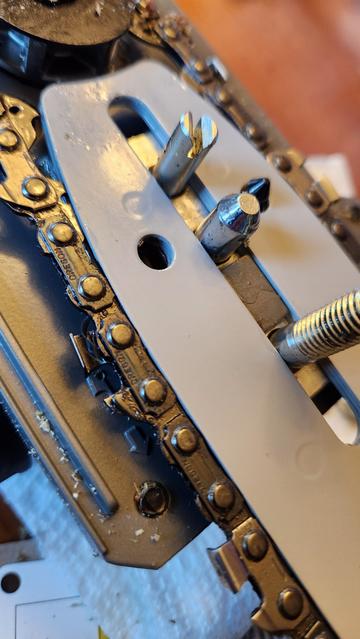
Photo 2 shows the bar & chain as they're oriented while in use.
The black stud in pic2 is the tension stud. The large hole opposite it is there so the bar can be flipped and used in both directions.

This is when I first became confused.

How does the oil get into the groove where the chain sits? Something looked wrong so I grabbed an old backup bar for the firewood saw...

@ai6yr

Where the oil hole on the new bar?

@phpete Uhhhhhhhhhhh