 Melatonin
Not my content, actually FACEBOOK, but I enjoyed it and I'm sharing anyway.
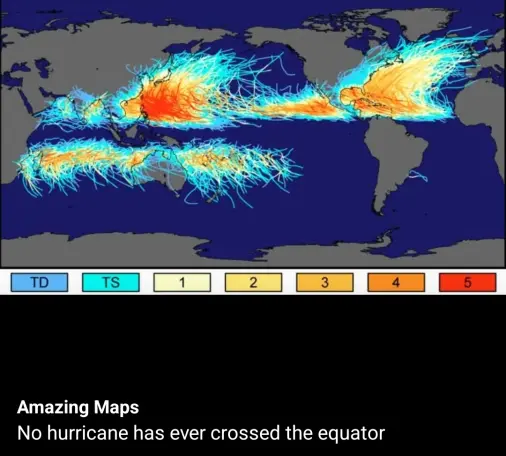
Not my content, actually FACEBOOK, but I enjoyed it and I'm sharing anyway.
Stole explanation from r/ELI5:
When you stand on the north pole how fast are you moving relative to the earth’s core?
Zero, you just spin around in place once every 24 hours.
When you stand on the equator how fast are you moving?
1000mph, you have to circumnavigate the earth in a day.
This difference doesn’t matter much when you throw a baseball, but it absolutely matters when you’re a storm the size of a country. > This disparity in relative speed rotates the storm since the equatorial side is moving faster than the polar side, and it provides the swirling structure of the hurricane.
But here’s the problem - storms in the north spin counter-clockwise and storms in the south spin clockwise.
That means to cross the equator you have to stop and reverse direction. That’s not happening, and hurricanes never track near the equator because neither the storm itself nor the prevailing winds that push it around can approach this reversal boundary.
 Inf_V
Inf_V Dave
Dave Peppycito