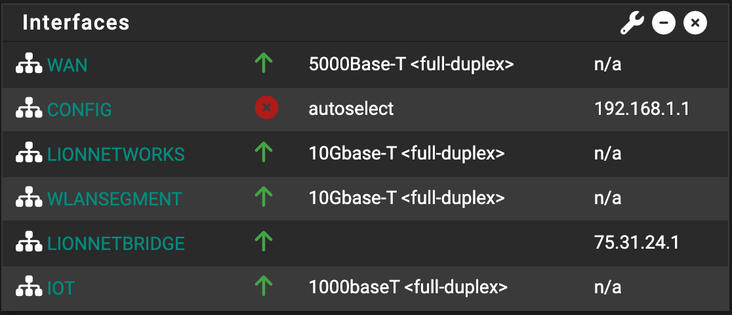
Firewall updates complete. No more SFP+ Transceiver wonking things up.

100% on HPE-Branded and Firmwared Intel X550-T2 NICs (there's still some HP/HPE synergies with firmware...like my HP RTX A4000 talks to the HPE ProLiant FW)

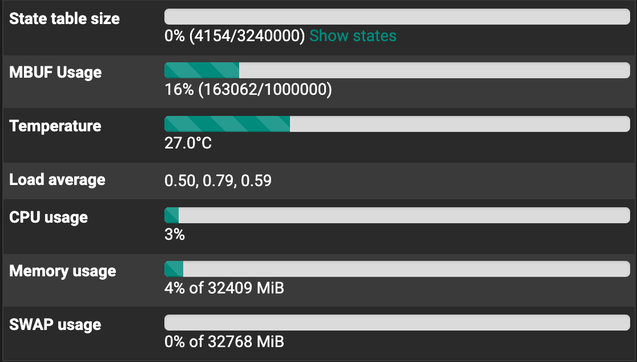
Doing speed tests to max out CPU usage, I'm getting 12% max with the power savings set to max efficiency and the system is idling super, super cool. The Atom CPU in the old Netgate 6100 used to run at ~65-75C.
@LeoBurr I have a long history of intel NICs being very picky about what SFPs they will except. One of the reasons I always spec Broadcom on server orders- getting intel to play nice became a crapshoot with our network team.

@bearpupzak That's the conundrum. FreeBSD supports Intel NICs better than just about anything else, save Chelsio, but the Chelsio NICs use a bit more power and run hot. Since this is a workstation-based Firewall (HP Z2, 32GB ECC, i5-14500, Micron 7450 Max SSD), I couldn't have NICs that needed tons of airflow.

For Linux, I usually would go Broadcom or Mellanox (Yuck, nVidia now...)

But for this system, I needed to stay as well-supported as possible. The weird thing is, the Netgate 6100 uses Intel NICs and it was okay with the FS NbaseT to SFP+ transceiver. The Intel X520, which is one of the best supported network devices under FreeBSD -and- the Intel X710 both had severe upspeed issues with that transceiver. I tried a 10GTek and it was better, but still not great.

Everything is rock solid now, but I'm 100% copper, so no chance for SFP+ module issues.

@LeoBurr @bearpupzak What's the power consumption looking like with the 10GBase-T stuff? Used to be fiber or DACs were much cooler than the twisted pair stuff.

@AMS @bearpupzak Idle power consumption is ~22-30w on the full system. Under full load, I'm seeing ~55-65w.

I've got the system running in power efficient mode.