 Ron Payne
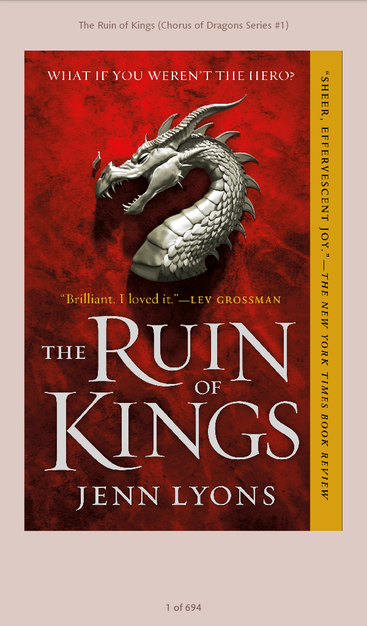
The Ruin of Kings by Jenn Lyons
⭐⭐⭐⭐
A really fun classic high fantasy chosen one story with vivid characters and tons of plot twists. Some people seem to have trouble with the atypical storytelling format, but I eat that stuff up for breakfast. I'm very much looking forward to reading the rest of this series.
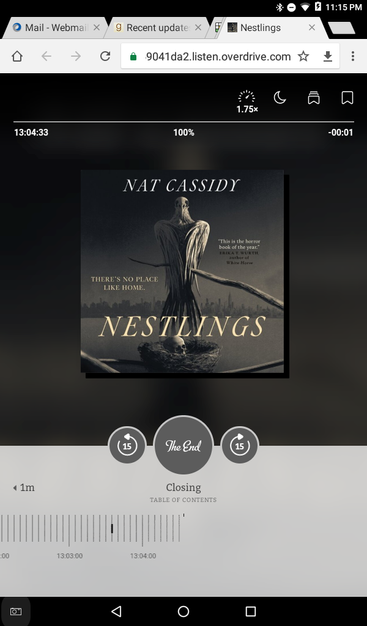
Nestlings by Nat Cassidy
⭐⭐⭐⭐
A horror about young parents who win a lottery to get an apartment in a historic NYC high-rise. It's Rosemary's Baby meets Salem's Lot with a bit of The Stepford Wives in there too. I almost DNF'd around 50% but a twist increased my enjoyment dramatically and it kept getting better from there. The disability of one of the main characters is very well handled, and It also does interesting things critically examining the place Jewish people have in horror fiction.
⭐⭐⭐⭐
A horror about young parents who win a lottery to get an apartment in a historic NYC high-rise. It's Rosemary's Baby meets Salem's Lot with a bit of The Stepford Wives in there too. I almost DNF'd around 50% but a twist increased my enjoyment dramatically and it kept getting better from there. The disability of one of the main characters is very well handled, and It also does interesting things critically examining the place Jewish people have in horror fiction.
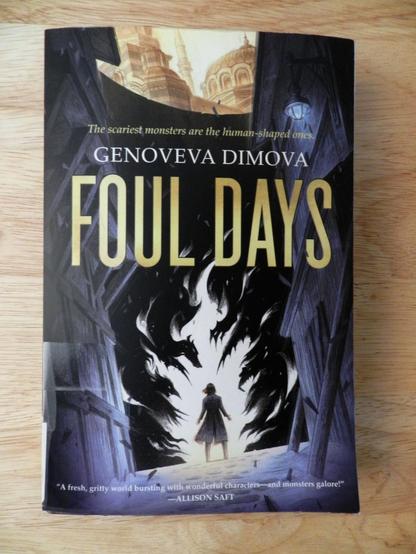
Foul Days by Genoveva Dimova
⭐⭐⭐
An Eastern European-inspired fantasy about a city walled off from the world leaving the people inside trapped with monsters. We follow a witch who has to avoid the personal attentions of nasty one. Though it was creative, and had strong character writing, I feel like this book would have benefitted from another round of harsh structural editing. There were world building inconsistencies regularly broke immersion for me, and it kind of stumbled to its conclusion.
⭐⭐⭐
An Eastern European-inspired fantasy about a city walled off from the world leaving the people inside trapped with monsters. We follow a witch who has to avoid the personal attentions of nasty one. Though it was creative, and had strong character writing, I feel like this book would have benefitted from another round of harsh structural editing. There were world building inconsistencies regularly broke immersion for me, and it kind of stumbled to its conclusion.
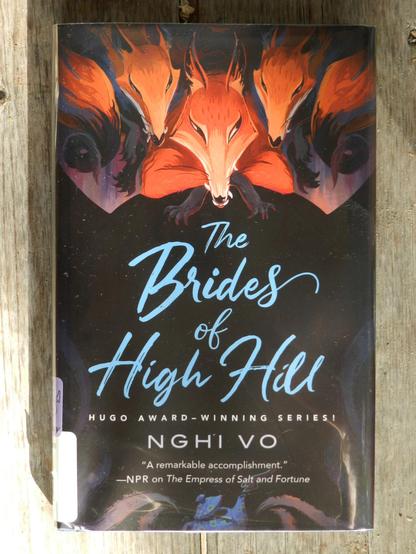
The Brides of High Hill by Nghi Vo
⭐⭐⭐⭐
Book 5 in the Singing Hills Cycle following Chih, an archivist Cleric traveling a fictional Asian-inspired fantasy land collecting stories. As with all the books in this series, the genre has shifted again, this time, towards the gothic, with Chih accompanying a bride to her wedding to an aging noble at a sprawling mansion complex. The mysteries play out very cleverly, leading to an excellent climax which places this as one of my favorites in the series.
⭐⭐⭐⭐
Book 5 in the Singing Hills Cycle following Chih, an archivist Cleric traveling a fictional Asian-inspired fantasy land collecting stories. As with all the books in this series, the genre has shifted again, this time, towards the gothic, with Chih accompanying a bride to her wedding to an aging noble at a sprawling mansion complex. The mysteries play out very cleverly, leading to an excellent climax which places this as one of my favorites in the series.
The Remains of the Day by Kazuo Ishiguro
⭐⭐⭐⭐
In 1950s England, a butler reminisces on his career while dealing with a staff crisis under his new employer. I once saw an interview with Ishiguro in which he said he had written the same book three times, this one, Never Let Me Go, and Klara and the Sun. I read them in reverse order, and yes, I can see the shared theme with them, which is bleak. This is the subtlest version of it, but the unique framing of each one makes them all worth reading.
⭐⭐⭐⭐
In 1950s England, a butler reminisces on his career while dealing with a staff crisis under his new employer. I once saw an interview with Ishiguro in which he said he had written the same book three times, this one, Never Let Me Go, and Klara and the Sun. I read them in reverse order, and yes, I can see the shared theme with them, which is bleak. This is the subtlest version of it, but the unique framing of each one makes them all worth reading.
Who’s Afraid of Gender? by Judith Butler
⭐⭐⭐⭐⭐
A book containing a series of essays, not about gender itself, but about the people who are currently pushing anti-gender/anti-trans narratives to boost their authoritarian agendas. It does a great job of showing how this moral panic is being both intentionally used, and perpetrated by useful idiots to undermine liberalism. If you are looking for more reasons to be mad at Russia, the religious right, and the Catholic Church this is a book for you.
⭐⭐⭐⭐⭐
A book containing a series of essays, not about gender itself, but about the people who are currently pushing anti-gender/anti-trans narratives to boost their authoritarian agendas. It does a great job of showing how this moral panic is being both intentionally used, and perpetrated by useful idiots to undermine liberalism. If you are looking for more reasons to be mad at Russia, the religious right, and the Catholic Church this is a book for you.
Your Utopia by Bora Chung
⭐⭐⭐⭐
The second short story collection I have read by this Korean author. My favorites were, The End of the Voyage about a zombie plague that escapes into space, the titular story, Your Utopia, about a self-driving car left on after humans abandon a planet, and A Song for Sleep about an elevator AI that unintentionally haunts a resident of its building. I like the way Chung often doesn't just do twists, but also puts an unexpected twist on the moral of her stories.
⭐⭐⭐⭐
The second short story collection I have read by this Korean author. My favorites were, The End of the Voyage about a zombie plague that escapes into space, the titular story, Your Utopia, about a self-driving car left on after humans abandon a planet, and A Song for Sleep about an elevator AI that unintentionally haunts a resident of its building. I like the way Chung often doesn't just do twists, but also puts an unexpected twist on the moral of her stories.

You Dreamed of Empires by Álvaro Enrigue
⭐⭐⭐⭐⭐
A historical fiction that very entertainingly portrays the meeting between Hernán Cortés and the Aztec Emperor Moctezuma in Tenochtitlan in 1519. The twisting political machinations of the vivid array of characters weave together into one of the best thematic conclusions I've ever read. Ultimately a book about how modern Mexican culture is the product of the conquerors and the conquered, it's funny and brutal, sometimes both at the same time.
⭐⭐⭐⭐⭐
A historical fiction that very entertainingly portrays the meeting between Hernán Cortés and the Aztec Emperor Moctezuma in Tenochtitlan in 1519. The twisting political machinations of the vivid array of characters weave together into one of the best thematic conclusions I've ever read. Ultimately a book about how modern Mexican culture is the product of the conquerors and the conquered, it's funny and brutal, sometimes both at the same time.
Authority by Jeff VanderMeer
⭐⭐⭐⭐⭐
The release of a fourth book in this series made me realize I had waited too long to read the second. In this book a new Director of the Southern Reach tries to systematically understand the events of the first book while getting undermined and misled by superiors and staff, being stymied by the unknowability of Area X, and revealing his own generational trauma along the way. A series as vivid as it is bewildering, I will not wait as long to read the next one.
⭐⭐⭐⭐⭐
The release of a fourth book in this series made me realize I had waited too long to read the second. In this book a new Director of the Southern Reach tries to systematically understand the events of the first book while getting undermined and misled by superiors and staff, being stymied by the unknowability of Area X, and revealing his own generational trauma along the way. A series as vivid as it is bewildering, I will not wait as long to read the next one.
A-Birding on a Bronco by Florence A. Merriam
⭐⭐⭐
The author, a late 19th century ornithologist known for her advocacy of using opera glasses to identify birds rather than shooting them, details observations made on trips to Southern California in the late 1800s. As the title suggests, she did most of her birding from the backs of horses, and though the prose was rather florid, and knowing which bird species she was writing about was often a challenge, I found this to be a charming read overall.
⭐⭐⭐
The author, a late 19th century ornithologist known for her advocacy of using opera glasses to identify birds rather than shooting them, details observations made on trips to Southern California in the late 1800s. As the title suggests, she did most of her birding from the backs of horses, and though the prose was rather florid, and knowing which bird species she was writing about was often a challenge, I found this to be a charming read overall.
Some People Need Killing by Patricia Evangelista
⭐⭐⭐⭐⭐
Fun fact: The Philippines constitution is modeled on the U.S.' and by reading Philippine history you can see real world examples of some very bad outcomes of that model. This book focuses on the most recent version of this during the presidency of Rodrigo Duterte and his dog-whistle campaign which led to the extra judicial killings of thousands of people by police and vigilantes done with his tacit approval. A stark warning for Americans.
⭐⭐⭐⭐⭐
Fun fact: The Philippines constitution is modeled on the U.S.' and by reading Philippine history you can see real world examples of some very bad outcomes of that model. This book focuses on the most recent version of this during the presidency of Rodrigo Duterte and his dog-whistle campaign which led to the extra judicial killings of thousands of people by police and vigilantes done with his tacit approval. A stark warning for Americans.
Some Desperate Glory by Emily Tesh
⭐⭐⭐⭐
This year's Hugo Award winner for best novel. A teen girl living on a space station in a militaristic society is trained as a warrior to fight the aliens who destroyed the Earth. But when she is assigned to a breeding program instead of combat, she learns that history is not exactly what she's been taught. I enjoyed this despite it using one of my least favorite story tropes (it's a spoiler to say which one). Not my choice for best novel, but a worthy one.
⭐⭐⭐⭐
This year's Hugo Award winner for best novel. A teen girl living on a space station in a militaristic society is trained as a warrior to fight the aliens who destroyed the Earth. But when she is assigned to a breeding program instead of combat, she learns that history is not exactly what she's been taught. I enjoyed this despite it using one of my least favorite story tropes (it's a spoiler to say which one). Not my choice for best novel, but a worthy one.
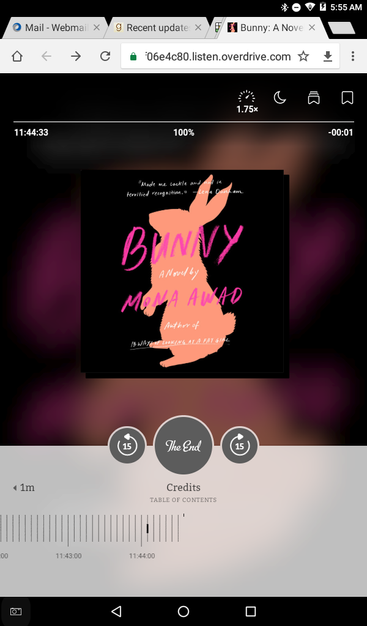
Bunny by Mona Awad
⭐⭐⭐⭐
Literary horror about a young woman with a scholarship to a MFA writing program at an elite New England school who can't stand her writing cohort of privileged white girls who call each other "Bunny." It's thick with metaphor but deftly written enough not to be saccharine about it, straddling the real and fantastic so well that it leaves you wondering what was real and what was delusion. A really well done look at the dangers of living too much in your own head.
⭐⭐⭐⭐
Literary horror about a young woman with a scholarship to a MFA writing program at an elite New England school who can't stand her writing cohort of privileged white girls who call each other "Bunny." It's thick with metaphor but deftly written enough not to be saccharine about it, straddling the real and fantastic so well that it leaves you wondering what was real and what was delusion. A really well done look at the dangers of living too much in your own head.
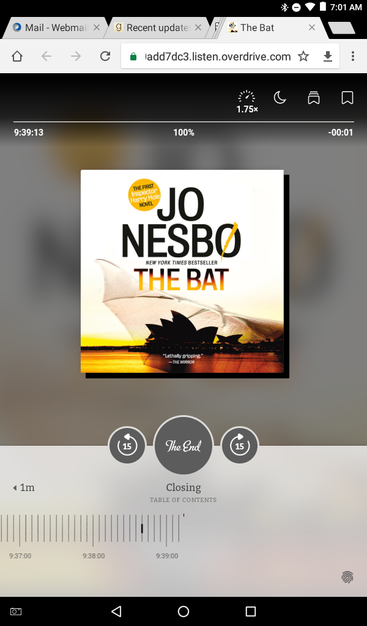
The Bat by Jo Nesbø
⭐⭐⭐
If it weren't for some good character work this book would have been a complete trash example of 90s serial killer fiction. It's like Nesbø watched Silence of the Lambs, Priscilla Queen of the Desert, and Leaving Las Vegas and decided to mash them all up into one novel. The mystery was preposterous and artificially extended by a character withholding information for preposterous reasons, and it all ended with a super-preposterous demise for the villain.
⭐⭐⭐
If it weren't for some good character work this book would have been a complete trash example of 90s serial killer fiction. It's like Nesbø watched Silence of the Lambs, Priscilla Queen of the Desert, and Leaving Las Vegas and decided to mash them all up into one novel. The mystery was preposterous and artificially extended by a character withholding information for preposterous reasons, and it all ended with a super-preposterous demise for the villain.
The Long Dark Tea-Time of the Soul by Douglas Adams
⭐⭐⭐⭐
Dirk Gently is a colossal jerk but somehow that doesn't stop this book from being a treat. Adams' hilarious turns of phrase alone are worth reading for. The plot is convoluted and I'm not sure it entirely makes sense in the end, but it was definitely a good time and certainly more compelling than the 300 page setup for a punchline about a Coolridge poem that the first Dirk Gently book was. I only regret that I have no more Adams to read.
⭐⭐⭐⭐
Dirk Gently is a colossal jerk but somehow that doesn't stop this book from being a treat. Adams' hilarious turns of phrase alone are worth reading for. The plot is convoluted and I'm not sure it entirely makes sense in the end, but it was definitely a good time and certainly more compelling than the 300 page setup for a punchline about a Coolridge poem that the first Dirk Gently book was. I only regret that I have no more Adams to read.
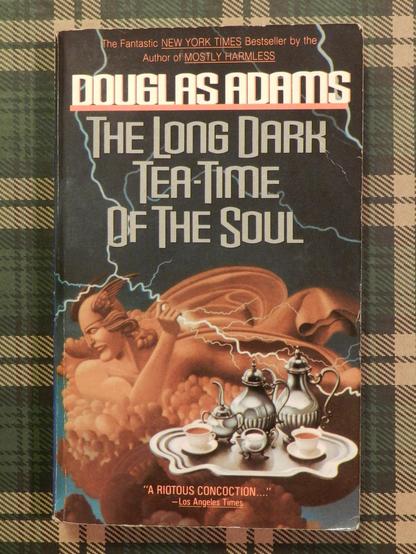
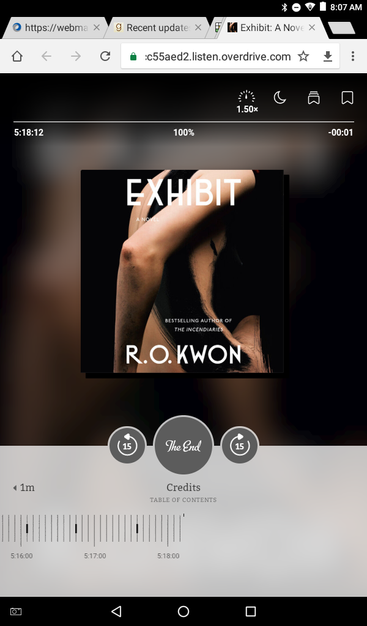
Exhibit by R.O. Kwon
⭐⭐
Here is a list of things that don't make mundane infidelity story interesting to me:
Asian representation
Lesbians
Artists
Fairy tale framing stories
This book, about a married photographer who meets a ballerina at party who becomes both her muse and lover, has all those things, and unsurprisingly they failed to make this story interesting. Not because any of those things aren't interesting, but because I find infidelity stories to be inherently mundane.
Phoenix Extravagant by Yoon Ha Lee
⭐⭐⭐⭐
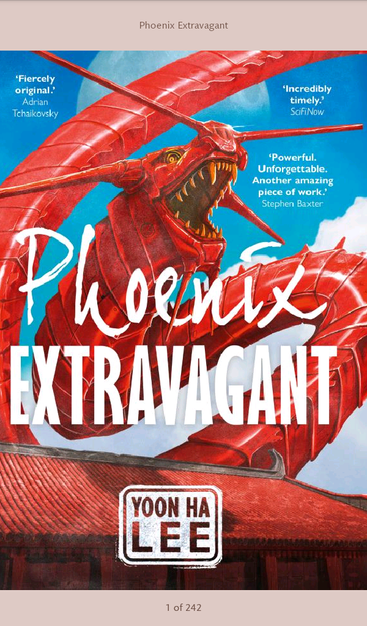
This book is a interesting mashup of historical Japanese-occupied Korea, and Asian fairytale-like mythology. We follow Jebi, and artist, and general walking disaster, who is so focused on their art that they are unaware of the harm they are causing by collaborating with their country's occupiers. Watching them learn, and work this out is makes for a very satisfying story arc. There's also a cool mechanical dragon and a love story. A very entertaining read.
⭐⭐⭐⭐
This book is a interesting mashup of historical Japanese-occupied Korea, and Asian fairytale-like mythology. We follow Jebi, and artist, and general walking disaster, who is so focused on their art that they are unaware of the harm they are causing by collaborating with their country's occupiers. Watching them learn, and work this out is makes for a very satisfying story arc. There's also a cool mechanical dragon and a love story. A very entertaining read.
Mirrored Heavens by Rebecca Roanhorse
⭐⭐⭐
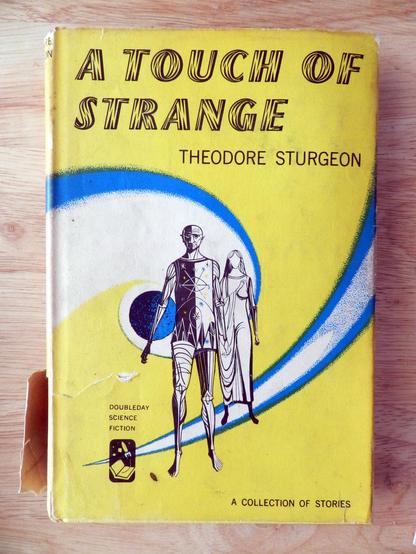
The final book in the Between Earth and Sky trilogy. Unfortunately the great Mesoamerican inspired world, creative magic, and interesting characters were wasted here in a predictable, pat conclusion. I also struggled to find a cohesive theme for the series—not that every series needs to have one—but there were so many things that could have been highlighted here, and in the end, just weren't. Not a complete waste of time, just kind of disappointing.
⭐⭐⭐
The final book in the Between Earth and Sky trilogy. Unfortunately the great Mesoamerican inspired world, creative magic, and interesting characters were wasted here in a predictable, pat conclusion. I also struggled to find a cohesive theme for the series—not that every series needs to have one—but there were so many things that could have been highlighted here, and in the end, just weren't. Not a complete waste of time, just kind of disappointing.
A Touch of Strange by Theodore Sturgeon
⭐⭐⭐⭐
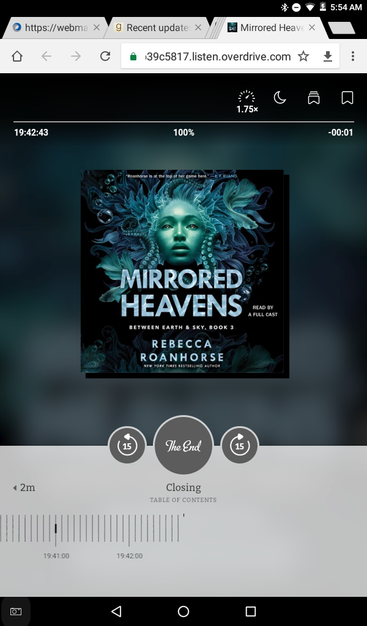
A collection of short stories written between 1953 and 1958, mostly science fiction, with a bit of fantasy, and one straight-up crime story. A lot of these stories buck the great man/great technology narratives popular at the time, which is interesting, and they seem to be groping for a modern progressive view on a lot of issues that they can't seem to reach from the perspective of the era they were written in.
⭐⭐⭐⭐
A collection of short stories written between 1953 and 1958, mostly science fiction, with a bit of fantasy, and one straight-up crime story. A lot of these stories buck the great man/great technology narratives popular at the time, which is interesting, and they seem to be groping for a modern progressive view on a lot of issues that they can't seem to reach from the perspective of the era they were written in.
The Seventh Veil of Salome by Silvia Moreno-Garcia
⭐⭐⭐⭐
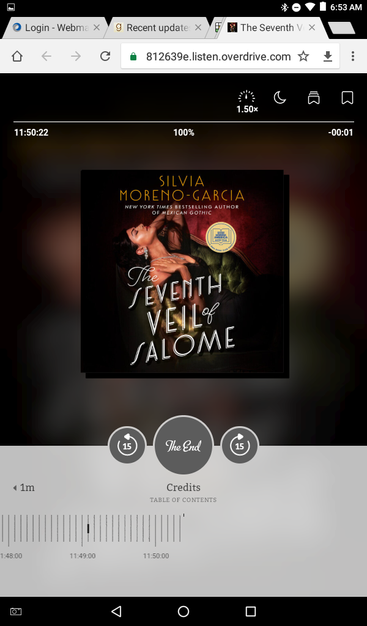
A multi-layered historical fiction telling the story of the making of a 1950s biblical epic film about Salome. We follow multiple characters in the orbit of the movie, including the female lead, a Mexican debut actress, a jealous bit player, a scriptwriter, and a musician. It's a superb depiction of the racism, sexism, and homophobia rampant in that era of Hollywood, and how it's artists could be raised to stardom and discarded on a whim.
⭐⭐⭐⭐
A multi-layered historical fiction telling the story of the making of a 1950s biblical epic film about Salome. We follow multiple characters in the orbit of the movie, including the female lead, a Mexican debut actress, a jealous bit player, a scriptwriter, and a musician. It's a superb depiction of the racism, sexism, and homophobia rampant in that era of Hollywood, and how it's artists could be raised to stardom and discarded on a whim.
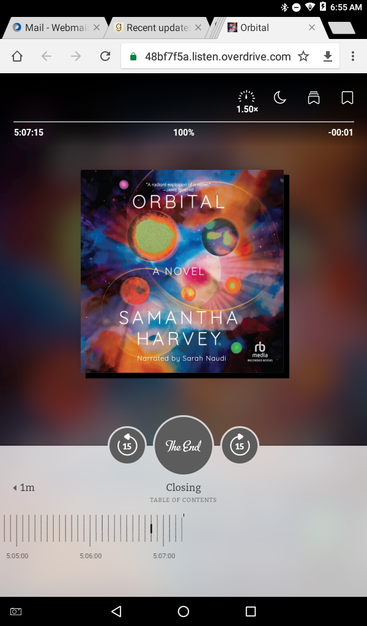
Orbital by Samantha Harvey
⭐⭐⭐
A barely science fictional story of a very near future International Space Station crew as they observe from space a super typhoon and the launch of a mission to the moon. Initially I found the prose and introspection of the characters beautiful, but it's repetition as we switched from one POV to the next reduced their impact, and any texture that might have been gained from having an international cast was flattened by having the same narrator voice throughout.
⭐⭐⭐
A barely science fictional story of a very near future International Space Station crew as they observe from space a super typhoon and the launch of a mission to the moon. Initially I found the prose and introspection of the characters beautiful, but it's repetition as we switched from one POV to the next reduced their impact, and any texture that might have been gained from having an international cast was flattened by having the same narrator voice throughout.
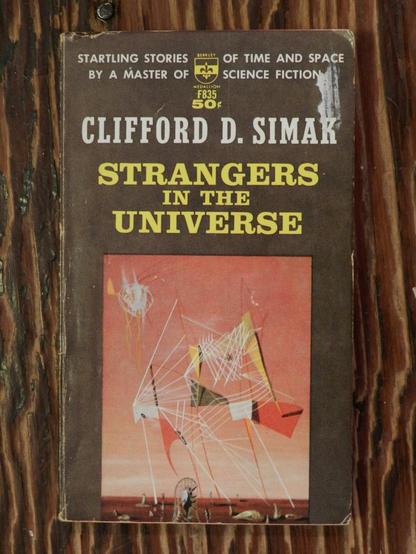
Strangers in the Universe by Clifford D. Simak
⭐⭐⭐⭐
A collection of science fiction short stories written from 1950-1956. Most of these deal with space travel and far future societies and the unforeseen consequences of those things on humanity. None of these are particularly famous stories, but they are really good examples of this era of SFF writing. Simak is well worth your time.
⭐⭐⭐⭐
A collection of science fiction short stories written from 1950-1956. Most of these deal with space travel and far future societies and the unforeseen consequences of those things on humanity. None of these are particularly famous stories, but they are really good examples of this era of SFF writing. Simak is well worth your time.
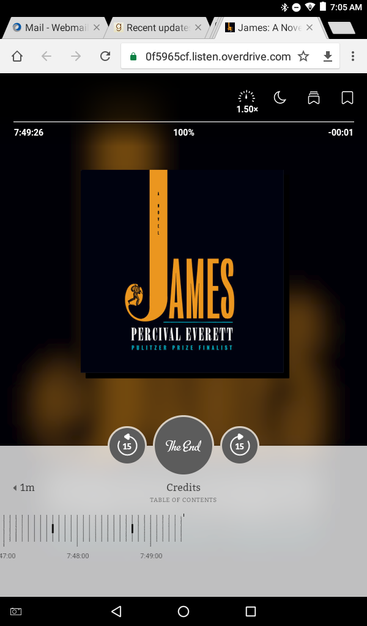
James by Percival Everett
⭐⭐⭐⭐⭐
My third Everett novel this year and every single one has been amazing. This is a retelling of The Adventures of Huckleberry Finn by Mark Twain told from the perspective of Huck's runaway slave companion. From his point of view the dangers are much more stark, and his motivations more complex. Everett pulls no punches, going between the satirical and the horrific often in the same paragraph. The best fiction about slavery I've read since Octavia Butler's Kindred.
⭐⭐⭐⭐⭐
My third Everett novel this year and every single one has been amazing. This is a retelling of The Adventures of Huckleberry Finn by Mark Twain told from the perspective of Huck's runaway slave companion. From his point of view the dangers are much more stark, and his motivations more complex. Everett pulls no punches, going between the satirical and the horrific often in the same paragraph. The best fiction about slavery I've read since Octavia Butler's Kindred.
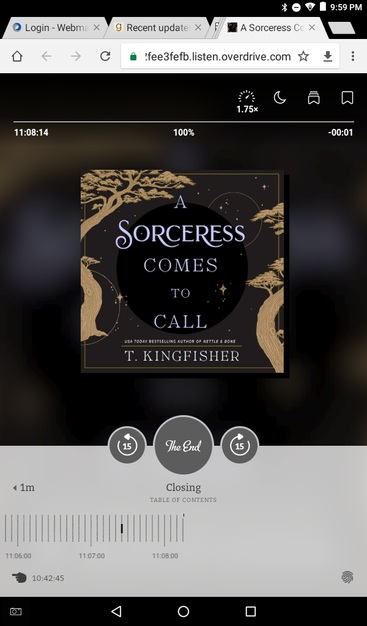
A Sorceress Comes to Call by T. Kingfisher
⭐⭐⭐⭐
Another very entertaining T. Kingfisher book. This one takes two of her common character types, a put-upon young girl, and a cantankerous older woman, and makes them co-protagonists, trying to escape the plans of an evil sorceress, who happens to be the mother of the former and potential sister in law of the latter. Supposedly this is a Goose Girl fairy tale retelling, but it's really more lightly inspired. But whatever it is, it all really worked.
⭐⭐⭐⭐
Another very entertaining T. Kingfisher book. This one takes two of her common character types, a put-upon young girl, and a cantankerous older woman, and makes them co-protagonists, trying to escape the plans of an evil sorceress, who happens to be the mother of the former and potential sister in law of the latter. Supposedly this is a Goose Girl fairy tale retelling, but it's really more lightly inspired. But whatever it is, it all really worked.
The Changeling by Victor LaValle
⭐⭐⭐⭐
How to describe this book? A boy who's family was abandoned by his father grows up to become a bookseller, finds love, and resolves to be a better father to his child than his was. All this is threaded through with weirdness, that expands into out and out horror. But like all the LaValle books I've read, this one sets up what seem like familiar narratives, only to subvert them in unexpected ways. In the end, a book about generational trauma, and a good one.
⭐⭐⭐⭐
How to describe this book? A boy who's family was abandoned by his father grows up to become a bookseller, finds love, and resolves to be a better father to his child than his was. All this is threaded through with weirdness, that expands into out and out horror. But like all the LaValle books I've read, this one sets up what seem like familiar narratives, only to subvert them in unexpected ways. In the end, a book about generational trauma, and a good one.
The Friday Afternoon Club by Griffin Dunne
⭐⭐⭐⭐
A memoir of Griffin Dunne's life growing up in Hollywood with film industry insider parents, his family life, and his own acting/producing career. Written in an introspective, humorous style, a lot of the best parts of this book are about the people and things that happened around him—this is worth reading just to hear his perspective of his great friendship with Carrier Fisher alone—but the story of his film career is genuinely interesting too.
⭐⭐⭐⭐
A memoir of Griffin Dunne's life growing up in Hollywood with film industry insider parents, his family life, and his own acting/producing career. Written in an introspective, humorous style, a lot of the best parts of this book are about the people and things that happened around him—this is worth reading just to hear his perspective of his great friendship with Carrier Fisher alone—but the story of his film career is genuinely interesting too.
Autocracy, Inc. by Anne Applebaum
⭐⭐⭐⭐⭐
A book that shows the way authoritarian regimes around the world, including Russia, China, Venezuela, etc., despite their differing internal political ideologies, cooperate in financial, material, and propaganda networks to undermine and manipulate the greatest threat to their existence, liberal democracy. Sadly, the author's solution to breaking their power is to end financial corruption in the West, which seems unlikely now given recent election results.
⭐⭐⭐⭐⭐
A book that shows the way authoritarian regimes around the world, including Russia, China, Venezuela, etc., despite their differing internal political ideologies, cooperate in financial, material, and propaganda networks to undermine and manipulate the greatest threat to their existence, liberal democracy. Sadly, the author's solution to breaking their power is to end financial corruption in the West, which seems unlikely now given recent election results.
Inglorious Empire by Shashi Tharoor
⭐⭐⭐⭐⭐
A history of the British colonization of India and its aftermath focused on breaking down point by point why people who say colonialism was ultimately good for India are incredibly wrong. It’s a view I was already aligned with, but I was still shocked by the depth of the depravity of British rule as they put extraction of wealth from the subcontinent above everything else, leaving scars that are still felt there today.
⭐⭐⭐⭐⭐
A history of the British colonization of India and its aftermath focused on breaking down point by point why people who say colonialism was ultimately good for India are incredibly wrong. It’s a view I was already aligned with, but I was still shocked by the depth of the depravity of British rule as they put extraction of wealth from the subcontinent above everything else, leaving scars that are still felt there today.
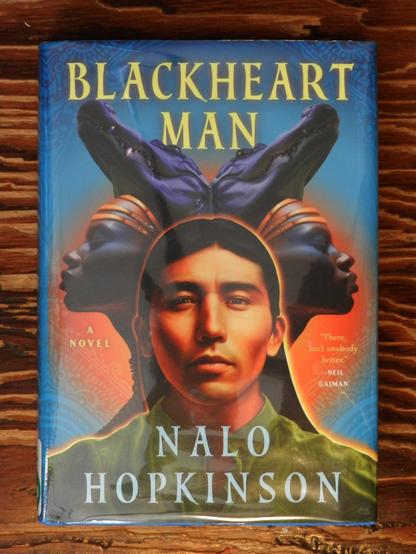
Blackheart Man by Nalo Hopkinson
⭐⭐⭐⭐
A Caribbean-inspired epic fantasy about a scholar who's individualistic, hero complex, causes more trouble than good while he tries save his island nation from a colonial threat. Sort of an anti-Hero's Journey (not to be confused with an antihero's journey, this ain't grimdark) in which the protagonist finds a better way to help in cooperation with his people. A little confusing at first but I found this to be a skillfully crafted novel with a rich setting.
⭐⭐⭐⭐
A Caribbean-inspired epic fantasy about a scholar who's individualistic, hero complex, causes more trouble than good while he tries save his island nation from a colonial threat. Sort of an anti-Hero's Journey (not to be confused with an antihero's journey, this ain't grimdark) in which the protagonist finds a better way to help in cooperation with his people. A little confusing at first but I found this to be a skillfully crafted novel with a rich setting.
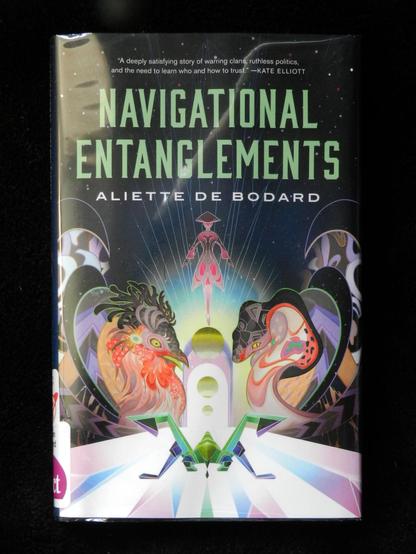
Navigational Entanglements by Aliette de Bodard
⭐⭐⭐
An Asian magical martials arts inspired space opera novella. We follow two young navigators from competing factions who have to learn to work together in a highly charged political environment as they track down a monster escaped from this world's faster than light system. The relationship between the autistic-coded characters was the best part, but I found the action sequences and complex world hard to parse so it didn't really work for me.
⭐⭐⭐
An Asian magical martials arts inspired space opera novella. We follow two young navigators from competing factions who have to learn to work together in a highly charged political environment as they track down a monster escaped from this world's faster than light system. The relationship between the autistic-coded characters was the best part, but I found the action sequences and complex world hard to parse so it didn't really work for me.
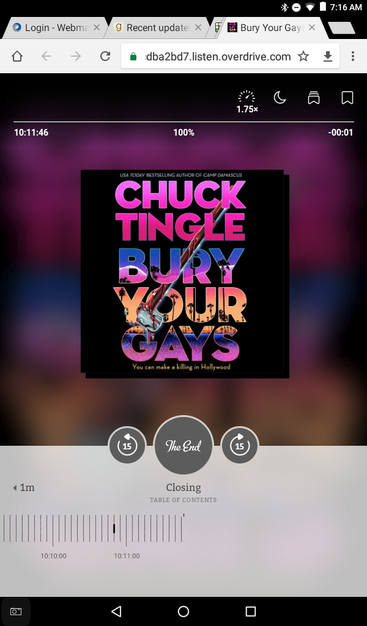
Bury Your Gays by Chuck Tingle
⭐⭐⭐⭐
A Hollywood screenwriter is told to kill off gay characters from his long running series, and when he resists, horror monsters from his filmmaking past start appearing and threatening him. I was blown away by how different the narrative voice in this was from Tingle's previous horror, Camp Damascus. This is a really fun, graphic, horror which smartly examines how queer creators and characters are treated by a highly profit motivated film industry.
⭐⭐⭐⭐
A Hollywood screenwriter is told to kill off gay characters from his long running series, and when he resists, horror monsters from his filmmaking past start appearing and threatening him. I was blown away by how different the narrative voice in this was from Tingle's previous horror, Camp Damascus. This is a really fun, graphic, horror which smartly examines how queer creators and characters are treated by a highly profit motivated film industry.
The Stainless Steel Rat by Harry Harrison
⭐⭐⭐⭐
The start of a classic adventure space opera series originally published in 1961. In a universe where highly sophisticated policing renders crime almost impossible, it takes an exceptional thief to get away with it. The titular character is one such thief until he gets caught, and learns his punishment is to work catching others like him. A really fun read, especially when he's running grifts, and only occasionally marred by period gender politics.
⭐⭐⭐⭐
The start of a classic adventure space opera series originally published in 1961. In a universe where highly sophisticated policing renders crime almost impossible, it takes an exceptional thief to get away with it. The titular character is one such thief until he gets caught, and learns his punishment is to work catching others like him. A really fun read, especially when he's running grifts, and only occasionally marred by period gender politics.
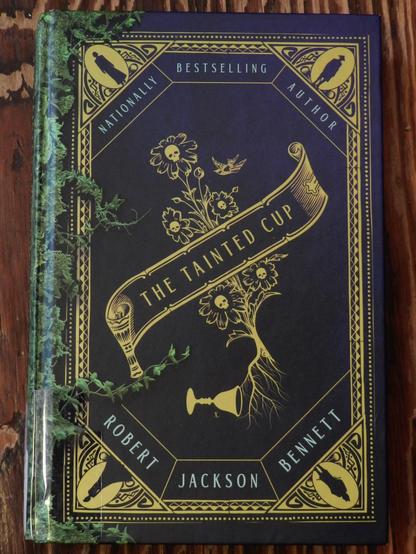
Dreams of Steel by Glen Cook
⭐⭐⭐⭐
Book five or six of The Black Company dark fantasy series depending on your accounting. Being this deep in the series it's hard to talk about much without spoiling previous books. Suffice to say that lots of military campaigning, dark magic, and remarkably soap opera like twists. The setting is inspired by South Asian cultures, and I'm not sure Cook handles that particularly delicately, but it's no more flattened than his previous rendering of Western Cultures.
⭐⭐⭐⭐
Book five or six of The Black Company dark fantasy series depending on your accounting. Being this deep in the series it's hard to talk about much without spoiling previous books. Suffice to say that lots of military campaigning, dark magic, and remarkably soap opera like twists. The setting is inspired by South Asian cultures, and I'm not sure Cook handles that particularly delicately, but it's no more flattened than his previous rendering of Western Cultures.
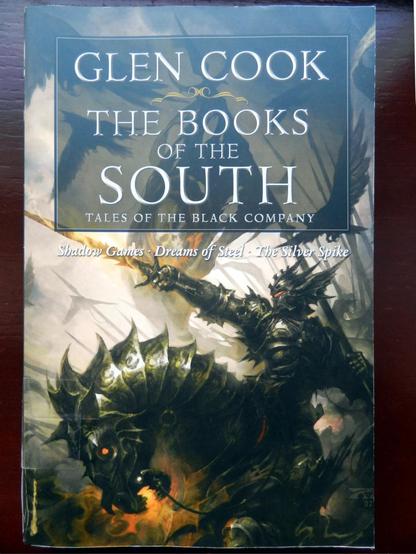
The Book of Love by Kelly Link
⭐⭐⭐
Or as I like to call it, "The Book of Long." A group of inauthentic-feeling teenagers have introspective ramblings while muddling their way through a supernatural crisis. My main problem with this is that all the character's interiority read the same. I also didn't really care for the ending since the main characters agency for finding themselves an acceptable conclusion was largely overrun by the circumstance of their predicament. But overall it was fine.
⭐⭐⭐
Or as I like to call it, "The Book of Long." A group of inauthentic-feeling teenagers have introspective ramblings while muddling their way through a supernatural crisis. My main problem with this is that all the character's interiority read the same. I also didn't really care for the ending since the main characters agency for finding themselves an acceptable conclusion was largely overrun by the circumstance of their predicament. But overall it was fine.
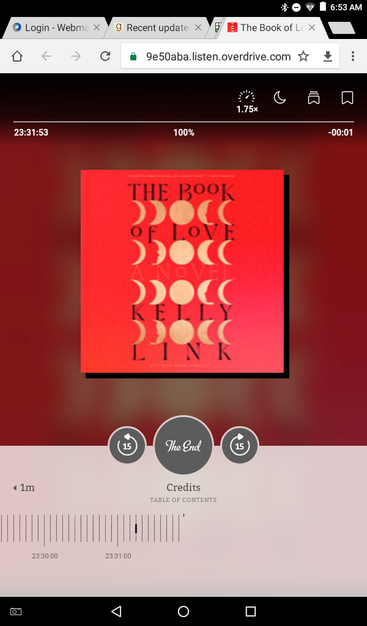
The City in Glass by Nghi Vo
⭐⭐⭐⭐
A very short fantasy novel about a demon who is happily participating in and guiding the development of a city over centuries when a group of angels destroy it. Before they leave, she attacks one with a part of herself causing him to be cast out, and tied to her. What follows is a fascinating character interaction as the demon begins to rebuild and the angel tries to appease her enough to be freed. And when I tell you that you won't guess the ending, believe me.
⭐⭐⭐⭐
A very short fantasy novel about a demon who is happily participating in and guiding the development of a city over centuries when a group of angels destroy it. Before they leave, she attacks one with a part of herself causing him to be cast out, and tied to her. What follows is a fascinating character interaction as the demon begins to rebuild and the angel tries to appease her enough to be freed. And when I tell you that you won't guess the ending, believe me.
Cahokia Jazz by Francis Spufford
⭐⭐⭐⭐
A historical fiction that imagines a world where the Mound People of the Midwest weren't wiped out by disease and held onto their land into the 1920s when they are part of the U.S. Written as a noir detective story, we follow a half native/black policeman who is gilding through life without being part of either community. The book hits all the noir beats extremely well while using the mystery to reveal amazing worldbuilding and resistance to colonialism.
⭐⭐⭐⭐
A historical fiction that imagines a world where the Mound People of the Midwest weren't wiped out by disease and held onto their land into the 1920s when they are part of the U.S. Written as a noir detective story, we follow a half native/black policeman who is gilding through life without being part of either community. The book hits all the noir beats extremely well while using the mystery to reveal amazing worldbuilding and resistance to colonialism.

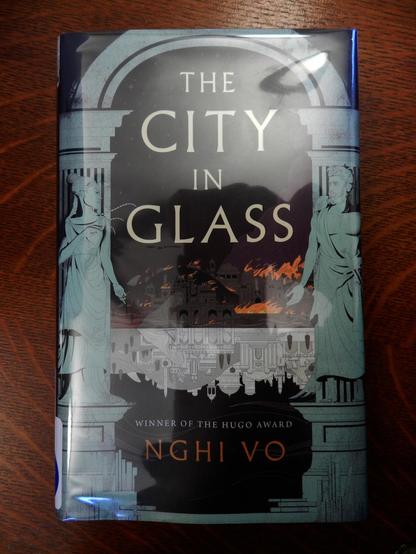
The Tainted Cup by Robert Jackson Bennett
⭐⭐⭐⭐
A spectacular first book in a new fantasy mystery series set in a world where society exists on the basis of the military being able to stop giant sea monsters from rampaging across the land, but also relies on biological technology based off those monsters. We follow a young assistant to a erratic, shut-in detective who uses his enhanced perfect memory to report on crime scenes. A rare book that handles both the fantasy and mystery equally well.
⭐⭐⭐⭐
A spectacular first book in a new fantasy mystery series set in a world where society exists on the basis of the military being able to stop giant sea monsters from rampaging across the land, but also relies on biological technology based off those monsters. We follow a young assistant to a erratic, shut-in detective who uses his enhanced perfect memory to report on crime scenes. A rare book that handles both the fantasy and mystery equally well.
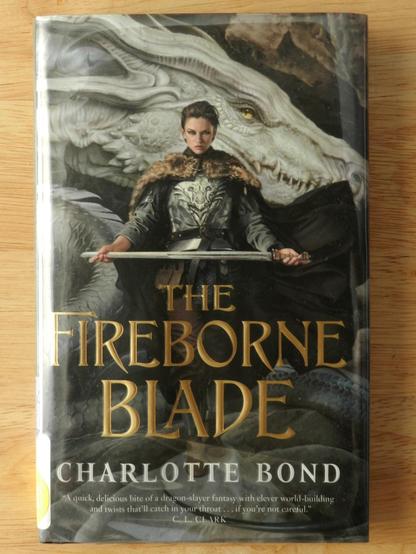
The Fireborne Blade by Charlotte Bond
⭐⭐⭐
A novella about a disgraced woman Knight who tries to mend her reputation by recovering a legendary sword from the cave of an infamous dragon. If you are looking for a story where knights do battle with dragons, this is the book for you. The story is told with a couple of timelines, and with in-world historical vignettes about knights encountering dragons that I liked better than the main story, which despite have a pretty good twist didn't land for me.
⭐⭐⭐
A novella about a disgraced woman Knight who tries to mend her reputation by recovering a legendary sword from the cave of an infamous dragon. If you are looking for a story where knights do battle with dragons, this is the book for you. The story is told with a couple of timelines, and with in-world historical vignettes about knights encountering dragons that I liked better than the main story, which despite have a pretty good twist didn't land for me.
The Heartbeat of Wounded Knee by David Treuer
⭐⭐⭐⭐⭐
A history of the Native People of the United States that tells their collective story from first contact with Europeans to the present. A book that seeks to, and succeeds at recontextualizing this as the story of modern peoples who have adapted and persisted in the face of pandemics, genocidal policies, land grabs, war, government corruption and mismanagement, to emerge poised to remain an important part of the future of the United States.
⭐⭐⭐⭐⭐
A history of the Native People of the United States that tells their collective story from first contact with Europeans to the present. A book that seeks to, and succeeds at recontextualizing this as the story of modern peoples who have adapted and persisted in the face of pandemics, genocidal policies, land grabs, war, government corruption and mismanagement, to emerge poised to remain an important part of the future of the United States.
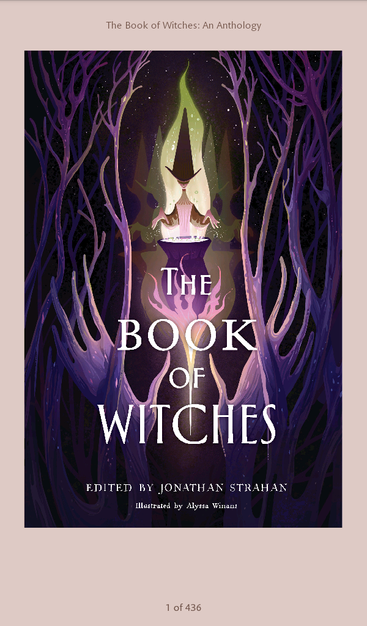
The Book of Witches edited by Jonathan Strahan
⭐⭐⭐⭐
An anthology of short stories and poems featuring a wide variety of types of witches. I enjoyed the project of this book even though quite a few of the stories didn't really work for me. The high points in here were very high, though. My favorites were The Liar by Darcie Little Badger, As Wayward Sisters, Hand in Hand by Indrapramit Das, The Unexpected Excursion of the Mystery Writing Witches by Garth Nix, and Night Riding by Usman T. Malik.
⭐⭐⭐⭐
An anthology of short stories and poems featuring a wide variety of types of witches. I enjoyed the project of this book even though quite a few of the stories didn't really work for me. The high points in here were very high, though. My favorites were The Liar by Darcie Little Badger, As Wayward Sisters, Hand in Hand by Indrapramit Das, The Unexpected Excursion of the Mystery Writing Witches by Garth Nix, and Night Riding by Usman T. Malik.
The Message by Ta-Nehisi Coates
⭐⭐⭐⭐⭐
A series of essays written in the form of a letters to an English class the author taught. They follow the author's evolving relationship with journalistic ethics through the lens of his upbringing as a black man in America and experiences as a reporter, and fiction and nonfiction author. This book is really good at making you think about who gets to tell the stories we are told.
⭐⭐⭐⭐⭐
A series of essays written in the form of a letters to an English class the author taught. They follow the author's evolving relationship with journalistic ethics through the lens of his upbringing as a black man in America and experiences as a reporter, and fiction and nonfiction author. This book is really good at making you think about who gets to tell the stories we are told.
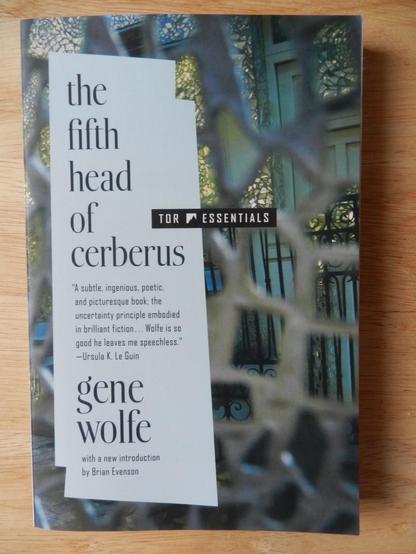
The Fifth Head of Cerberus by Gene Wolfe
⭐⭐⭐⭐
A collection of three interconnected novellas set in the far future on a pair of binary worlds. The first about young man coming of age and learning his heredity, the second a story purportedly told to an anthropologist by aboriginals, and the third a set of documents about an expedition and the imprisonment of the same anthropologist. I enjoyed reading this but can't say I really understood it, which means, as usual with Wolfe, I need to reread it.
⭐⭐⭐⭐
A collection of three interconnected novellas set in the far future on a pair of binary worlds. The first about young man coming of age and learning his heredity, the second a story purportedly told to an anthropologist by aboriginals, and the third a set of documents about an expedition and the imprisonment of the same anthropologist. I enjoyed reading this but can't say I really understood it, which means, as usual with Wolfe, I need to reread it.
And here ends my 2024 reading thread. I kept up with it pretty well until late summer when election anxiety sapped my will. Post election fatalism allowed me to get back to doing it in bursts, including a new year's eve marathon that the clock ran out on. Let's see what I can do in 2025.