 moe90
moe90YouTube is cracking down on clickbait

 Spuddlesv2
Better title: “YouTube is cracking down on click bait - here’s how”
 TheTechnician27
“5 ways YouTube is cracking down on clickbait – #3 will make you shid and fard and cum your pants”
 Lanusensei87
YouTube tried to Crack down on clickbait, what happened next will shock you!
 rigatti
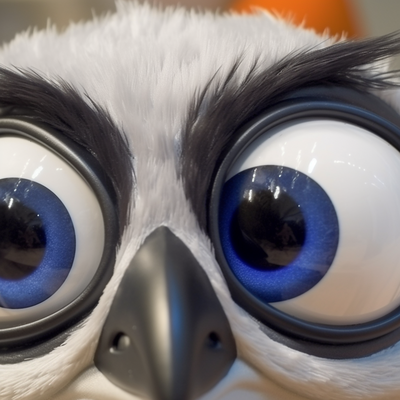
Thumbnail:
They’re doing WHAT!?! —>
(⓿_⓿)
 thatsnothowyoudoit
Two hours later with a changed titled and thumbnail:
Fix YouTube clickbait with this one simple trick….
About time.
This stuff has been cancer on YouTube for years.
 woelkchen
Misleading titles and thumbnails are against YouTube terms of service for as long as I can remember. Those are options to select when reporting videos.
It seemed like they never enforced it though
Years ago, I reported maybe 3 or so videos because the thumbnail wasn’t slightly misleading or exaggerated but completely different from the content. Nothing ever happened. DeArrow fixes the problem to a degree.
 Bogasse
Like, we will be able to make negative feedback about a video again? Oh no nevermind it’s just bs again…
YouTube says the policy will combat “egregious” clickbait that misleads viewers, with a particular focus on videos related to “breaking news” or “current events.” The company’s examples of egregious clickbait include a video with the title “the president resigned!” that doesn’t actually address a resignation or a “top political news” thumbnail attached to a video with no news content.
This is only going to target garbage-level content. You can still expect the same clickbait-style titles and thumbnails from established creators
YouTube will never “crack down” on these guys. They are their money-makes and can do whatever the fuck the want.
YouTube is the one pushing them to clickbait. Their metrics are designed such that if you don’t bait clicks a huge percentage of the time you’re shown, you won’t even show up in the feeds of your actual subscribers.
I think you’ve correctly identified their self-interest over altruism, but you’ve misidentified the internal value of discouraging clickbait. YouTube is a treasure trove for building training datasets, and its value increases when metadata like thumbnails, descriptions, titles, and tags can be trusted.
It’s the AI gold rush; notice how this coincides with options to limit or disable third-party training but not first-party training? It coincides but is definitely not a coincidence.
 Alphane Moon
Yeah, this is not even really targeting clickbait, more like putting restrictions on openly malicious content.
unless they pay for it to be shown as an advertisement of course
I’ve noticed these super annoying
news flashes that say like Beyonce fleeing US and shit like that. Super long videos too and their all trash. Makes it hard to get real news on it
Makes it hard to get real news on it
Well there’s your problem. Why the fuck are you trying to get news on Youtube?!
Mainly just stick to law and crime network haha. I wanna watch it tho, aint nobody wanna read about Diddy ha
Yes, which YT actively encourages people to do. So ultimately nothing really changes.
I’ll be even more cynical than that: I think this policy will be abused to suppress legitimate news/current events videos with a POV the oligarchs doesn’t approve of (e.g. pro-Palestinian, pro-Adjuster, etc.).
This will address extreme and obvious falsehoods but I still encounter clickbait of the more pedestrian kind everywhere I go. “You’re using your table saw WRONG” or “the 1 table saw trick 99% of people don’t know” etc.
I consider this clickbait: it creates a false sense of urgency and doesn’t convey any information in itself. What is this one trick? Oh I already knew that one, but I had to watch the video to realize that.
It wastes a lot of time and makes things harder to search for. And often these clickbait headlines are not in the video headline where YT can easily scan them, but in the thumbnail graphic in huge letters, where it’s probably harder to automate any moderation for.
I pay for YT premium but this aspect of the experience still feels ad-like and cheap.
 penquin
The fix was there, but they removed it. The dislike button. Fucking unbelievable how stupid these companies are.
The fix was there, but they removed it.
Return YouTube Dislikes still exists. The likes and dislikes of RYD users are stored in an external database, so Google cannot take them away.
It's completely inaccurate though. It can show massive amounts of faux dislikes that don't actually exist. This has been confirmed with youtubers, who still see the dislike ratio on their backend.
It’s completely inaccurate though. It can show massive amounts of faux dislikes that don’t actually exist. This has been confirmed with youtubers, who still see the dislike ratio on their backend.
I’d say the “actual” dislike numbers are completely inaccurate because what’s the point of disliking a video in an environment where the dislikes don’t count?
RYD extrapolates the like/dislike ratio as stored on their own server to the like numbers as displayed by YouTube. That’s not secret information. They spell it out in their FAQ.
If anything, if you like more representative numbers, get more people to install RYD.
So a video getting like 80% dislikes in the addon, but like 90% likes in the backend, is an okay and totally not misleading metric to you?
When the only people hitting the dislike button are the people using the addon (because that’s the only circumstance in which it counts), WTF else did you expect than for the dislike ratio with the addon to be higher?
If that's the only people using the addon, then they should adjust their extrapolation formula to account for the bias of their user base. Because like this it will only feed people's confirmation bias through literal disinformation, making content look heavily disliked even when it isn't.
 Null User Object
Unless YouTube is using that data to not recommend crappy videos, then it’s completely pointless. If YouTube was going to use that data, then they would, oh, I don’t know, maybe still have a dislike button?
Unless YouTube is using that data to not recommend crappy videos, then it’s completely pointless.
YouTube never did that anyway. YouTube recommends videos on user engagement. Thumb buttons in any direction are engagement. They have slightly hidden “don’t recommend video/channel” options for that.
What RYD does is to show what others think.
 Gormadt
The fact they never used that data in video recommendations is surprising, and if they started to factor it in would have probably helped make this less of an issue
The fact they never used that data in video recommendations is surprising
So you never clicked dislike, just to get recommendations for the same channel / type of video over and over again? I thought everyone figured that out by now. These are the menu items that actually do the trick:
This is not official and not many people (relatively speaking) know about it. My wife, for example, still uses the official YouTube app on her iPhone with all of its ads and garbage.
This is not official
Neither was the previous workaround which IIRC required some JavaScript trickery with the web player.
What are you talking about??? The previous WAS MADE BY GOOGLE. 😂
it wasn’t a workaround, it was a feature built into the YouTube app that is made by Google. I can’t believe I have to explain this. Lol
You wrote “there was a fix” which I assumed you meant one of those user scripts / browser extensions that let users access removed features for a while. Pretty sure this worked with downvotes for a while but not in an official capacity.
Ok. I see where the confusion lies. My bad. It was just me being sarcastic that those dumb asses created an unnecessary problem and now they’re trying fucking fix it. They could just bring back the dislike button. Sorry
*Only directly misleading clickbait.
So they'll continue to promote other forms of clickbait like specific thumbnails or capitalized & ambiguous titles.
So they'll continue to promote other forms of clickbait like specific thumbnails or capitalized & ambiguous titles.
Of course they will, The Holy Algorithm loves that stuff. It’s why even some respectable creators have to stoop to that frustrating nonsense.
They don't have to, they choose to. There's still people like Etho who don't even ask for people to sub and post incredibly infrequently and still successfully maintain their views and audience simply through quality content.
It's more a matter of whether you do YT for yourself, or for the money. And nowadays the majority of people do it for the money. That's why the content has become so piss poor over the years too. It's all just commercialized garbage.
It's more a matter of whether you do YT for yourself, or for the money. And nowadays the majority of people do it for the money. That's why the content has become so piss poor over the years too. It's all just commercialized garbage.
One of the greatest channels on YouTube, in terms of quality content, is Mentour Pilot (and his other channel, Mentour Now). He releases videos weekly, I think. They’re remarkably high production value, well-researched, well-written, informative, and fascinating.
His thumbnails and many of his titles are awful. Clickbait, capitalization, arrows pointing at stuff, etc.
There are of course people who do the clickbait stuff and make terrible content.
There are people who don’t do the clickbait stuff, some of whom make good content and some who make terrible content.
Whether you try to get as much value from the platform as you can doesn’t indicate the quality of your work. Some people play the game, some don’t.
And I block everyone who does, since I have no way of judging the content other than the low quality titles & thumbnails. I'm dubious about allegedly well researched content though. Lot's of people for example recommend Perun, or Kurzgesagt too, which are both awful.
That’s fair. If you have even the slightest appreciation for aviation, I really do recommend Mentour Pilot. His video recently about the LionAir 737-MAX8 crash was phenomenal, and a perfect example. Extremely clickbait-y title and thumbnail, but a rock-solid hour-long dive into the final report, including details of the preceding flights.

The REAL Truth behind the Misunderstandings and lies! Lion Air flight 610
I don't, not that much anyway. But I'm even more allergic to clickbait than I am to ads, and I run ad blockers since their invention. If I ever click on a clickbait video I feel dirty and soon after even more determined to block those channels. So I quite literally just can't.
It’s more a matter of whether you do YT for yourself, or for the money.
Frankly, the people doing the former should be leaving Youtube for Peertube. I feel like Fediverse advocates ought to be trying to figure out ways to court them.
You Tube Is Elminating Competition
I won’t be happy until they ban shocked Pikachu thumbnails.
I logged off and then started looking for titties…the tape project, dancers wearing next to nothing, African tribe dancing naked, body paint, see thru lingerie hauls, cleaning naked hauls, breast feeding tities…my YouTube is now embarrassing pornographical without me loving in.
YouTube is not for kids.
How else are people at religious colleges with internet filters supposed to masturbate?
YouTube is clickbait. This is like them saying they’re going to crack down on their own advertising model.
Youtube literally tell their wagies they need to make click but like this ugly ass thumbnails with up-close mug shots.
I am not sure what data they have to support it but I don't click these thumbnails but mrbeastade a career off them lol
 arararagi
Veritasium made a video about it, his example video only performed better after switching the thumb and title to something more clickbaity.

Clickbait is Unreasonably Effective
LTT did the same experiment. The stupid O-faces just work
Web architecture was flawed.
They went the simple fast way in times when changing a few completely incompatible realizations while looking for the working one was fine. People still used not just Apple and IBM PCs, but also Amiga and various kinds of Unix. Web reading via e-mail was a popular service. Many different technologies to get some connectivity to the big world. FIDO and so on.
So it probably seemed intuitive that when it becomes problematic, people will think of something better and stop using the flawed thing.
Except that assumption relied on fragmentation and incompatibility and variability, things that useful idiots for corporations were vilifying in late 90s and 00s, and managed to kill around late 00s.
So. Engagement-driven model is pretty similar to casinos. It’s profitable and anti-customer. What allows it in the Web - lack of separation between connectivity, storage and identities.
One can say it differently - the Web application layer should be higher than it is. IP and DNS can identify a site, that is, a computer or a cluster or something united. But they shouldn’t identify a website. Quite obviously. A website shouldn’t go down for the sole reason of some computer somewhere being shut down.
It also simply makes sense for the Web to work as some kind of a version control system - it just came into existence before those became the norm for things, well, requiring version control.
I don’t want to write yet another time what everyone will find by themselves in that direction of thought. In short, WWW was an experiment at networked hypertext systems, similar to Gopher, but nicer. It was intended for nice cool library things. It wasn’t intended as the “information superhighway”. Another system actually was - Usenet. Usenet lacks that flaw of the Web.
Except Usenet is morally obsolete. Some new kind of it, with cryptographic identities of users and of groups, some sort of “websites” represented by sequence of update messages in the same group (here’s version control), and probably something like realtime group chats, would be cool.
Yeah sure they will.
They’ll target small creators, but keep shit heads like the scammer Paul, the fake philanthropist Beast, and others
Top talent who made careers on clickbait will not be harmed
Pedophiles on set, no problem
Scamming people, no problem
Advertising and selling spoiled food, no problem
Say suicide, demonetized 🤡
 Martineski
Youtube will age restrict songs in my playlist with a word “fuck” in title but won’t do anything about unrestricted animated gore on a channel of a studio that does kid animations that I’ve reported long ago. 🙃
[X] Doubt
Sure, as soon as X cracks down on misinformation