
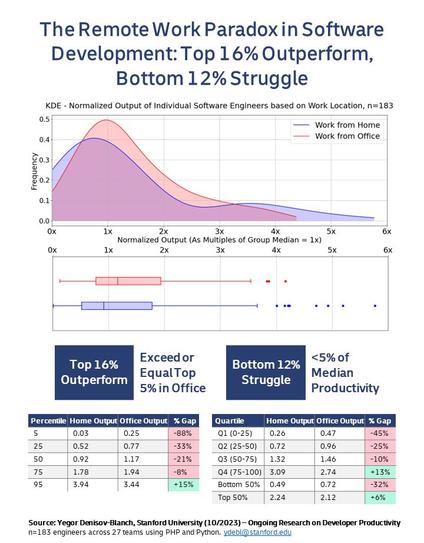
The datapoint that the top 16% of remote workers outperform the top 5% in-office while the bottom 12% of remote workers underperform the bottom 5% in-office seems intuitive.

If you’re a top performer then gaining 1-2 hours a day from not commuting makes you more productive. If you’re the kind of person who needs help to get the basics done, then being on Slack versus in the office is worse.

RTO is penalizes top performers due to underperformers not being able to handle the freedom.
@carnage4life I wonder how best to handle the underperformers. Do they need more support, more training, better mentorship? Or should they be let go so they can find more suitable jobs? A caring society would have a government department empowered to help them. #Caringism

@dan613 @carnage4life It’s slightly more complicated than that. Managing remote teams, and especially remote workers still learning the ropes, requires a certain skill set (and to a lesser extent appropriate policy and procedures). Some managers work on these skills and use them effectively, others don’t.

So certain workers may perform better while remote if they have managers who can actually handle remote teams.

1/2

@dan613 @carnage4life Workers need the appropriate skill set to be productive while working remote too!

This isn’t to say that some people aren’t just better at managing themselves than others. Some people really need to be in the office for at least a couple days a week.

2/2