đź§µ Paper alert: How do different transcription factors work together to help form GABAergic neurons in the brain?

The work was led by Rinaldo Catta-Preta, Susan Lindtner, John Rubenstein, and Alex Nord (we were a minor part of it) - time for a thread nonetheless! 1/14

https://authors.elsevier.com/sd/article/S1534-5807(24)00603-8
ScienceDirect.com | Science, health and medical journals, full text articles and books.

GABBA GABBA HEY!!!

The paper looks at how specific brain cells—GABAergic neurons—are created and how different transcription factors work together to help form these cells. 2/14

đź§  Seriously, what are GABAergic neurons? These cells play a critical role in keeping our brain balanced by slowing down activity. They use a neurotransmitter called GABA to calm things down, preventing overstimulation. This balance is essential for functions like movement and mood regulation! 3/14
Where do GABAergic neurons come from? They’re created during early brain development in an area called the basal ganglia, a part of the brain that controls movement and behavior. 4/14
🔬 Why is it important to understand how these neurons are made? Issues with GABAergic neurons have been linked to neurological conditions like epilepsy, schizophrenia, and anxiety. By learning how they’re formed, we can better understand these conditions and develop treatments. 5/14
The new paper focuses on transcription factors (TFs), special molecules that turn genes on or off, guiding cells to become specific types, like GABAergic neurons. 6/14
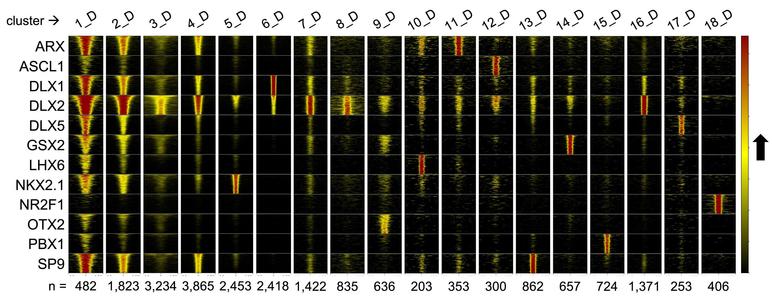
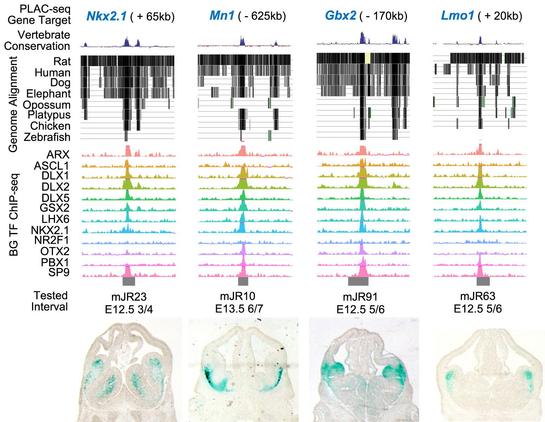
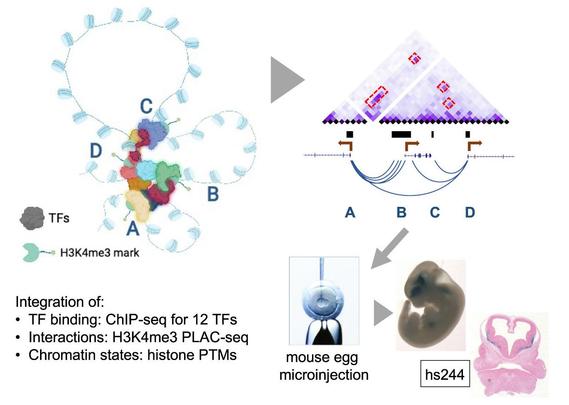
Using ChIP-seq of relevant TFs and chromatin interaction assays, the study maps out over 27,000 regulatory elements (most of them distal, i.e., enhancers) that are active during GABAergic neuron development. 7/14
In transgenic mouse reporter assays, these enhancers drive highly reproducible reporter expression to specific subregions of the developing basal ganglia. 8/14
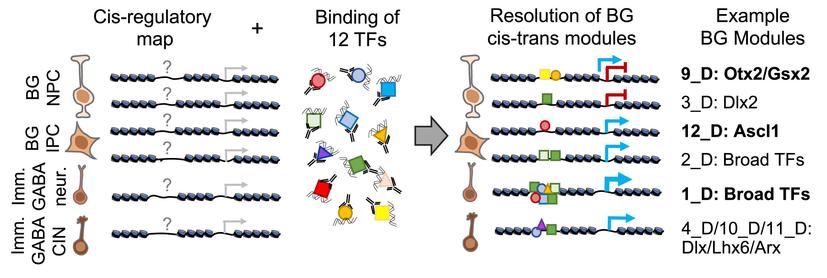
Intriguingly, the study identified regulatory “modules,” which are sets of regulatory sequences that bind common sets of the same transcription factors and are responsible for distinct pathways of GABAergic differentiation. 9/14
Among these clusters of different modules, the D_1 cluster stands out in two ways: These regulatory sequences are unusually densely occupied by many of the relevant TFs, and they tend to be extremely well conserved in evolution. 10/14
By combining these results with single-cell transcriptome and chromatin accessibility data from developing basal ganglia, it became possible to associate modules, defined by specific sets of TF, with subtypes of differentiation neurons. 11/14
Integrating this result with the previous knowledge about the processes of cell migration and differentiation processes in the basal ganglia provides insights into how these TFs (and combinations thereof) direct the process. 12/14