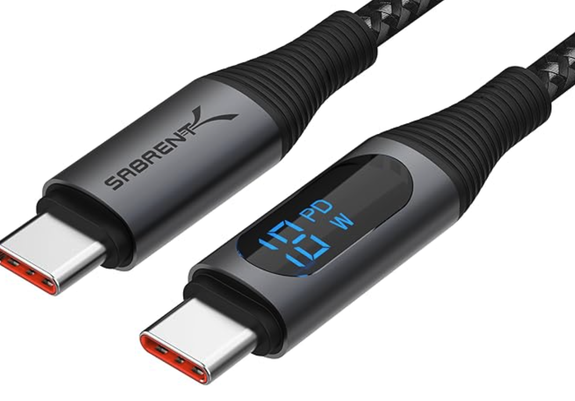
well done to everyone involved in making usb so complicated that now the only way to understand what it's doing is to put diagnostic screens on charging cables

just a really solid set of decisions all the way down
@penllawen
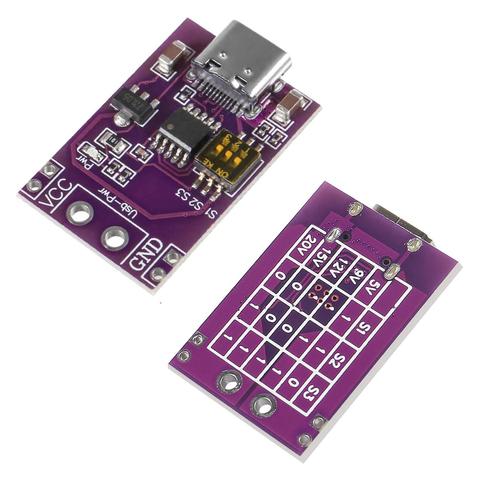
I would prefer a little box with dip switches in the middle, so I can reconfigure the cable on demand.
@wakame @penllawen i actually have little modules like this for usb-pd. i think they might also work for some of the other charge protocols, but i haven't checked, they're cool though. i think they're one of those knockoffs of someone's open source design that made it to aliexpress so they're fairly ubiquitous on any selling platform that allows people to list their own junk (ebay, amazon, etc)

@rudi @penllawen

I still don't quite understand why we can't have a base protocol and then negotiate the add-ons that both sides support and want.

Similar to "why is every computer port shrinking, only ethernet stays its clunky self?". 

@wakame @rudi @penllawen isn't that what's happening? At least for power delivery you start at the always-present 5V with max 500mA, and then voltage and current draw are negotiated. I (perhaps wrongly) assumed something similar was going on with other parts of the protocol.
(I know, silly of me to assume something sane from the group that brought us "USB 3.2 gen 2x2", but still)
@Stephanie @wakame @rudi @penllawen it is probably the same people who brought us SDXC UHS1
@gunstick @Stephanie @[email protected] @rudi At least the SD specs - like HDMI - are more or less just slowly improving over time, so you mostly only need to navigate the 2-3 competing spec abbreviations that happen to exist right now. That's still a bit easier to deal with USB-C, I think, which has the same cornucopia of naming conventions but has speedrun to it in a handful of years.