
Title: Reconciling European Commission's Digital Fairness "Fitness Check" with something that closer resembles "common sense".

Introduction: Reconciling the Commission Staff Working Document on Consumer Law with the Mario Draghi report on European competitiveness highlights contrasting priorities and approaches, the type of contrast that could "kill" the EU (according to Macron) or revive our innovative spirit.
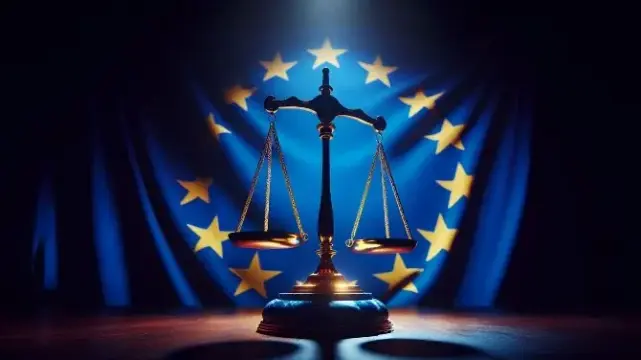
1. Consumer Protection vs Competitiveness: The consumer law document focuses on protecting consumers from digital market practices, emphasizing "fairness" and legal updates.
The Draghi report stresses reducing regulatory burdens and fostering innovation to boost competitiveness. It suggests regulatory simplifications, which may conflict with increased enforcement for consumer protections.

2. Regulation vs Flexibility: The Draghi report advocates for flexibility in energy and digital sectors, including incentives for emerging tech.

Meanwhile, the consumer law document stresses stricter enforcement to "protect" against dark patterns and data misuse, which could create friction with the more innovation-friendly stance in the Draghi report.

Balance seems to be the answer, but that word doesn't seem to be in the Commission's dictionary.

3. Digital Markets Act (DMA): While the consumer law document views the DMA as part of improving fairness, the Draghi report may see stringent DMA regulations as potentially hampering large digital firms’ competitive edge, stressing market competitiveness more than regulatory oversight.

Overall, the tension lies between ensuring government overreach packaged as "consumer protection" or fostering a competitive, flexible, and innovation-driven environment for businesses.

The Draghi report leans more towards competitiveness and reducing barriers for businesses, while the consumer law document is focused on enhancing protection mechanisms in an evolving digital landscape.

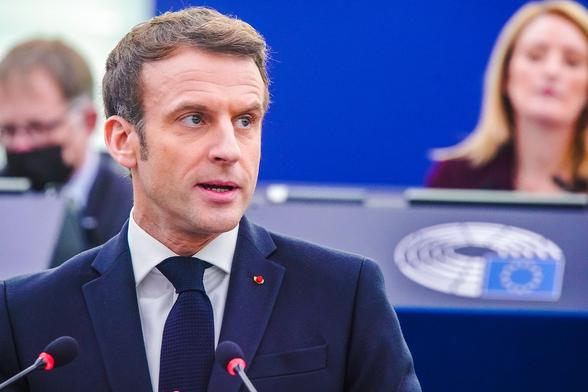
Macron's comments are relevant here:
"At an event in Berlin this week, the French president warned that the EU “could die” and that if it continues with a “classical” free-trade agenda, it will be “out of the market” in two or three years. He made the case that Europe should embrace a more protectionist agenda if it wants to survive."
https://www.politico.eu/article/france-emmanuel-macron-germany-olaf-scholz-europe-global-threats-economy-china-american-protectionism/
You could kill the EU, says France. No, you could, Germany replies.

Macron and Scholz clash again over how to counter protectionist America and Chinese power.

POLITICO
Macron’s recent statements align closely with the concerns Mario Draghi raised in his report on European competitiveness. Macron has emphasized that Europe is lagging behind the U.S. and China, particularly in areas like climate change, defense, and artificial intelligence. He warned that the EU could face an existential crisis if it doesn’t radically reform its economic strategies, echoing Draghi’s call for a transformative approach to improve Europe’s competitiveness.
Macron has also advocated for a regulatory “pause,” arguing that Europe’s over-regulation is stifling its competitiveness and ability to innovate, which mirrors Draghi’s concerns about underinvestment and excessive regulation. Macron believes that Europe needs to simplify its rules and focus more on implementation rather than creating new ones, a stance that complements Draghi’s emphasis on reducing regulatory hurdles to foster growth and innovation.
Macron: EU has only 2 or 3 years to stave off total US, China dominance

“The EU could die, we are on a verge of a very important moment,” the French president added.

POLITICO

What Happens if the Market “Dies”?

If Europe’s economic competitiveness falters, the market itself could stagnate or shrink, which would diminish the very economic activity that the EU Commission is trying to protect through consumer regulations, digital fairness, and environmental sustainability. In such a scenario:

1. Fewer Consumers to Protect: A shrinking or weakened economy would result in less consumer demand, fewer jobs, and lower standards of living. If industries move out of Europe due to competitiveness issues, the Commission’s consumer protections might become irrelevant because there would be fewer businesses left to regulate or protect.
2. Lost Innovation: By missing out on key technological advances, such as AI, quantum computing, and renewable energy innovation, Europe risks becoming a laggard. This could lead to dependency on external powers like the U.S. and China, reducing Europe’s strategic autonomy. In that case, even if Europe remains a highly regulated market, it would no longer be a major player in setting global tech or environmental standards.
3. Economic Disruption: Without rapid reforms, Europe might witness capital flight as businesses and investors shift to markets that offer more favorable conditions (such as the U.S., which has pursued looser regulations and massive green subsidies under the Inflation Reduction Act). Once Europe’s industries relocate, the very economic base that the Commission aims to protect will have moved elsewhere.

Why the Commission Might Stay the Course

Despite Macron and Draghi’s warnings, the EU Commission likely sees a different time horizon. They are betting on long-term sustainability, believing that aggressive regulation (such as digital fairness laws and environmental protection) will ultimately make Europe a leader in ethical markets, green industries, and trustworthy digital spaces.

However, the EU seems to be almost alone in this belief.

However, the risk Macron and Draghi point out is that by the time these long-term benefits materialize, the market might already be in a terminal decline, making it too late to recover the lost ground.

Conclusion

The EU Commission’s bet is indeed a risky gamble that could result in decades of stagnation and missed opportunities. The global economy is moving rapidly, and while the EU’s alleged *intention* to create sustainable, ethical markets is viewed a "noble" by some, the question remains whether it can afford the consequences. It may be time for the EU to seriously consider adjusting its course before the costs become too high to bear.

@janwillens Very good! I posted it on Twitter too.
@umcopu Haha, seems like that platform will never get fully rid of me.