 neville park
Took an utterly gratuitous mental health day (going down to the lake and looking at bold jumping spiders)
#ArthroBeauty #DailySpiderPic #SpidersOfMastodon #JumpingSpiders #spiders • #Araneae #Salticidae
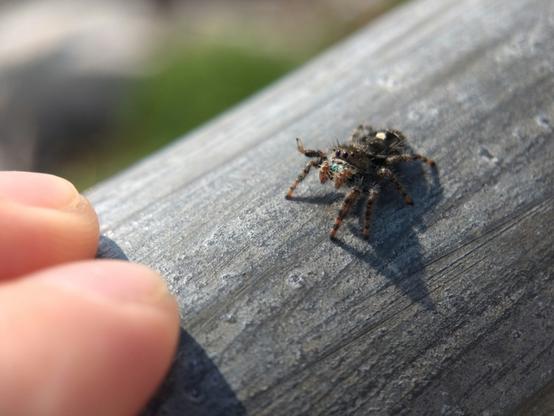
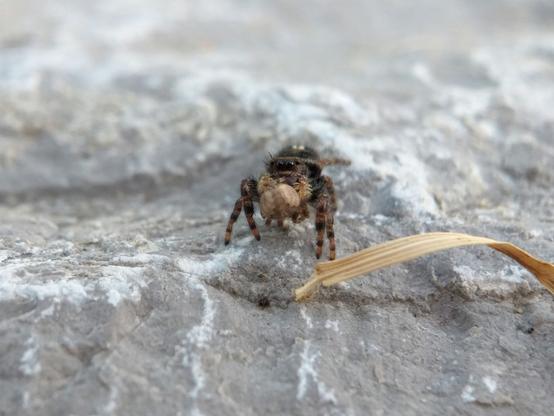
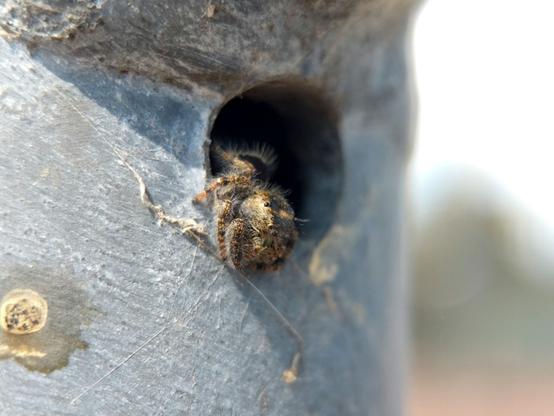
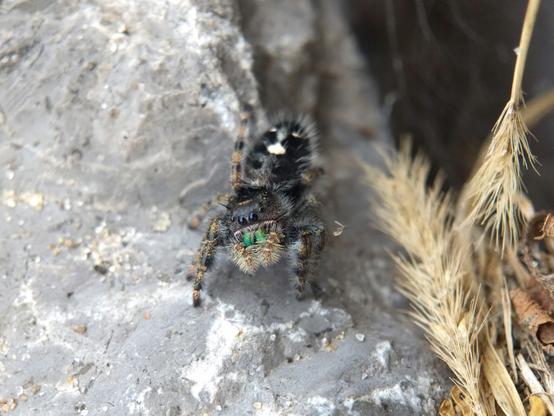
Took an utterly gratuitous mental health day (going down to the lake and looking at bold jumping spiders)
#ArthroBeauty #DailySpiderPic #SpidersOfMastodon #JumpingSpiders #spiders • #Araneae #Salticidae
Here's video of the last jumping spider. When the giant alien object descending from the sky eludes your comprehension, just tilt your head and tap your pedipalps harder!
Yes, (at least some) jumping spiders tilt their heads when confused, just like dogs.
#ArthroBeauty #DailySpiderVid #SpidersOfMastodon #JumpingSpiders #spiders • #Araneae #Salticidae
@LillyHerself yes.
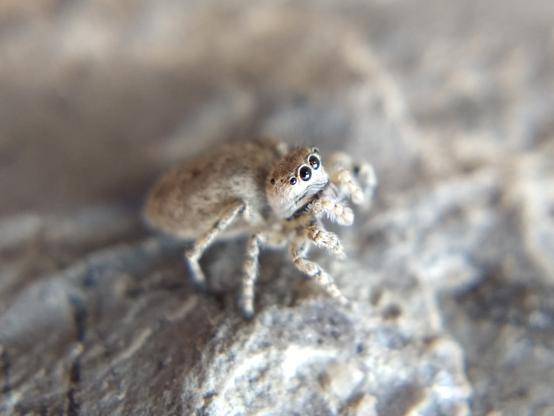
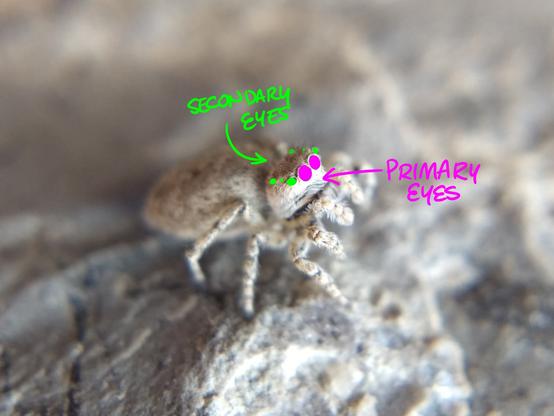
Okay seriously though, here's the same spider with the eyes highlighted. (The ones hidden from the camera are fainter in colour.) And a lighter-coloured jumping spider, since they may be easier to see on it.
The primary eyes are much keener and have colour vision, whereas the secondary eyes cannot see colour but are highly sensitive to movement. Together they give jumping spiders almost 360° vision.
This page is a great reference, albeit North American families only: https://bugguide.net/node/view/84423

 LillyLyle/Count Melancholia