 Alphane Moon
3D printer maker Bambu Lab faces patent infringement lawsuits that could threaten hobbyist 3D printing in general

 duckman
Umm… Wow… Wtf?
 otter
otterSo far, it looks like only FDM is at risk here…
Which is most of hobbyist 3D printing. Resin printing has its issues, especially with strength
 PerogiBoi
And sheer toxicity. You need fume vents and air quality monitoring for processing resin.
The the damn resin absorbing into your skin and curing the next time you’re in direct sunlight. Resin is super detailed, but I can’t say I particularly enjoy doing it.
That’s terrifying I haven’t even considered that. I like my FDM machine.
Eh, it isn’t so bad as long as you take precaution.
Wear gloves and a mask, and make sure to keep your tools separate.
I wonder how may people that have bought a $250 printer from Amazon are taking those precautions or even know they need to.
 I Cast Fist
But it’s what anyone into miniatures uses due to much higher details
 june (she/her)
Miniatures ≠ most of the 3d printing market. Minis may be fine but the rest of the 3d printing space will be at risk and covers a great deal more use cases.
I’m not sure what qualifies as “hobbyist” in your book, but the vast majority of hobby-level printers I’ve interacted with over the last 5+ years are into MSLA more than FDM. 🤷🏽♂️
Almost not surprising. Inventors and R&D businesses patent things all the time, then it takes a while to claim them. There was a guy in Australia who apparently invented WiFi (he calls it “wiffey”) and he successfully asserted his patent against WiFi manufacturers worldwide such that they paid him a couple pennies in royalties for every chip manufactured.
The saving grace is that patents only last for 20 years. After that, anyone can use the design, like Gillette’s double edged safety razor (which is why their modern razors are so silly and change every few years).
 empireOfLove2
Patent trolls doing patent troll things. Stratasys no longer provides usable value to the enterprise market and they’re stagnating bad, their only hope is to start suppressing competition through overly broad, unrefined patents obviously tailored to provide a blanket market lockout.
They’ve done it before and they’ll do it again. Fuck Stratasys, uncompetitive monopolistic fucks.
I hope it gets tossed out of court considering companies have been freely using these patents for years and their just now going after someone because Bambu has been so much more successful than a lot of the cottage-type companies who’d previously been building most printers. You can’t simply wait for a big fish to decide to start enforcing your patent rights because by then it’s been used to much without any push back that you’ve effectively given up the rights.
You can lose trademarks if you knowingly don’t defend them but it’s pretty hard to lose a patent. Even it gets added to a standard you participate it just goes into FRAND.
I think I got the two mixed up then. Regardless (I’m probably preaching to the choir), this seems like a ridiculous lawsuit and I hope they get sent packing.
I’m not a big fan of these patents having been awarded and patent law needs serious overhaul. That said I think there is a good chance the lawsuit is successful. Three are a lot of patents in 3D printing that the open source community is just waiting for them to expire.
There is certainly a lot of precedent for them not defending patents, especially those now expired.
Unfortunately this is the Texas circuit court so any kind of critical thinking or obvious precedent won’t matter, and the biggest corporation will win by default until appealed. We will just have to hopee Bambu has the resources to survive in the US market until then, as the court will likely force a stop sale injunction or large penalties on device sales.
 jabjoe
These patents seam trivial obvious ones. Hope they get knocked down during the case.
US9421713B2 - Additive manufacturing method for printing three-dimensional parts with purge towers US9592660B2 - Heated build platform and system for three-dimensional printing methods US7555357B2 - Method for building three-dimensional objects with extrusion-based layered deposition systems US9168698B2 - Three-dimensional printer with force detection US10556381B2 - Three-dimensional printer with force detection
That’s like all of 3d printing, that’s pretty scary. If they win on all 5, seems like it’d kill consumer 3d printing entirely.
When I look at these patents all of them seem to be patenting others inventions from years ago. So I hope prior art wins.
Which would also strip them of each of those patents.
Stop! I can only get so erect.
Why can they even patent stuff they didn’t invent?
Better lawyers. Patent law is so f’d up. Few understand it and those that do take advantage of it.
That seems geared only towards FDM printers, so SLA (resin) is still ok-ish? I do suppose those really big powder printers could also suffer.
I read the heated bed and it was about the way it’s built, so I’m not convinced it’s a general hot bed patent but something more small detail about how they are using it.
I suspect someone will need to do more research and this article is a knee jerk reaction
Eastern District of Texas is extremely favorable to patent trolls. It’s not a coincidence that they filed the suit there.
I hope one day it will be illegal to shop for judges to shut down tech companies
Daily reminder that IP law is fucking stupid.
And always about protecting the hegemony of the rich and powerful.
It’s never about the struggling artist/inventor just wanting to be paid for their work as the lobbyists and the politicians they own pretend every time they want to fuck over regular people some more.
The rich didn’t come up with the IP. It was the employees who did. They also want to get paid.
B/S. The article states that this company bought the IP from Makerbot in 2013 so nobody working there was responsible for creating these patents. This is like when people claim that piracy hurts the people working on the set of a movie. It actually doesn’t because those people were already paid their wages while the billion dollar corporations are the ones who own the rights and profit off of sales with none of that going to the workers outside of their normal wage.
If there is no incentive to make profits on IP, nobody will hire people to develop the IP. Congrats, you made the rich lose their profits but you also made everyone lose their jobs.
Ah yes because nobody had jobs before IP law and nothing was invented.
IP law was invented when it became necessary to protect it. We no longer live in a cave but in a globalized and industrialized world economy. Your idealistic world view simply doesn’t work here.
No. We did it because IP is inherently anti competitive and we were very concerned with protecting monopolies. They were literally crown granted monopolies. Then they changed in the industrial era to be tools for the Robber Barons. And the corporations after that.
It has never been a mechanism that creates jobs. It’s entire purpose is to shut down competition, to kill jobs. It has never protected inventors. Just the people who can afford more lawyers to convince the court their design is legally distinct.
The economy? The economy would boom and we wouldn’t be worried about legally distinct rectangles between Apple and Samsung. (The true message of which is, “don’t you dare try to enter this market, you’ll get sued into the dirt.”)
You’re just wrong.
It has never been a mechanism that creates jobs.
IP is what creates most jobs right now. Let’s take software development for example. That would be a 100% share of that. Without IP protection they wouldn’t be able to compete. Even open-source software wouldn’t exist because they are also protected by licenses.
Just the people who can afford more lawyers to convince the court their design is legally distinct.
This statement is such populistic bs and completely contradictory in itself. If there was no law and order and no IP protection, the big companies will be the only ones to survive. Just think this through for a second. How is a small company supposed to make profits by innovating? The big ones will immediately steal it and put them out of business because they have the economies of scale. Your lawyers will help even less when there is no law that protecs against that. So even if your conspiracy were correct, it’s still a bad argument.
The economy? The economy would boom and we wouldn’t be worried about legally distinct rectangles between Apple and Samsung.
No it wouldn’t. As I said before: manufacturing is easy. Logistics is easy. Inmovation is hard.
If nobody can make profits with innovating then nobody will do ressearch and development. We’ll end up in a world where education is irrelevant, no meaningful innovation will be made and the companies will win that can manufacture the cheapest by cheap labor (as innovation is impossible to make). So slavery will ultimately win and innovation will he stifled.
There is a key point you don’t seem to understand: competion in a world where innovation is not competitive is a terrible thing and half of our current digitalized economy will lose jobs.
Just think about this for a second. Take software development for example. Running a software, hosting a website, or operating servers for a service are all so incredibly cheap and easy to do. This is not what companies distinguish themselves with. The hard part is writing the software and that is entirely IP protected. If it weren’t, then nobody would put work into this anymore. If 99% of your investment is software development and 1% hosting the service you developed, then why would anyone invest into that if the 99% can just be stolen after it’s finished? The only way to make profits and be competitive in an IP-less world is to not develop or innovate, steal as much IP as possible, enslave people to manufacture as cheap as possible. I don’t think this is the kind of competition you envision.
The software world is entirely dysfunctional because of IP. There’s only so many ways to program a widget. If you didn’t show up in time you get the snot sued out of you and you have to show in court you created that widget with zero input, contact, or experience with the big corporation. Good luck when that corporation is Microsoft or Apple. Open source code actually shows exactly how this would work. Linux has been forked how many times? And Ubuntu, one of the early distros is still going strong.
And if big business would never then explain patent trolls. If you want to talk about big business undercutting small ones out of business then we need to talk about monopoly laws, not patents.
Nobody said innovation was easy. But you brought up the software world. Specifically open source. Which shows that contrary to libertarian fantasies, innovation does indeed happen without guaranteed monetary compensation.
No. Education will not be irrelevant. And slavery will not win because these aren’t patent and innovation issues. And companies will still innovate because people aren’t going to stick around for old tech.
You haven’t even begun to prove we’d lose half our jobs. This is just another ridiculous fear mongering segway.
And ah yes, why does open source software exist? Don’t they know they’re supposed to be making sure only they can work on that code?!? What’s their motive if they aren’t making money or hoarding it for their own ego like a dragon!
There is so much false information in your reply I don’t even know where to start. Your idealized world is inherently illogical and cannot exist. You’re against big corps and monopolies and seem to love the spirit of FOSS. But none of that logically implies any conclusions about IP and IP protection. You’re confusing causation with correlation. I’ll explain that below.
The software world is entirely dysfunctional because of IP.
It only works because of IP. Software is IP: Software isn’t manufactured, it’s not produced, it has no operating cost, you cannot grab it, you can copy it indefinitely, etc. Take away IP protection, and the software developer can no longer pay their bills. The only one who can pay the bills is the one using the already developed software to build a service or materialized product. But that person does not need to pay the first one because he can just steal it.
Linux has been forked how many times? And Ubuntu, one of the early distros is still going strong.
If there were no protection on software, then nobody would develop it, this also counts for non-hobbyist FOSS projects. It’s good that you brought up Linux as an example. Because Linux is also IP and is protected by laws and licenses. You cannot just freely copy a Linux distro. It needs to be under the same license and nothing more permissive than that. You can’t just grap Linux, make it closed-source, modify it, and profit from it. Your Linux counterexample is actually a prime example why IP protection works. Linux is profitable because a lot of industries see value in it so they fund it. But the whole community thing only works because Linux has a license and there are laws that protect its existence and the work the developers do.
If you didn’t show up in time you get the snot sued out of you and you have to show in court you created that widget with zero input, contact, or experience with the big corporation.
That’s just wrong. First of all, there are laws on what can be patented and what is IP. Secondly, there are laws against monopolies. There are major law suits against Google and Apple right now and I see there being more in the future. I agree that there is a public and economic interest to prevent monopolies and anti-competitive behavior because they are a threat to our world economy. However, IP protection in general does not threaten anything like that. It’s only remotely related. In a world without IP protection, monopolies would be even worse as these companies will always be the fastest to steal something and scale it to large economies.
But you brought up the software world. Specifically open source. Which shows that contrary to libertarian fantasies, innovation does indeed happen without guaranteed monetary compensation.
FOSS does not mean free as in “free beer”. This is a common misconception. FOSS software was never meant to be free-of-charge. FOSS means free as in “freedom to modify, use and distribute”.
Innovation never happens at large scale without monetary compensation.
Sure, some smaller projects are developed by people in their free-time and provided as free-of-charge. But they are getting payed the rest of the day for, guess what, developing software with monetary intentions. How else are they going to pay their bills? The larger projects that people work at full time (Linux, Nextcloud come to mind) are funded either by donations, extra services or other means. They are always funded. And every one of the projects has a license that is defined by some IP protection law.
Correlation and Causation are things in statistics. So that’s right out the window.
Software is very much produced. And copying it is only half the battle. You have to actually run the service. Patch bugs and security holes. It isn’t magic that comes from nothing. And nobody ever said FOSS was free, you can absolutely copy it, charge for it and keep the source open. That’s 3 strawmen already.
ThErE ArE laWS oN whAt YoU cAn PatENt!
Not any that get enforced. Seriously the enforcement mechanism for an overly broad patent is a court finding that in the lawsuit where you have to defend your widget. The Patent Office does not care. Neither does the Copyright office.
tHeRe aRe LaWS aGAinSt MoNOpoLies
Nope. You’d have to be blind, deaf, and dumb, to genuinely believe there’s any consequences for monopolistic behavior in the US. If some thing ever actually happens then feel free to come back but I wasn’t born yesterday. My entire life has been watching the government approve larger and larger mergers and then issuing deferred prosecution agreements instead of actually holding a corporation accountable. Boeing killed hundreds of people with fraud and got docked a day’s profit even after breaching their deferred prosecution agreement.
Have you been listening at all? You’re worried about FAANG grabbing code and copying it before whoever came up with it can use it, but the actual problem we’re facing is FAANG dreamed it’s existence a decade ago and already patented the idea. In video games they patented dialogue boxes. The very idea that you might converse with an NPC in a video game is patented. And you want me to worry about start ups having their stuff stolen? Software is in the position where you can’t make the plane because the idea of wings was patented already.
InNoVatION NevEr hApPeNs At lArGe ScAle WiThOuT mOneTaRy CoMPeNsAtiOn!
Explain DARPA. Explain FOSS. Explain 3D Printing. Explain art.
Don’t tell me what I am for or against. I’ve already plainly stated that.
I liked this discussion. However, I think both of you have different axioms. It’s a pro-socialism vs pro-capitalism debate.
In capitalism, we need innovation to create new value. Or you can pollute water to sell water bottles which will have value now. It’s up to citizens to decide what to restrict that was publicly available or what to innovate.
In socialism, the innovation is only happening where it needs to happen carefully planned and funded by the government.
I’m rather socialist, so I’d defend it:
Having a software with inability to modify is injustice, It’s the same as polluting a water to sell it. Even if we need to pollute the water to sell it, it doesn’t justify pollution.
Good news is, you will never be able to stop hobbyist 3d printing.
Sorry patent trolls, you can’t make aluminum extrusion, stepper motors, an extruder, and a short circuit illegal.
The problem is that most people aren’t making RepRap printers from scratch, they’re buying kits which has everything included.
Bambu makes decent gear, I don’t think we want to have the only option being Chinese machines which always makes compromises to make it cheaper. And that’s coming from a person who uses Chinese printers.
 UnderpantsWeevil
I don’t think we want to have the only option being Chinese machines
When you shut everyone else down, they’re the only guys left with the freedom to do business.
 pixeltree
Are there any American made printers?
Isn’t Prusa expanding to the US or something? Thought I saw it somewhere.

a voron is american made depending on where you make it
Pretty much anything is American made depending on where you make it though
yeah but I’m not going to be able to make a Bambu printer in the US since it is a product produced by a Chinese company. A Voron is different since I can source parts from US based companies and put it together myself in the US.
 YeetPics
Lmao, as an idiot trying to get a 20y/o stratysys running at work, I can see why they’re trying to sue.
Their machines are trash and wildly outdated, DRM spools locked into cases and disposable beds are GARBAGE.
Outdated? I’ve yet to see out of the box quality at 800€ like bambulab…
DRM spools? You can use whatever you like with the printer. The spool just makes filament detection in the ams possible.
Disposable beds? The printers come with reusable beds… The pattern beds are optional.
Disposable what?!?!
The print beds are SINGLE USE injection molded ABS(I think it’s ABS, anyhow).
They snap over the heating element and seem to be a gigantic waste of resources. You can tell R&D was pushed to make their machines as profitable as possible by avoiding reusable parts.
You can’t refill their spool cassettes either without some RFID hacking.
It’s fuckin’ bogus.
 Uriel238 [all pronouns]
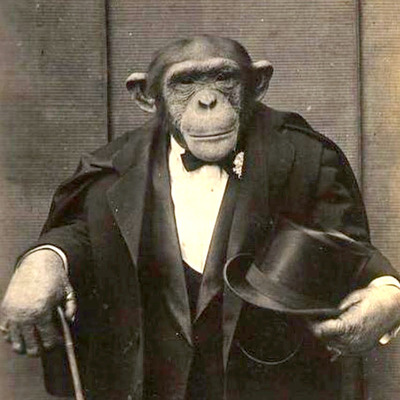
The old adage: Young companies innovate while old companies litigate.
 apemint
We have 3 Stratasys printers at work and yeah, you’re absolutely correct.
To add, their ‘professional’ slicer program “Insight” is the most user hostile piece of software I’ve ever laid my eyes on. Straight out of 1992 levels of awful. The workflow, the UI (if you can call it that), everything.
The other ‘user friendly’ slicer is “GrabCAD Print”, an Apple style piece of garbage. It lacks everything beyond basic functionality, yet lately they’ve been pumping it full of subscription locked features.
Honestly, fuck this company.