I got through the first chapter but I don’t think I can continue. I believe that these dire predictions are likely true, but let’s talk about the facts of the models. I feel like I could read the whole book and not be able to say that I learned anything. It’s just not for me. #climate
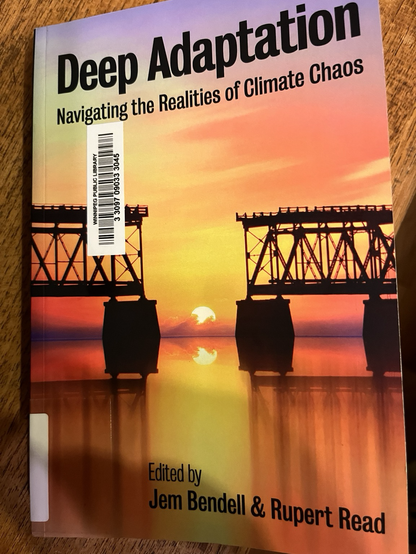
I’m still reading all of this. The most interesting part to me is of course agriculture. The author quotes that 3.5 billion hectares of land are used for “fodder crops”. This is defined as crops used to feed animals. And that 8 tons of carbon can be converted by changing to intensive grazing. Ok, but corn and soy fields don’t have cattle grazing on them. And the 8 tons is a tiny fraction of the potential if perennials were grown. Plus the cooling effects of water retention are not estimated.
@Overallactivist holistic analysis is extremely uncommon despite being desperately needed in all fields.
@neotoy I’m not a scientist, but I speak with them regularly. They can be very compartmentalized. Which is good because people like me often make unsubstantiated statements without any evidence.