
EVs won't save the planet. Ultimately, the material bill for billions of individual vehicles and the unavoidable geometry of more cars-more traffic-more roads-greater distances-more cars dictate that the future of our cities and planet requires public transit - *lots* of it.

--

If you'd like an essay-formatted version of this thread to read or share, here's a link to it on pluralistic.net, my surveillance-free, ad-free, tracker-free blog:

https://pluralistic.net/2024/06/26/unplanned-obsolescence/#better-micetraps

1/
Pluralistic: Cleantech has an enshittification problem (26 Jun 2024) – Pluralistic: Daily links from Cory Doctorow

But no matter how much public transit we install, there's always going to be *some* personal vehicles on the road, and not just bikes, ebikes and scooters. Between deliveries, accessibility, and stubbornly low-density regions, there's going to be a lot of cars, vans and trucks on the road for the foreseeable future, and these *should* be electric.

2/

Beyond that irreducible minimum of personal vehicles, there's the fact that individuals can't install their own public transit system; in places that lack the political will or means to create working transit, EVs are a way for people to significantly reduce their personal emissions.

In policy circles, EV adoption is treated as a logistical and financial issue, so governments have focused on making EVs affordable and increasing the density of charging stations.

3/

As an EV owner, I can affirm that affordability and logistics were important concerns when we were shopping for a car.

But there's a third EV problem that is almost entirely off policy radar: enshittification.

An EV is a rolling computer in a fancy case with a squishy person inside of it. While this can sound scary, there are lots of cool implications for this.

4/

For example, your EV could download your local power company's tariff schedule and preferentially charge itself when the rates are lowest; they could also coordinate with the utility to reduce charging when loads are peaking. You can start them with your phone. Your repair technician can run extensive remote diagnostics on them and help you solve many problems from the road. New features can be delivered over the air.

5/

That's just for starters, but there's so much more in the future. After all, the signal virtue of a digital computer is its flexibility. The only computer we know how to make is the Turing complete, universal, Von Neumann machine, which can run every valid program. If a feature is computationally tractable - from automated parallel parking to advanced collision prevention - it can run on a car.

6/

The problem is that this digital flexibility presents a moral hazard to EV manufacturers. EVs are designed to make any kind of unauthorized, owner-selected modification into an IP rights violation ("IP" in this case is "any law that lets me control the conduct of my customers or competitors"):

https://locusmag.com/2020/09/cory-doctorow-ip/

EVs are *also* designed so that the manufacturer can unilaterally exert control over them or alter their operation.

7/

Cory Doctorow: IP

You’ve probably heard of “open source software.” If you pay at­tention to the politics of this stuff, you might have heard of “free software” and even know a little ab…

Locus Online

EVs - even more than conventional vehicles - are designed to be remotely killswitched in order to help manufacturers and dealers pressure people into paying their car notes on time:

https://pluralistic.net/2023/07/24/rent-to-pwn/#kitt-is-a-demon

Manufacturers can reach into your car and change how much of your battery you can access:

https://pluralistic.net/2023/07/28/edison-not-tesla/#demon-haunted-world

8/

Pluralistic: Autoenshittification (24 July 2023) – Pluralistic: Daily links from Cory Doctorow

They can lock your car and have it send its location to a repo man, then greet him by blinking its lights, honking its horn, and pulling out of its parking space:

https://tiremeetsroad.com/2021/03/18/tesla-allegedly-remotely-unlocks-model-3-owners-car-uses-smart-summon-to-help-repo-agent/

And of course, they can detect when you've asked independent mechanic service your car and then punish you by degrading its functionality:

https://www.repairerdrivennews.com/2024/06/26/two-of-eight-claims-in-tesla-anti-trust-lawsuit-will-move-forward/

9/

Tesla allegedly remotely unlocks Model 3 owner's car, uses smart summon to help repo agent - Alt Car news

Tesla remotely activated smart summon, locate, and unlock to help a repo agent reposess a car after an owner fell behind on payments.

Alt Car news

This is "twiddling" - unilaterally and irreversibly altering the functionality of a product or service, secure in the knowledge that IP law will prevent anyone from twiddling back by restoring the gadget to a preferred configuration:

https://pluralistic.net/2023/02/19/twiddler/

The thing is, for an EV, twiddling is the *best case* scenario.

10/

Twiddler – Pluralistic: Daily links from Cory Doctorow

As bad as it is for the company that made your EV to change how it works whenever they feel like picking your pocket, that's *infinitely* preferable to the manufacturer going bankrupt and *bricking your car*.

That's what just happened to owners of Fisker EVs, cars that cost $40-70k. Cars are long-term purchases.

11/

An EV should last 12-20 years, or even longer if you pay to swap the battery pack. Fisker was founded in 2016 and shipped its first Ocean SUV in 2023. The company is now bankrupt:

https://insideevs.com/news/723669/fisker-inc-bankruptcy-chapter-11-official/

Fisker called its vehicles "software-based cars" and they weren't kidding. Without continuous software updates and server access, those Fisker Ocean SUVs are turning into bricks.

12/

What's more, the company designed the car from the ground up to make any kind of independent service and support into a felony, by wrapping the whole thing in overlapping layers of IP. That means that no one can step in with a module that jailbreaks the Fisker and drops in an alternative firmware that will keep the fleet rolling.

13/

This is the third EV risk - not just finance, not just charger infrastructure, but the possibility that any whizzy, cool new EV company will go bust and brick your $70k cleantech investment, irreversibly transforming your car into 5,500 lb worth of e-waste.

This confers a huge advantage onto the big automakers like VW, Kia, Ford, etc. Tesla gets a pass, too, because it achieved critical mass before people started to wise up to the risk of twiddling and bricking.

14/

If you're making a serious investment in a product you expect to use for 20 years, are you *really* gonna buy it from a two-year old startup with six months' capital in the bank?

The incumbency advantage here means that the big automakers won't have any reason to sink a lot of money into R&D, because they won't have to worry about hungry startups with cool new ideas eating their lunches.

15/

They can maintain the cozy cartel that has seen cars stagnate for decades, with the majority of "innovation" taking the form of shitty, extractive and ill-starred ideas like touchscreen controls and an accelerator pedal that you have to rent by the month:

https://www.theverge.com/2022/11/23/23474969/mercedes-car-subscription-faster-acceleration-feature-price

Put that way, it's clear that this isn't an EV problem, it's a *cleantech* problem.

16/

Mercedes locks faster acceleration behind a $1,200 annual paywall

Mercedes is the latest manufacturer to lock auto features behind a subscription fee, with an upcoming “Acceleration Increase” add-on that lets drivers pay to access motor performance their vehicle is already capable of.

The Verge

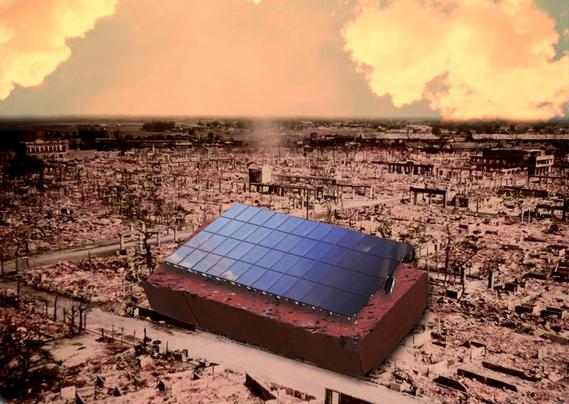
Cleantech has *all* the problems of EVs: it requires a large capital expenditure, it will be "smart," and it is expected to last for decades. That's rooftop solar, heat-pumps, smart thermostat sensor arrays, and home storage batteries.

And just as with EVs, policymakers have focused on infrastructure and affordability without paying any attention to the enshittification risks.

17/

Your rooftop solar will likely be controlled via a Solaredge box - a terrible technology that stops working if it can't reach the internet for a protracted period (that's right, your home solar stops working if the grid fails!).

I found this out the hard way during the covid lockdowns, when Solaredge terminated its 3G cellular contract and notified me that I would have to replace the modem in my system or it would stop working.

18/

This was at the height of the supply-chain crisis and there was a long waiting list for *any* replacement modems, with wifi cards (that used your home internet rather than a cellular connection) completely sold out for most of a *year*.

There are good reasons to connect rooftop solar arrays to the internet - it's not just so that Solaredge can enshittify my service.

19/

Solar arrays that coordinate with the grid can make it much easier and safer to manage a grid that was designed for centralized power production and is being retrofitted for distributed generation, one roof at a time.

But when the imperatives of extraction and efficiency go to war, extraction always wins.

20/

After all, the Solaredge system is *already* in place and solar installers are largely ignorant of, and indifferent to, the reasons that a homeowner might want to directly control and monitor their system via local controls that don't roundtrip through the cloud.

21/

Somewhere in the hindbrain of any prospective solar purchaser is the experience with bricked and enshittified "smart" gadgets, and the knowledge that anything they buy from a cool startup with lots of great ideas for improving production, monitoring, and/or costs poses the risk of having your 20 year investment bricked after just a few years - and, thanks to the extractive imperative, no one will be able to step in and restore your ex-solar array to good working order.

22/

I make the majority of my living from books, which means that my pay is very "lumpy" - I get large sums when I publish a book and very little in between. For many years, I've used these payments to make big purchases, rather than financing them over long periods where I can't predict my income. We've used my book payments to put in solar, then an induction stove, then a battery. We used one to buy out the lease on our EV.

23/

@pluralistic Is it grid-tied, hybrid or supposed to be offgrid?

The kits for those different setups aren't the same.
@pluralistic Here in Europe there are quite a few EV options that are "alternative drivetrain for long established vehicle" which now suddenly look a lot more attractive due to ready availability of cheap spares and reduced attack space for enshittification