A 🧵 about the last 2 days of @crowdsupply #Teardown2024 which was just ER. MEH. GERD. amounts of fun! Adding posts as quick as I can thumb-type. :)

First up - @charlyn ‘s amazing LED jewelry display. I think the whirling ring is my favorite. There were so many thoughtful details in both her designs and her displays, it was super cool to hear how she put it all together. Will post a video at the end, as those take a while to upload.

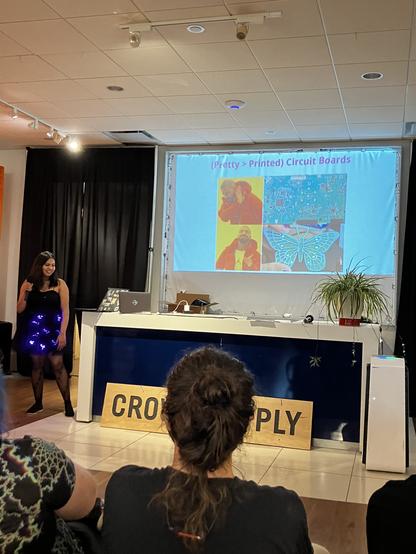
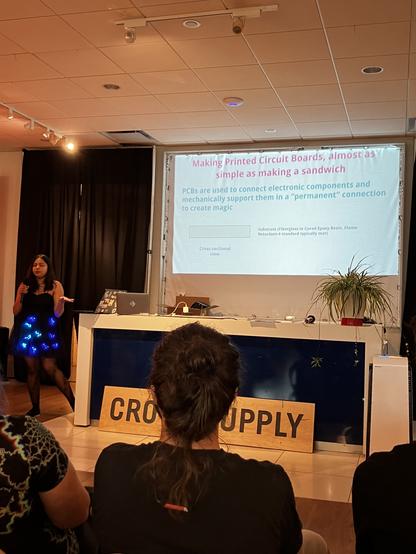
Ayesha Iftiqhar @icymakes gave a great talk about why you should make Pretty Circuit Boards (PCBs). It was really inspiring to hear all the ways she does outreach to promote inclusion in STEM. My favorite part was her sly dig at the “get in the kitchen and me me a sandwich” attitude by saying that PCBs were about as easy to make as a sandwich and using that as the framework for explaining layer stackup. And check out her dress with LED constellations!
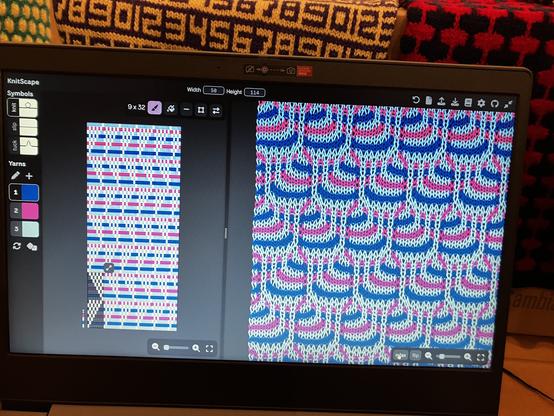
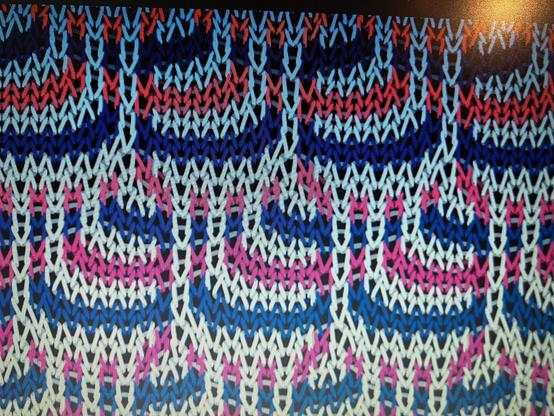
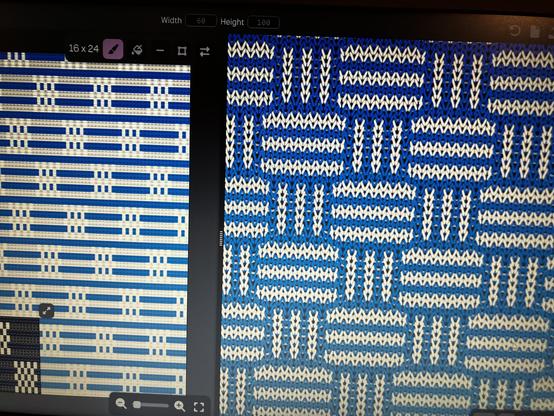
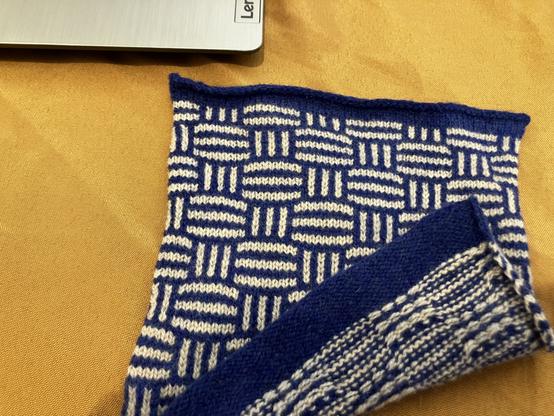
And now let’s talk about the knitting. Yes, the MINDBLOWING machine knitting and stitch visualization software by Hannah Twigg-Smith who is on instagram as branchwelder. She has managed to model slip-stitch patterns AND the way they compress by including a spring constant for the yarn. I totally thought her stitch pattern image was a photo until she explained it. 🤯🤯🤯 Check this out. I’ll include a video at the end of this thread as well.
@alpenglow @chrishuck well if that doesn't make me want to try slip-stitch patterns on a knitting machine... (that's so cool!)

@emery @alpenglow To me, knitting already feels like magic, but knitting *software* is 🤯. Even as someone that is good at geometry and can program, it breaks my brain a bit to think about how you would write software that does this.

It is unbelievably cool.

@chrishuck @alpenglow Right? Absolutely mindblowing that I can connect my laptop to a knitting machine made in the 1980s and make it do stuff. Well, I mean, I still have to physically make the knitting happen, but I can send the stitch pattern information to the machine. ;)

At one point, Husband wrote a little program for me that converts colourwork charted in Excel into a bitmap, where one cell = one pixel. I can put that bitmap into the knitting machine software and then send it to the machine so it selects the correct needles as I knit. (Why Excel? Because I worked in an office and that's what I had to keep myself from dying of boredom.)

@chrishuck P.S. I think you'd also be fascinated by the inner workings of the non-computerized punchcard knitting machine :)

@emery Oh, you can be sure of that! :)

I think hand-crank circular knitting machines are really amazing. Especially when you consider when they were first developed!

Stretching Excel for non-traditional uses always makes me happy. I think I heard of someone making a flight simulator in Excel because it was the tool they had available… 🤷‍♂️

@chrishuck Knitting machines even predate sewing machines - the first knitting frames go back to the late 1500s. There's a museum in England that I hope to one day visit.

The flatbed machines I have work similarly to the circular ones, except the carriage goes back and forth rather than around.

So here's a punchcard reader :) The 24 silver pins fall into the punchcard holes (or not); the white drum pushes on the ones that are selected, which moves the black rods, which are connected to the hooked metal strips at the bottom of the image. Each metal strip selects, iirc, every eighth needle. Selected needles take a different path through the carriage as it passes over them with the yarn, which causes different things to happen depending on which combination of buttons the knitter has chosen.

(This particular machine still isn't selecting needles properly, so we're going to have to open it back up and try to figure out why...)

@emery So cool! :)
@chrishuck Now the real trick is to figure out how to make clothes that FIT with it! I can crank out rectangles of fabric with no problem, and I know how to do shaping and stuff... but *where* to put the shaping is the tricky part. :D