What I find so ironic is how many Open Web advocates express antipathy toward advertising. There is nothing wrong with it. In fact, it was once literally the lifeblood of journalism and it has never recovered from losing it. The problem was NEVER advertising, but intrusive ALGORITHM-based advertising. Old-school advertising with fixed rules against abuse could help open social explode.

@shoq in digital, you can't have one without the other. We've had 20+ years of this auction-based behavioural ad sales model, Google and Facebook are entirely dependent on it for revenue. Untargeted advertising is not going to come back. See how the NYT website shows Google ads even to paid subscribers.

Open web advocates should find ways of reducing the cost of publishing online (hosting mostly), rather than finding "ethical" advertising partners to subsidize their work. They don't exist.

@glider85 @shoq

Frankly, this is absurd to me. DuckDuckGo's founders have spoken on this particularly - you don't need to do invasive tracking of a user in order to serve relevent ads. There's plenty of information availible based on the content near the ad.

People watching or viewing a particular piece of content usually fall under particular demographics. You can see this play out in real time with *sponsorships*. In fact I know that many Youtube channels get the predominate amount of their income from that!

Worse still, Google and other behavioral ad providers regularly lie about the effectiveness of their ads. They're completely opaque about it oftentimes.

Google & Facebook are horrible because they're giant monopolies. There are no better alternatives for most ad spread - they've captured most of the ad space. More ethical ads do exist they're just not mainstream.

The easiest example of this is affiliate links - they're non-intrusive, picked by the creator, and don't track you just by viewing them. It's an ad, just not a horrible one.

And we don't need compatibillity with the wider ad space. We can develop ad tools with strict publishing requirements. If a corporation wants to put ads on the Fedi, they should specifically come here wanting to do so - and subsequently abide by our standards. That's it.

@scien @shoq DDG can say whatever they want -- their ad product is owned and controlled by Microsoft, not them. It's right there on their own page: "To advertise on DuckDuckGo, visit Microsoft Advertising." https://duckduckgo.com/duckduckgo-help-pages/company/advertise-on-duckduckgo-search/
Advertise on DuckDuckGo Search

DuckDuckGo owns the #2 position in mobile market share in the US, and 18 other markets.

DuckDuckGo Help Pages
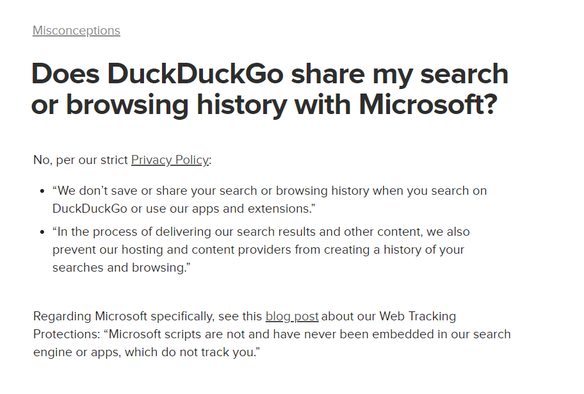
Misconceptions About DuckDuckGo

There are lots of false rumors about DuckDuckGo out there – don’t be fooled by them! Here’s the truth about some common misconceptions.

DuckDuckGo Help Pages
@shoq @scien This is unfortunately smoke and mirrors. DDG pings Bing to serve a LOT of its search results, and 100% of its ads. As recently as 2022, they admitted that their browser apps had an exception for Microsoft trackers, while blocking Google/FB trackers. While this does not apply to web search, this is playing whack-a-mole as conditions of their MS contract are NDA'd. They'd be more trustworthy if they had their own search index and ad product. https://techcrunch.com/2022/05/24/ddg-microsoft-tracking-blocking-limit/
DDG confirms tracker blocking limit linked to Msft contract

DuckDuckGo, the self-styled "internet privacy company" -- which, for years, has built a brand around a claim of non-tracking web search and, more

TechCrunch
@glider85 @scien Well, that’s distressing, but I don’t think their one stealthy (and dishonest) carveout invalidates their entire business model. Perhaps it does, but I’d want to see evidence of that. And just because a trackerless model isn’t easy or popular one right now, doesn’t mean it can’t be.