The people I work with are doing cool shit!

I finally got a chance to interview fellow PhD'er Sarah Caddy from our faculty about this excellent new research and looking at stars and satellites (like the ISS) DURING DAYLIGHT HOURS!

THey're using a telescope called 'The Huntsman' and look how many eyes it has 🕷️🔭

https://www.spaceaustralia.com/news/seeing-stars-day

#SpaceAustralia #Astrodon #Astronomy #Telescopes

📸 Caddy et al. 2024
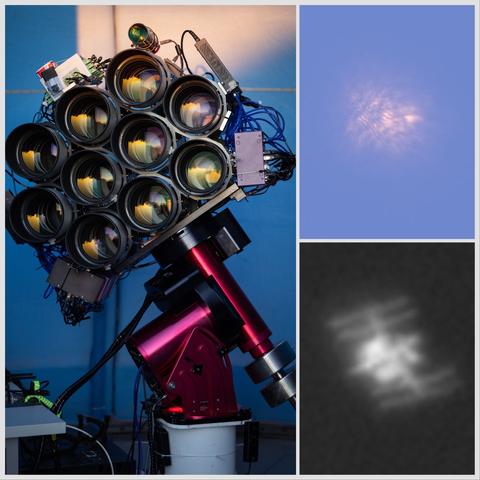
Seeing The Stars By Day | Spaceaustralia

Astronomers at Macquarie Univerisity have established a new method of studying celestial objects like stars and satellites during daytime hours - opening up the possibility to year-round astronomy, and increasing space situational awareness.

@CosmicRami ꙮ as foretold by unicode prophecy
@CosmicRami It ought to have 8 for maximum spideriness, but we couldn't resist adding the extra 2 to fill it out.

@CosmicRami Interesting. Does it help to observe with red filters to cut out more of the blue light or does that not make enough difference to be worth the slower image taking?

Something I've been wondering for two decades after observing a daylight occultation of Saturn by the Moon using a 10" Mead but never got round to following up on.

@penguin42

@edavies JWST observed in the Infrared range, so these are different infrared filters rather than the usual optical band filters that you mentioned.

Different types of elements, events and processes have different thermal signatures, so what these filters highlight is this variability.