I've quietly made my LayerProcGen framework public:
https://github.com/runevision/LayerProcGen

It's a framework (C#) that can be used to implement layer-based procedural generation that's infinite, deterministic and contextual.

Nobody else have tried/tested it yet - if you're up for taking it for a spin, let me know how it looks; what's clear or confusing, if you think there's low hanging fruit improvements I could make, etc.
#ProcGen

GitHub - runevision/LayerProcGen: Layer-based infinite procedural generation

Layer-based infinite procedural generation. Contribute to runevision/LayerProcGen development by creating an account on GitHub.

GitHub

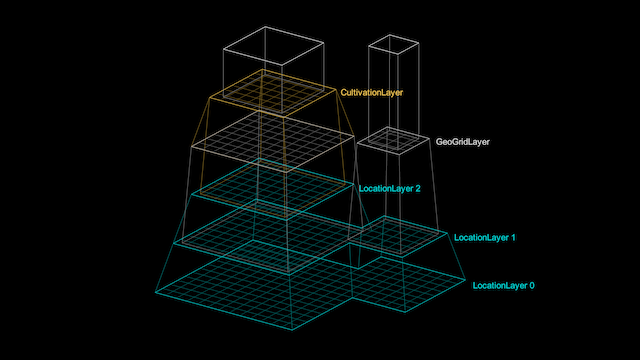
The value of layer-based generation is not just the implementation, but also a certain way to *think* about how to define spatial dependencies for large-scale generation.

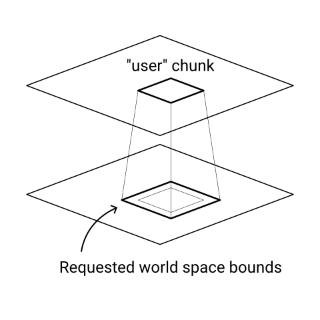
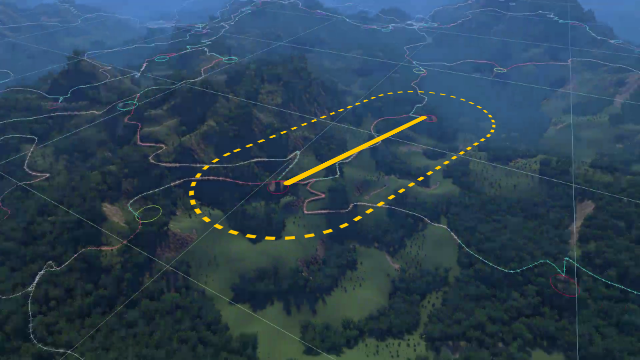
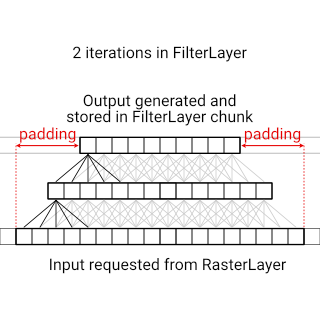
I've put a lot of effort into the documentation and its illustrations (examples here), which explain the high level concepts of the framework as well as the details.
https://runevision.github.io/LayerProcGen/

LayerProcGen: LayerProcGen

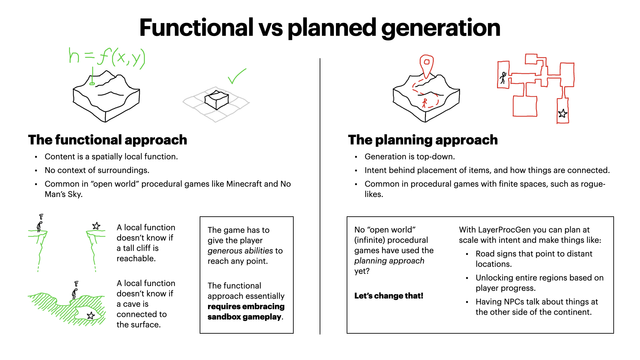
Procedurally generated open-world games tend to use "the functional approach" which essentially requires embracing sandbox gameplay.

LayerProcGen points the way towards making open-world procedural games based on "the planning approach" instead, which is normally only seen in "finite space" games such as rogue-likes.
#ProcGen

@runevision For my PhD thesis, I created a multi-layered grid generating / caching system that you could think of as the dual of a quad-tree with the grid coordinates on the odd values rather than the evens. No two LODs share the same boundary which let me amortize updates across the different levels as you move. Also, objects of any scale would be fully contained in a single cell of some detail level. I didn't get around to implementing anything using the latter.

https://cs.brown.edu/people/sdollins/world/home.html

@scdollins That's neat! I'm unsure though what this relates to? Did your system do anything based on a "planning approach"? Based on skimming your thesis it seems to be a classic "functional approach"?

@runevision I got a job offer and ran out of time, so I focused on implementing the functional terrain. Your implementation is much better fleshed out than mine would have been.

My idea was similar to yours in that coarse levels would place towns and the paths between them which would influence the terrain generation of the finer levels they overlap. Likewise, I intended to generate watersheds that would force the land to descend as needed.

Your implementation easily subsumes mine.

@scdollins Right, I'm convinced there has been many people thinking about and even sometimes implementing concepts quite similar to mine, since the basic ideas are more or less straightforward. I just hadn't seen much discussion of it, let alone any reusable implementations shared, so I felt I could contribute something there :)