I've quietly made my LayerProcGen framework public:
https://github.com/runevision/LayerProcGen

It's a framework (C#) that can be used to implement layer-based procedural generation that's infinite, deterministic and contextual.

Nobody else have tried/tested it yet - if you're up for taking it for a spin, let me know how it looks; what's clear or confusing, if you think there's low hanging fruit improvements I could make, etc.
#ProcGen

GitHub - runevision/LayerProcGen: Layer-based infinite procedural generation

Layer-based infinite procedural generation. Contribute to runevision/LayerProcGen development by creating an account on GitHub.

GitHub

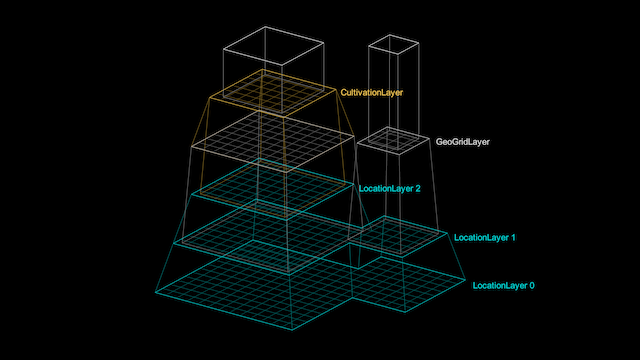
The value of layer-based generation is not just the implementation, but also a certain way to *think* about how to define spatial dependencies for large-scale generation.

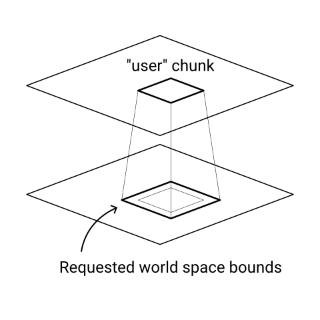
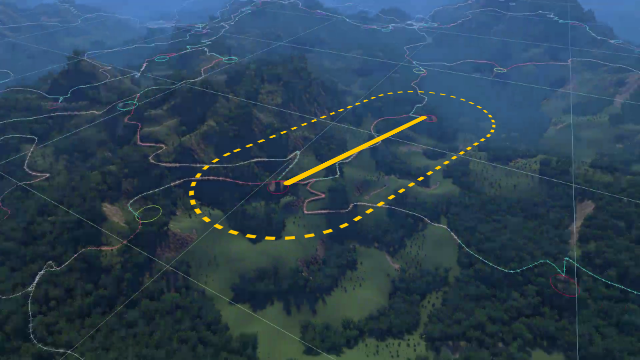
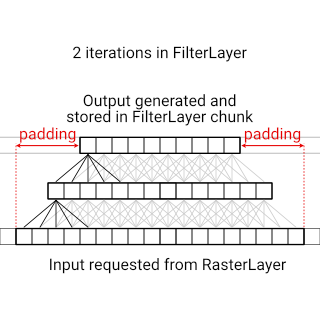
I've put a lot of effort into the documentation and its illustrations (examples here), which explain the high level concepts of the framework as well as the details.
https://runevision.github.io/LayerProcGen/

LayerProcGen: LayerProcGen

@runevision okaaaaay, I think you just provided me with a Solution for my Problem as well. I'm not procedural generating, but want to convert OpenStreetMap Data in exactly the same way into 3D Data.
@runevision I try to get it to work in Godot and prototype a couple of things. Thanks for the ground work.

@Sythelux Cool! I'm very curious to hear how it goes in Godot. I've tried to make as much as possible non-Unity dependent, but some non-core things were difficult. Details here:
https://runevision.github.io/LayerProcGen/md_UsingWithoutUnity.html

I'd be open to including Godot-specific parts and wrappers (similar to the Unity ones) if someone wants to implement it, and we can find a good way to make it work in the repo.

LayerProcGen: Using Without Unity

@runevision how did you do the upm branch is it simply branched out and then files moved around or is there some file referencing magic going on? because I would do something similar in Godot with their addon system.

btw I can't promise anything, but this framework looks really well thought through so I'll at least start to make something and we see how it goes.

@Sythelux It's a separate branch (with no shared history) where the files are moved around according to this python script:
https://github.com/runevision/LayerProcGen/blob/main/upm_release.py

Currently I run the script and check in the result manually on my computer for each commit, but I might automate it with a GitHub action at some point.

And yes, there could be a separate branch for delivering to Godot as well using a similar approach.

LayerProcGen/upm_release.py at main · runevision/LayerProcGen

Layer-based infinite procedural generation. Contribute to runevision/LayerProcGen development by creating an account on GitHub.

GitHub
@runevision okay this makes sense now, because github said about the upm branch, that it is "6 commits ahead of and 5 commits behind main" which only makes sense, if you'd branch it off, but I gonna ignore what github does there.
@Sythelux Yeah I don't know how to make GitHub treat it properly as an orphan branch. It's weird, because GitHub does not say that about the gh-pages branch even though it also has no shared history.