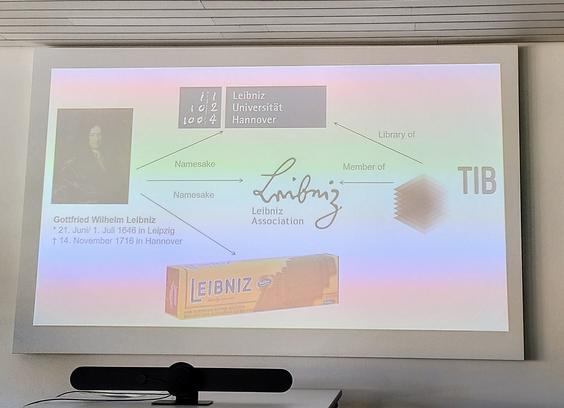
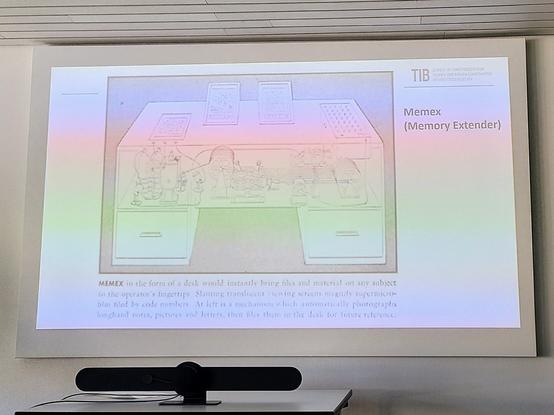
At the #RKGSymposium @tibhannover today, celebrating 5th Bday of the #ORKG @orkg 🎉 and learning more from @soeren_auer about the context of the project, which involves: a) a small KG about Leibniz, because it can get confusing: librairies, unis, scientists and biscuits! And b) some original inspiration comes from the 'As we may think' paper and the Memex idea (throwback to media studies classes)!
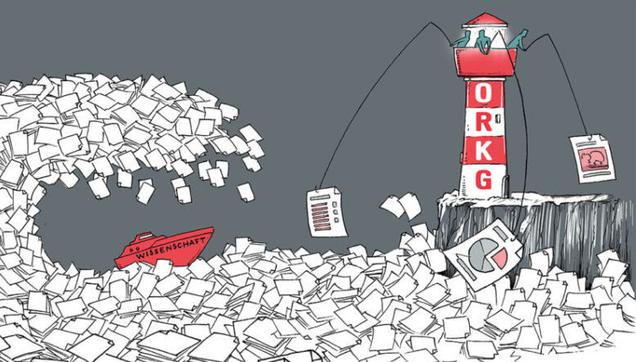
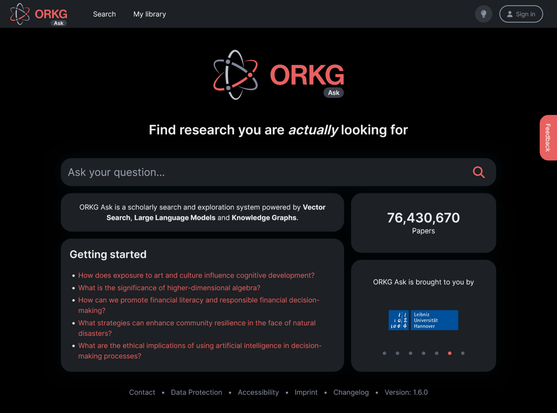
The #ORKG core concept is to act as a lighthouse in a sea of (mostly unstructured, mostly PDF) scientific papers. Today the reveal is a new interaction interface, #ORKGAsk, which allows users to more effectively explore and compare vast amounts of papers based on a question prompt and analysis of the paper abstracts. Short synthesized text answers (via LLMs) are also included. Users can also build their own paper library and search through those, if their papers are not already indexed.

Interface concept is based on supported human-machine collaboration (rather than attempting full automation). Nice dark mode features too. ✨

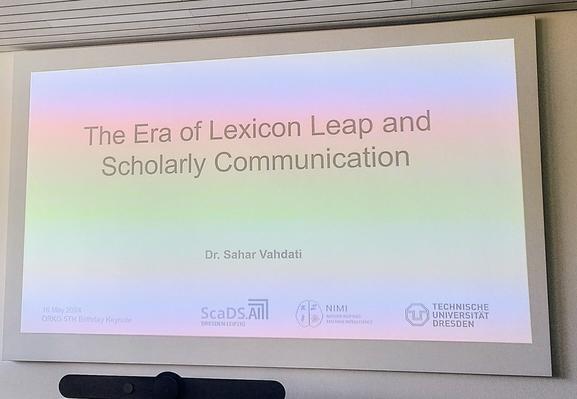
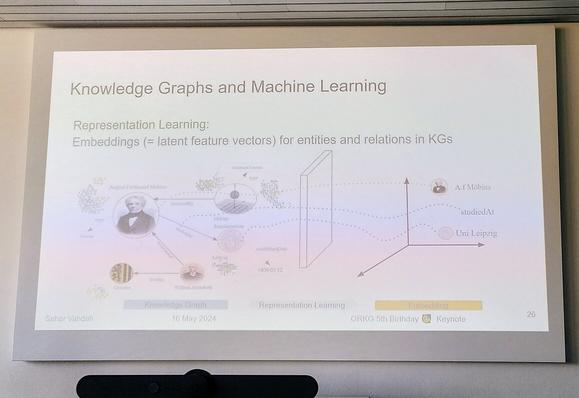
Day 2 of the #RKGSymposium at @tibhannover kicks off with a great talk by Dr Sahar Vahdati on the leap needed to get to reasoning, logical systems with high precision (not only high recall). Nice to see references to Paul Outlet, usually popping up more in archival sci contexts, and a range of other literary sources. Take aways: KGs and KG Embedding Models are vital for the future of getting more precise systems, but we've still got some way to go before concepts like the early Apple ('86) Knowledge Navigator (YouTube video worth checking out) can be reached.