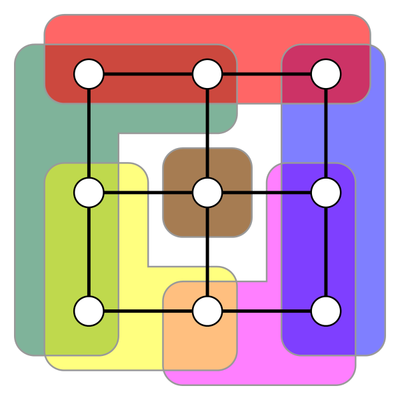
Gasarch on what counts as "closed form" and what does not, using the Ordered Bell numbers as an example: https://blog.computationalcomplexity.org/2024/05/what-is-closed-form-horse-numbers-are.html

He asks, in the form of a Platonic dialogue: is \(\tbinom{n}{i}\) or \(\tfrac{n!}{i!(n-i)!}\) closed form? What, if anything, makes that sort of formula different from the formula \(H(n)\), denoting the \(n\)th ordered Bell number?
What is Closed Form? The Horse Numbers are an illustration

In the book Those Fascinating Numbers  by Jean-Marie De Konick they find interesting (or `interesting') things to say about many numbers. I ...

@11011110 How about 'closed under a particular collection of primitives = can be written as a finite expression made of only those primitives'? You could then talk about universality classes - what can you do with only polynomials, with some transcendentals, what does 'closed under infinite sums but not under recursion' let you do?