 Dr. Robert Rohde
The 12-month moving average of global mean temperatures has now moved slightly above 1.6 °C (2.9 °F).

The 12-month moving average of global mean temperatures has now moved slightly above 1.6 °C (2.9 °F).
@richardtol @RARohde I wonder if anyone has worked out what the extinction curve would look like. I'm told by experts that hurricane damage goes up with the third power of wind speed, though overall the numbers decrease. So we can adapt at the moment, but there will be a time when adaption becomes difficult and deaths will skyrocket. Maybe not to the point of extinction, but that is a poor target.
I'm still pretty confident that we'll stop emissions long before then, so we'll never have to find out.
@richardtol Interesting, but I'm not sure it provides the answer. I certainly may be misinterpreting the work you did, but climate is localized in experience, as is climate *change*. It's not that the climate as a whole gets warmer, cooler, wetter, drier. It's that it will do all those things at once (though more warming than cooling) depending on where you are.
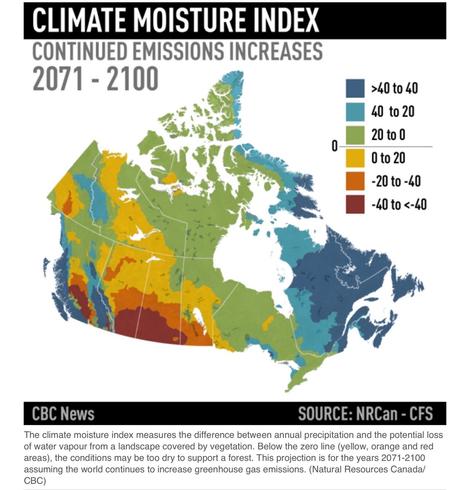
The forecast for Canada illustrates this nicely. The climate is very regional and affected by the rain shadow of the Rocky Mountains (and the coastal range to a lesser extent). So the grain fields will see drought, and the coastal agriculture farms will see flooding. This has already affected crops and food prices. Then you have to account for locking in of weather systems due to resonance which exacerbates hot and cold spells. (https://www.science.org/doi/10.1126/sciadv.aat3272)
 Prof Dr Richard S.J. Tol MAE
 Dan Neuman 🇨🇦