More favorite articles:
@ElisabethBoenisch The (so far) most popular article:
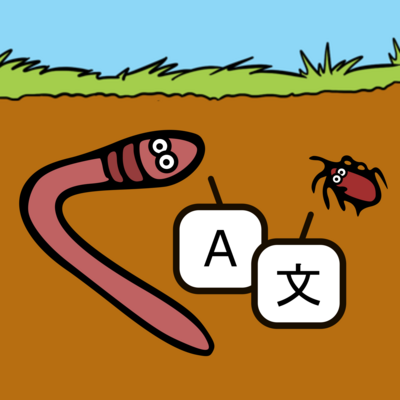
📃 Title: Disgusting or delicious - How soil invertebrates deal with the increasing microplastic contamination
🔎 Why selected: It is important to raise awareness of the increasing pollution caused by microplastics in our environment and their impact on the organisms in our ecosystems.
The authors of this article found that earthworms and springtails can suffer from several health problems after eating microplastics.😪 🤕

This article has already been translated to 7️⃣ languages (Arabic, French, Mandarin, Croatian, Portuguese, German & Turkish)!

Link to article:
https://kids.frontiersin.org/articles/10.3389/frym.2021.625228

Link to collection:
https://kids.frontiersin.org/collections/11796/soil-biodiversity

Link to translations:
https://www.idiv.de/de/young-minds/languages.html

How Soil Invertebrates Deal With Microplastic Contamination

Small animals living in soils, called soil invertebrates, represent a very diverse group of soil inhabitants. They include earthworms, woodlice, spiders, springtails, mites, and some insects. Soil invertebrates feed on dead plants, on fungi and bacteria, or on other soil invertebrates. The many ways soil invertebrates interact with each other, and the large number of different species, make life in soils complex and difficult to understand. Unfortunately, soil invertebrates have been dealing with soil pollution, including contamination with tiny particles of plastic called microplastics for decades now. But are microplastics harmful to these organisms? Can microplastics be passed between soil invertebrates when one feeds on another? Most questions about microplastics and soil invertebrates have been investigated using earthworms, but a few studies on others, like springtails, mites, and nematodes, also exist. In this article, we summarize the effects of microplastics on soil invertebrates.

Frontiers for Young Minds