 smileyhead
The HDMI Forum rejected AMD's open source HDMI 2.1 implementation

 Carlos Solís
If we had to relay exclusively on non-proprietary protocols, I doubt that GNU/Linux would have gone anywhere beyond the Commodore 64
 tabular
Why? Most software wasn’t propreitary before companies realised they could make more money at your expense, not all went into making a better product.
If given the choice of an uncomfortable dormitory or a comfortable jail, at least the residents can improve the living areas in the former.
Parent is right though. Unix being proprietary is why the GNU project was started, and why the Linux kernel and BSDs rose above.
Hopefully HDMI being proprietary leads to others creating an alternative, open standard which eventually can push HDMI to open up or push it out.
Isn’t that what DisplayPort is? At least that is what Dell is claiming.
VESA requires an annual membership fee to access the DP standard. Perhaps that’s fine but that makes regular people unable to “open” the door to the standard. VESA has in the past claimed implementing DP can mean you own them royalty fees but they apparently backed down from that.
Implementation of Content ““Protection”” isn’t in the spirit of an open standard to me, rather the opposite. Why have an open standard if not to weed-out corporate anti-features from existence for the benefit of the users?

Alright this sent me down a rabbit hole so I’m going to try to and summarize really quickly.
1^st^, VESA requires a membership but in reality you need a company that has a vested interest in what VESA does. So you have to pay a huge due to be apart of it. This is quite BS according to me, the fact that they can do this and still claim to be an open standard. Source
2^nd^, VESA never tried to implement a royalty based off the Display Port Standard. The company that did that was MPEG LA, LLC, they aren’t affiliated with VESA. Rather this company is a patent pool company that attempted to enforce their clients (such as Sony) licensing fees. They seemed to have backed off of this back in 2016 as the last patent used was for the Display Port Standard 1.4. Source
3^rd^ Content Protection was necessary if you want wide spread adoption. Companies aren’t going to want to do business with you if you allow for their IP to be ripped. As well, VESA is just a collection of companies that have voting shares in the company. So those corporate features are just par for the course.
FAQs - VESA - Interface Standards for The Display Industry
Quick answers to common questions are found here. Can’t find what you are looking for? Submit your question via Ask DisplayPort to get an answer from one of our subject matter experts. General VESA FAQs Q: How do I order VESA Standards? How much are they? A: Some VESA Standards are offered electronically in PDF […]
indeed, parent’s conflation of C64 and *nix threw me off (as I guess it did others), but your comment helps to put it into perspective.
proprietary can drive FLOSS innovation, but its so hard to get around proprietary entrenchment - especially wrt consumer facing tech.
 Riskable
Linux never ran on the Commodore 64 (1984). That was way before Linux was released by Linus Torvalds (1991).
I’d also like to point out that we do all rely on non-proprietary protocols. Examples you used today: TCP and HTTP.
If we didn’t have free and open source protocols we’d all still be using Prodigy and AOL. “Smart” devices couldn’t talk to each other, and the world of software would be 100-10,000x more expensive and we’d probably have about 1/1,000,000th of what we have available today.
Every little thing we rely on every day from computers to the Internet to cars to planes only works because they’re not relying on exclusive, proprietary protocols.
 phillaholic
DRM is mandatory in any spec you expect content owners to support. We don’t have to like it, but it’s absolutely not going away.
There are couple of ways, not buying it for example.
DRM is for paying customers.
That’s 99% of the reason we use HDMI…
Who is we?
Well said, content owners, not creators.
 Fisch
FischAV1 is a good example of a non-proprietary protocol replacing proprietary protocols (h.264, h.265, …)
 TheImpressiveX
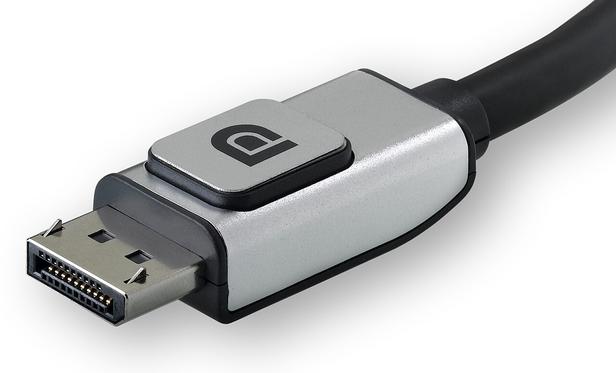
DisplayPort for life!
That doesn’t do audio too though right?
It does since version 1.0 it seems?
Thank God, for a moment I thought I had auditory hallucinations.
Visual are ok though
Sounds like hdmi Forum are a bunch of twats. Time for a new format.
DisplayPort already exists
Hard to find on non-pc gear, but that’s a fair point
It’s usually easy enough to adapt it as needed. It can typically send signals compatible with HDMI and DVI-D just fine.
The passive adapters that connect to DP++ ports probably still rely on this HDMI specific driver/firmware support for these features.
 pewgar_seemsimandroid
can’t you just mod it?
 Altima NEO
And also USB c
USB C is just a connector, you might be referring to Displayport over USB C which is basically just the same standard with a different connector at the end. That or Thunderbolt I guess
USB-C display output uses the Display Port protocol
Can it use others, and is there a benefit? USB C makes a lot of sense; lower material usage, small, carries data, power and connects to almost everything now.
I believe USB-C is the only connector supported for carrying DisplayPort signals other than DisplayPort itself.
The biggest issue with USB-C for display in my opinion is that cable specs vary so much. A cable with a type c end could carry anywhere from 60-10000MB/s and deliver anywhere from 5-240W. What’s worse is that most aren’t labeled, so even if you know what spec you need you’re going to have a hell of a time finding it in a pile of identical black cables.
Not that I dislike USB-C. It’s a great connector, but the branding of USB has always been a mess.
 strawberry
would be neat to somehow have a standard color coding. kinda how USB 3 is (usually) blue, maybe there could be thin bands of color on the connector?
 jabathekek
Please think of the shareholders… :(
Have you looked at the naming of the usb standards? No you havn’t otherwise you wouldn’t make this sensible suggestion.
the shenenigans with USB 3 naming you mean? you're right, this would be too logical for USB lol
Don’t worry, they made it worse with usb 4.
oh they did? how so?
USB 3.2 2x2 with 20 Gbps is the same as USB 4 Gen 2×2 with 20 Gbps
USB 4 Gen3x2 has 40 Gbps and was then renamed to USB 4 1.0
jesus what the fuck
Yeah I have multiple USB cables, some at 30w, and some at 140w. Get them mixed up all the time! More companies need to at least brand the wattage on the connectors.
There’s some really high bandwidth stuff that USB-C isn’t rated for. You have to really press the limits, though. Something like 4k + 240Hz + HDR.
That doesn’t even seem so unreasonable. Is that the limit though? My cable puts a gigabyte a second down it so I wouldn’t imagine that would hit the limit.
It is trivial arithmetic: 4.52403840*2160 ≈ 9 GB/ s. Not even close. Even worse, that cable will struggle to get ordinary 60hz 4k delivered.
I think the maths got a bit funky there. I don’t think a cable capable of such speeds would struggled to do 60Hz at 4K, it surely doesn’t need close to a gigabyte a second?
It surely does. Check pirates post for clean math formatting
USB-C with Thunderbolt currently had a limit of 40Gbit/sec. Wikipedia has a table of what DisplayPort can do at that bandwidth:
en.wikipedia.org/wiki/DisplayPort
See the section “Resolution and refresh frequency limits”. The table there shows it’d be able to do 4k/144hz/10bpp just fine, but can’t keep above 60hz for 8k.
Its an uncompressed video signal, and that takes a lot of bandwidth. Though there is a simple lossless compression mode.
I love having mysterious cables that may or may not do things I expect them to when plugged into ports that may or may not support the features I think they do.
If the implementation is so broad that I have to break out my label maker, can we even really call it a “standard”
USB C seems like a good idea but in reality all it really did was take my 5 different, not interchangeable, but visually distinct, cables, and make them all look identical and require labeling
you mean thunderbolt?
 zelifcam
We are all aware of that.
However, there are tons of studios people have constructed that use HDMI TVs as part of that setup. Those professionals will continue to be unable to use Linux professionally. That’s a huge issue to still have in 2024 with one of the major GFX options. Linux desktop relies on more than some enthusiasts if we want to see it progress.
 Eldritch
Linux has very little to do with DisplayPort. My Windows PCs use DisplayPort. You can get passive adapters to switch from HDMI to DisplayPort etc.
What? I’m talking about people who would like to use the full capabilities of their HDMI TVs, when using Linux. I’m not sure what you’re on about.
My understanding is the adapters do not provide all the features of the HDMI 2.1 spec. Is that no longer the case?
 Pantherina
What exactly doesnt work over HDMI?
We cannot have two standards, that’s ridiculous! We need to develop one universal standard that covers everyone’s use cases.
There are now three competing standards.
I know what you are referencing, but displayport already covers everybody’s use cases
#switchtodisplayport
Oh? Let me CEC on that…
Hi, my name is USB-C!