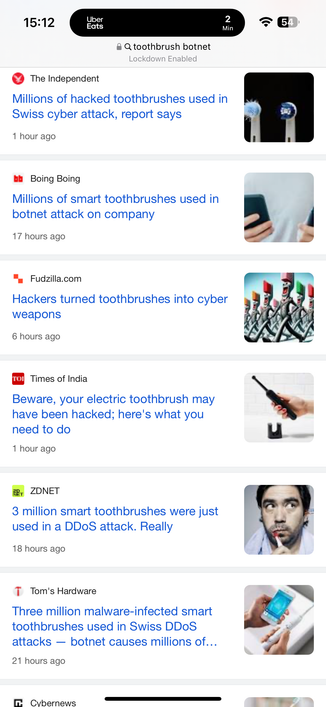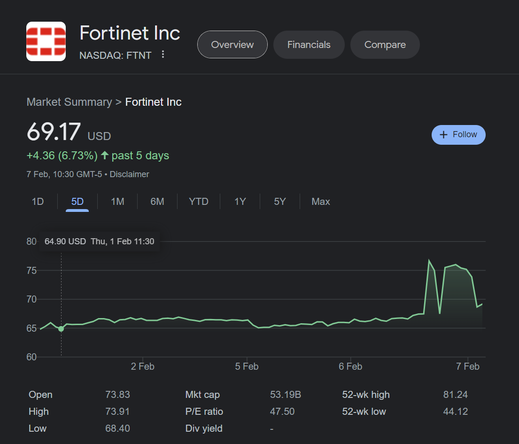
The three million toothbrush botnet story isn’t true.

Here’s the original source of the story: https://archive.is/2024.01.30-203406/https://www.luzernerzeitung.ch/wirtschaft/kriminalitaet-die-zahnbuersten-greifen-an-das-sind-die-aktuellen-cybergefahren-und-so-koennen-sie-sich-schuetzen-ld.2569480

It’s simply a made up example. It doesn’t exist. It starts talking about NoName Ddosia, too, which also isn’t toothbrushes.
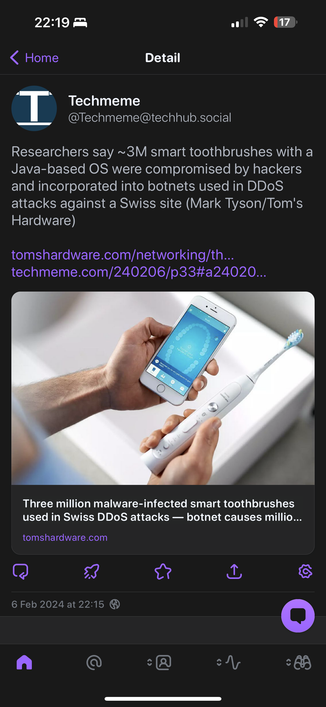
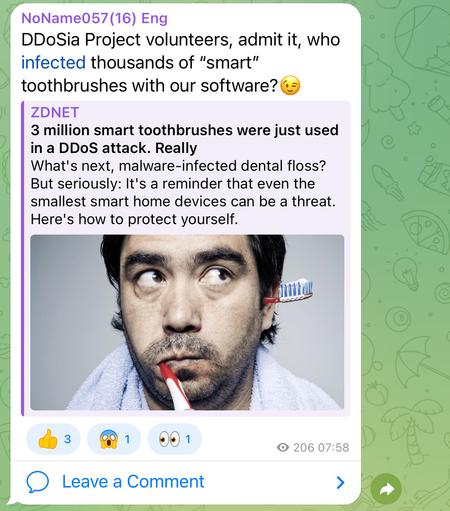
The toothbrush thing has gone viral despite it being total bollocks.

Now NoName have picked up the fake toothbrush story as propaganda for their members.

Good job, Fortigate.

Fortigate haven’t replied to my PR question about it. Given this is several times the size of the world’s biggest botnet, you’d think they’d have any evidence.. at all.

Kudos to @BleepingComputer for doing actual journalism.

Fortinet also declined to comment to me.

It's a completely made up story, which is now being circulated as Russian propaganda.
https://www.bleepingcomputer.com/news/security/the-unlikely-3-million-electric-toothbrush-ddos-attack/

The unlikely 3 million electric toothbrush DDoS attack

A widely reported story that 3 million electric toothbrushes were hacked with malware to conduct distributed denial of service (DDoS) attacks is likely a hypothetical scenario instead of an actual attack.

BleepingComputer
@GossiTheDog @BleepingComputer I’m still trying to figure out what the problem was with toothbrushes that needed fixing with an internet connection.