 Daniel Hernández
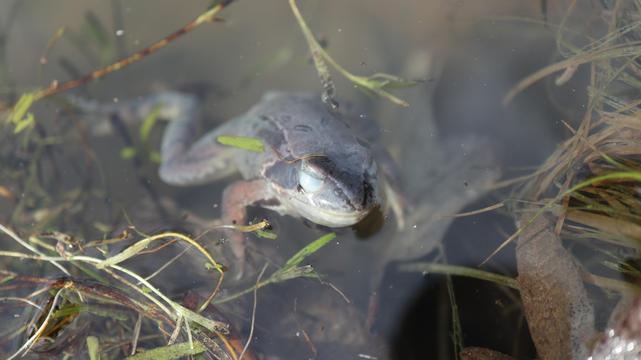
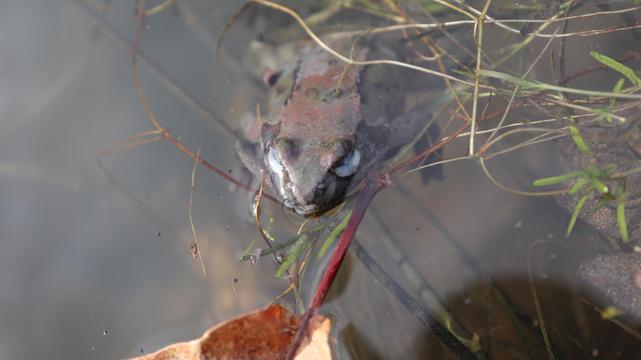
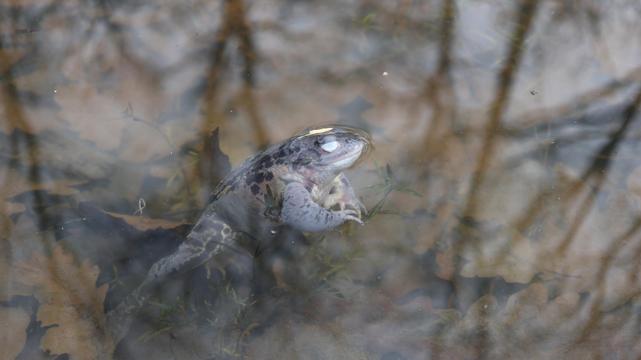
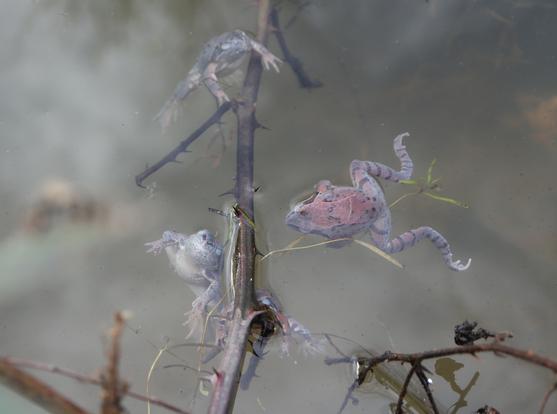
Today, @Ayenkantun and I were walking in the #Vahingen forest, and saw around one thousand dead frogs in a pond (the pond marked on https://www.openstreetmap.org/?mlat=48.75194&mlon=9.11892#map=19/48.75194/9.11892). I saw an alive frog in the grass, but I had no time to take a picture. It jumped into the pond and disappeared below the leaves at the bottom of the pond. I saw no other alive frogs.
Frogs were of different sizes, small and big, but all of them were dead. So our question is what killed them. We usually observe who lives in the pond, and we usually see frogs, insects, and tritons. This is the first time we observed dead frogs in that pond.

 Ayenkantun