
A chart from a 2018 dataviz 📊 study. This has melted my brain a bit.

The chart is meant to raise awareness about radon exposure and nudge people to get their homes tested. Specifically, it's meant to show smokers that they're at increased risk.

What effect do you think it actually has?!
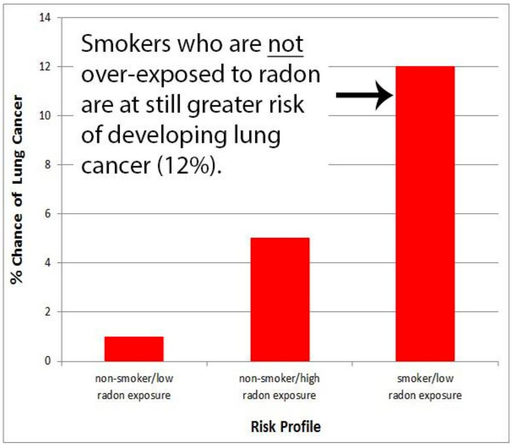
@elibryan They could have worded it differently and said; even if you don't smoke, high radon levels increase your risk of lung cancer by 400% (from 1 to 5%). If you smoke, high radon levels increase your risk by 158.3% (from 12 to 31%).
@elibryan It's not really all that surprising that people would look at this and go "Oh, I'm in the left half of what looks like an exponential curve" and go "nah, I'm OK" though is it?
@mduvekot ha, I guess surprise is relative?! I think it's non-trivial (or at least not widely understood) that these takeaways are relative and and not necessarily responsive to the absolute values. Also unclear why people on the left half _reduce_ their perceived risk but it doesn't seem to affect people on the right half? Like why isn't the influence symmetric? If they were using an exponential curve as their mental model then you'd expect people on the right to increase their perceived risk.