 Nyarlathotep
 Cory Doctorow
 Spoontaneous Consumption
@pluralistic
And it's all the Phreakers' fault! Damn freeloaders 😡
 Den of Earth
@manu @pluralistic
I knew a guy in the 80s who would make collect calls from Canada to a payphone in France. When his girlfriend answered, she would say she accepted the charges, but the Canadian operator didnt know that there was no such mechanism in France so they would have long free talks at a time when international calls were expensive and neither Skype nor the Internet existed.
I knew a guy in the 80s who would make collect calls from Canada to a payphone in France. When his girlfriend answered, she would say she accepted the charges, but the Canadian operator didnt know that there was no such mechanism in France so they would have long free talks at a time when international calls were expensive and neither Skype nor the Internet existed.
 TonyC
TonyC@DenOfEarth @manu @pluralistic I heard a story once about a British expat living in the Caribbean. He had arranged for his club in London to phone him with a morning alarm call. A friend heard of this arrangement and asked him, "Isn't that rather expensive?". "Oh, I never pick up the phone" was his answer.
 ALAN LAVENDER
@phlebas @DenOfEarth @manu @pluralistic I knew of an Art Director in London who used to shoot with my boss when I was a young photographic assistant in the 80s. Rather than pay the cost of London parking meters or garages he would just drive to the doorstep of his first appointment (he drove in from out of town), park his Bentley on the pavement outside then collect it several days later from the car pound where it had been clamped and removed to. He maintained it was cheaper than parking. Probably the same guy.
 Frikisada
@phlebas @DenOfEarth @manu @pluralistic I don't remember the details anymore, but my mom and one of my aunts had a system. Depending on number of tones and time of day, they meant one thing or the other (i.e. 2 tones at around 9am meant I'm going to the bakery meet me in 10 minutes to go for groceries together)
 Philip Moscovitch
@DenOfEarth @manu @pluralistic Many years ago in Budapest, some other backpackers told us about a payphone on the outskirts of town that let you make free international calls. We used it a couple of times to call home. One day, there was a Hungarian guy calling his girlfriend, who lived outside the country. He begged us to please not overuse the phone or tell others about it, because it was his lifeline and he didn't want to lose it. We did not go back.
@manu @pluralistic
Another early form of (legit, sorry!) free calls was the old Zenith numbers. This predated the 800 toll free lines. You had to call the operator and ask to be connected to the 5-digit number you wanted.
A company I worked for in the 80s still had a Zenith number published in the white pages even though it had long been disconnected. We tried calling it and were greeted with a very suspicious "and WHO are you trying to reach???" - we hung up.

 abcderian
@DenOfEarth @manu @pluralistic Is this something different from the abbreviations they used to use for all phone numbers? They used to use the letters associated with the digits as a quick code for operators - for instance, in Central New York there was an exchange that began 756 or 753: those numbers were referenced as 'Skyline', so to call 756-8413 (made up number, do not call!) You would ask the operator for 'Skyline 6-8413'.
Anyone remember Beechwood 4-5789?
According to the Wikipedia article, Zenith numbers were so called because the letter Z was on the number zero (edit, or it should be, see pic), which would take you to the operator you needed in the first place.
 Geoff Winkless
@DenOfEarth @manu @pluralistic my dad used to tell me a story of how he and his friends got cheap calls from old UK payphones.
In those days, local calls were much cheaper than national; critically, "local" also included the geographical neighbour codes to the local area.
AIUI the paid rate was based on an (inaudible) signal from the exchange.
They worked out that you could hop from area to area by chaining area codes. As long as each exchange saw a local code, it would remain at local rate.
 Billy Smith
@Geoff @DenOfEarth @manu @pluralistic
There was a recording that i listened to in the early 1990's, called the Sounds Of Britain.
When rotary phones were still a thing, the exchanges used a similar mechanism. You could hear the clicks as the mechanism operated.
If you started dialling an adjacent area code before the first one had finished dialling through, so as long as you knew the numbers, you could dial all the way around the coastline of Britain, and then dial your own phone number. :D
@Geoff @DenOfEarth @manu @pluralistic
When you heard your own number start to ring, you had to hang up your phone.
Then within a few minutes you phone would ring, and when you answered it, all you would hear was the clangs and clicks of closing electro-mechanical connections. :D
Someone played me a tape of it in the early 90's, but i've never been able to find a copy since then. :D
 Vaguely here 🏳️⚧️🏳️🌈
@BillySmith @Geoff @DenOfEarth @manu @pluralistic I still have my dad's exchange index which was exactly the sort of thing you wanted to pull off this kind of trick... Amongst other things ;) https://flic.kr/p/eixfQt

Telephone Exchange Index
 Ursidinoj/The Bjornsdottirs
 RealGene ☣️
@manu @pluralistic
My sister and I built a couple of Black Boxes so she could call home from college (pre SS7). The box worked by limiting the circuit voltage enough to stop the ring signal, but not enough to signal that the receiver was lifted.
So, you were basically talking over a circuit that Bell thought was ringing unanswered.
If we talked more than about 5 minutes, there was a good chance an operator would cut in to ask why we were letting it ring for so long…
 Pierre Massé
@pluralistic that typeface though 😍
 AKMA
AKMA John Francis
 SHODAN
@pluralistic Seen similar in Cockfosters Tube Station in the UK. Still illuminated mind. Not sure there are any public phones left in London at this point.
 snaeqe
The London ones at least serve a purpose when you walk into them while speaking on your very own non-public phone, to both silence out a little of the whole acoustic mess a tube station is, as well as providing more privacy for your conversation than surprising your s/o with the information about your expectancy while hanging from a grab loop in an overcrowded service..
 Martijn de Vrieze - TK69241
@SHODAN @pluralistic
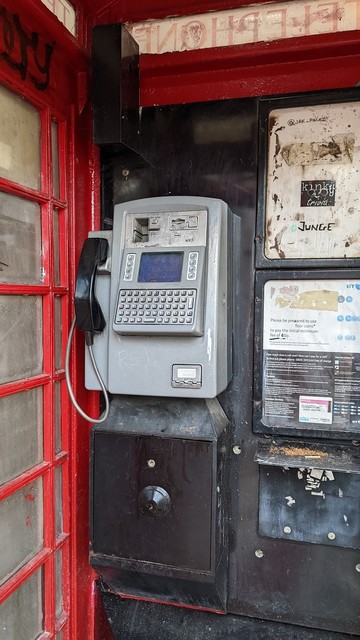
I do not recall seeing any functioning payphones in London, However I ran into this still functioning relic last year in Oxford.
I do not recall seeing any functioning payphones in London, However I ran into this still functioning relic last year in Oxford.
 Charlie Stross
@martijndevrieze @SHODAN @pluralistic BUSINESS STARTUP IDEA: Buy up empty phone booths, slap PV panels on top and a battery/distribution board inside, then rent them out as smartphone fast-charge charging points (with a lock-box to leave your phone in while it's sucking juice at £1/30 minutes).
"It's a phone box. You pay us for permission to leave your phone in it. You're welcome."
@cstross Some UK phone booths are already given to the community afaik. Some are used to store defibrillators and some are libraries.
@SHODAN As I live in the UK, I knew that already. Shocking, isn't it?
@cstross Heh, missed that. I think BT want to get rid of these generally mind, so offloading them to the community to maintain instead seems cynical enough from a certain angle I suppose.
@cstross Hell, maybe I could see if I could buy a working phone from one at some point, see if I could get it working on the mobile network and use it as an alternative for home use only instead of giving out my mobile number.
@SHODAN I had a friend (now dead) who once lifted most of a Strowger exchange from a skip outside a BT building they were re-equipping with System X. He took it home, set it up, added a speaking clock, and put the speaking clock on a premium-rate phone line with a number he could give to people who annoyed him.
 Elias Mårtenson
 armadillosoft
@cstross @martijndevrieze @SHODAN @pluralistic
Sadly, too late they are mostly gone now.
Also by the end there, they had gotten quite stinky.
 snaprails
@Armadillosoft @cstross @martijndevrieze @SHODAN @pluralistic They always were. Even back in 1979 when I worked with the payphones engineers the kiosks were known as the most expensive public toilets in the country.
It's also when I learned about always checking the handset before listening for dial tone - just in case someone had filled the mouthpiece with shit.
It's also when I learned about always checking the handset before listening for dial tone - just in case someone had filled the mouthpiece with shit.
 rlonstein
@cstross @martijndevrieze @SHODAN @pluralistic We tried the smartphone charger lock-box. Other than a few specific environments both venues and users prefer open cables and advertising over paid secure charging. Outdoors and even in mall hallways people will attack the boxes with prybars and hammers to try to steal the contents.
 NKT
NKT@cstross @martijndevrieze @SHODAN @pluralistic Scotland has quite a few derelict blue police boxes scattered about. Some have become coffee houses, one in Edinburgh is a tool loan/exchange, etc.
I'm sure someone creative could see an equivalent use? Charging point for robot police cars in the near future?
I'm sure someone creative could see an equivalent use? Charging point for robot police cars in the near future?
@Dss @martijndevrieze @SHODAN @pluralistic The Edinburgh ones are all Grade 2 Listed buildings (at least). (Source: a friend of mine bought one.)
 James Gleick
@Dss @pluralistic @cstross @martijndevrieze @SHODAN I understand they are larger on the inside than the outside.
@JamesGleick @Dss @pluralistic @martijndevrieze @SHODAN No, but they have electricity and running water (and a sink so the cold copper could brew a mug of tea in the middle of a winter shift). They gradually fell into disuse when the telephone, radio dispatchers, and cars enabled the police to work out of centralized stations rather than patrolling on foot.
 Paul Lalonde
@cstross @JamesGleick @Dss @pluralistic @martijndevrieze @SHODAN Though more comfortable for the copper, something has been lost in passing of solo foot patrols being the default. Detachment of the police from the community really makes a mess.
 Noel Kelly
@martijndevrieze @SHODAN @pluralistic@mamot.
Meanwhile in Australia...
https://www.sbs.com.au/news/podcast-episode/payphones-neither-gone-nor-forgotten/6jbbv69g6

Payphones - neither gone, nor forgotten
Telstra has revealed since payphones became free to use in 2021, there have been over 40 million calls made across Australia. More than 250,000 of those calls were made to emergency services - reiterating the importance of payphones for vulnerable people.
@gnoll110 @pluralistic @SHODAN That's really nice, making them free for calls actually gives them a proper use again!
 Adrien Delessert
@martijndevrieze @SHODAN @pluralistic I loved those full-keyboard payphones when I was a kid! I lived in the US but spent long periods in Switzerland, where we didn’t have a computer. I discovered that you could actually send emails from the payphones there, so I’d stop by, put a few coins in, and send notes to my friends back home!
@SHODAN @pluralistic Ha! Was about to reply with the photo I took of the same kiosks last Saturday 😀
 Tony Wells
The Cockfosters ones are probably like that due to some sort of listed building status although they do look like a hidden entrance to a top secret building.
 AutisticMumTo3
@SHODAN @pluralistic
They should be required to keep a few working especially in places such as the underground where mobile phones are more likely not to get a signal. What if someone needs to dial 999 & either hasn't got a mobile, their mobile has been stolen or their mobile can't get a signal
They should be required to keep a few working especially in places such as the underground where mobile phones are more likely not to get a signal. What if someone needs to dial 999 & either hasn't got a mobile, their mobile has been stolen or their mobile can't get a signal
 xs4me2
No more…
 Tom Walker
@pluralistic They should put some phone chargers in these
 My camera shoots fascists
I had a weird dream about this! There were old-timey machines in these stalls that somehow let you talk to anyone. I was searching a very large book, attached to the metal table, that contained every number in the city, listed publicly. I could do so *anonymously,* without being surveilled or having my searches entered into a database about me by hundreds of companies I'd never heard of. In the dream I could make an anonymous phone call to any of these numbers and discuss anything without being surveilled or data mined or recorded. For a quarter. And the machines were everywhere.
Man, what a weird-ass dream.
 LisPi
LisPi@Mikal @pluralistic Well the "without being surveilled or recorded" part I'm not sure was actually real though.
Officially they weren't, but I wouldn't be even remotely surprised if they were all logged and recorded.
These days the way to get an equivalent of that phone book is to look for database dumps/leaks.
You'll still be logged and potentially recorded though.
Officially they weren't, but I wouldn't be even remotely surprised if they were all logged and recorded.
These days the way to get an equivalent of that phone book is to look for database dumps/leaks.
You'll still be logged and potentially recorded though.
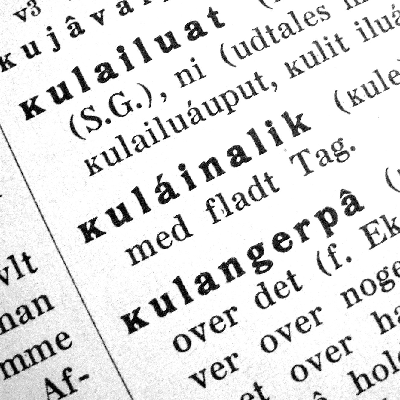 Head·word /ˈhedˌwɜː(ɹ)d/ n.
@pluralistic The burial chamber of pharaoh Ptelephony
 jimb
jimb Jez Caudle
@pluralistic Long Circular Mall, Trinidad and Tobago. No calls longer than 3 minutes.
 Patrick Johanneson 🚀 🇨🇦
@pluralistic The last time I checked—a few months back—this one was still in place.
Big Sky, at the Headingley edge of Winnipeg, MB.
 Dane Peterson
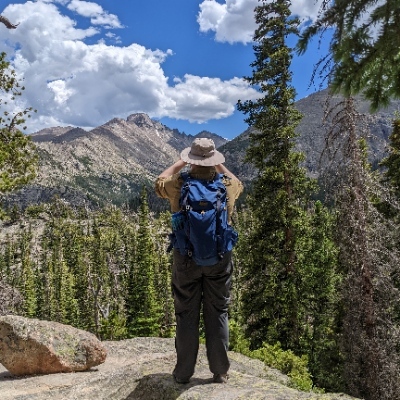
@pjohanneson @pluralistic There was one still a real classic one in place at Colter Bay Visitor Center in Grand Teton National Park when we passed through in early October. It was the first I've seen in ages.
They used to be so important when I was a kid on vacation with my parents, travelling in a truck camper. We would find one every few days to call home, alternating between my maternal grandparents and paternal grandmother, with each of them subsequently relaying the details to the other.
 Allan Chow
@grumpasaurus @pjohanneson @pluralistic I loved that movie as a kid!! (And honestly still do.)
My mom had hooked her hifi up to the VCR and transferred the complete audio for both The Brave Little Toaster and Mary Poppins over to cassettes.
On those aforementioned vacations, my parents would entertain me by putting those on the car stereo, sometimes playing them multiple times in a row.
 Nicky🦨✌️
@danep @pjohanneson @pluralistic i gave my nephew a campus tour of my alma mater and as we came from the engineering building to the student union i sadly said, “and this was where all the pay phones used to be.” Sad. Memories…people standing in line waiting to check their pager voicemails 😂
@skoombidoombis @pjohanneson @pluralistic I they were just getting rid of them when I was at college. I think they vanished one summer. But if I remember correctly, they kept the row of wooden booths built into an out of the way wall in the student union as little private spaces to make calls on your cell. I thought this was a pretty clever idea, but it never really caught on. 😕
 Steven Sandoval
@skoombidoombis @danep @pjohanneson @pluralistic “A pager is like ... a text message receiving device that only receives numbers.” https://youtu.be/YkfrqLAC1U0 #hololive #hakosbaelz #noirvesper
