Time for the first item: The “Generational Transformation of Toronto’s Housing System.” Proposed new target is 65,000 rent-controlled units — up from 40K units in the Tory plan. It’ll be part of larger provincial plan to build 285K housing units of all types by 2030.
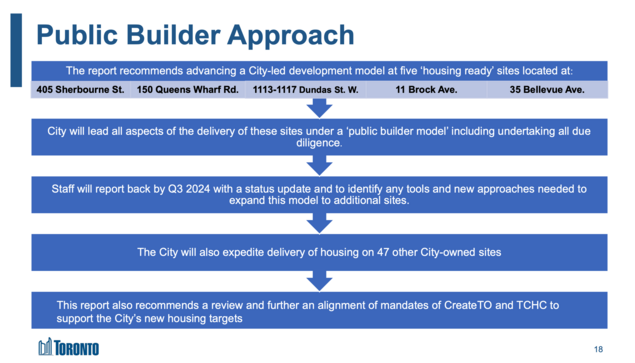
A new thing in this Housing plan compared to past Housing plans is a recommendation to pursue a “Public Builder” strategy with five sites. Different from model where City offers leases to private developers on condition a percentage of units will be affordable.
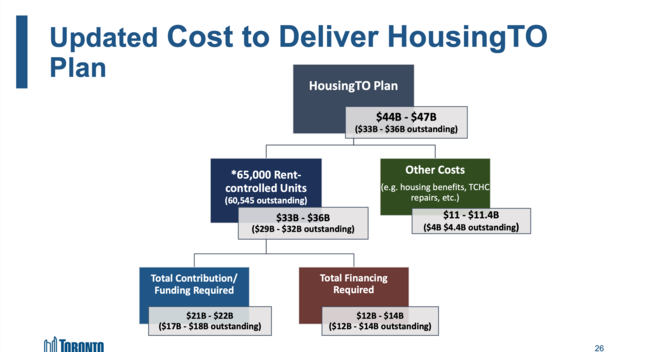
But, well, then there’s the matter of the bill. All this is expensive.
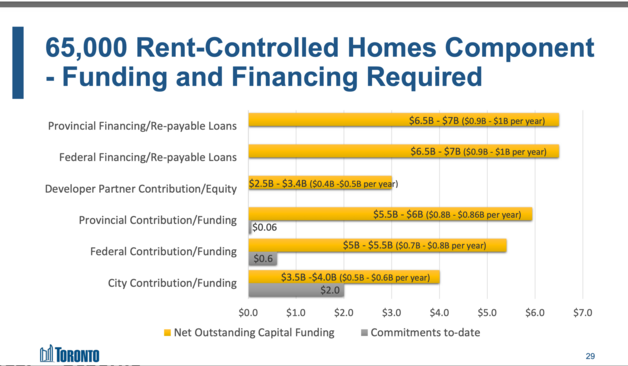
City needs between $33 billion and $36 billion. Report includes major requests for money from Queen’s Park and Ottawa in form of both financing and direct funding.
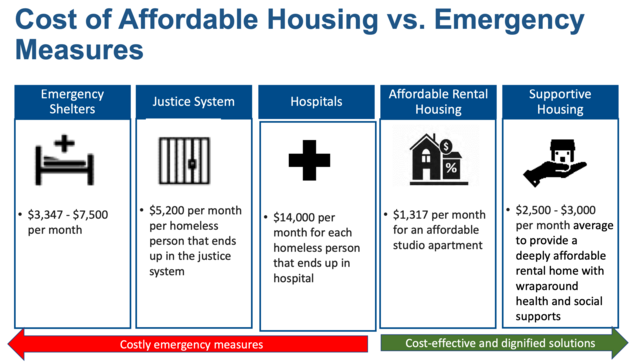
The thing to remember about these costs though is that the alternatives — shelters, jail, hospitals — are *way* more expensive.
Councillor Nick Mantas asks if the city could look at buying developments that have approvals but aren’t getting built. Housing Secretariat’s Abi Bond says that’s possible, and there may be opportunities to do that given number of developers experiencing financial distress.
Councillor Dianne Saxe asks if staff have looked at building tiny houses on vacant/transitional lots. Bond says they’re reviewing information about doing that. More to come.
See this week’s City Hall Watcher for more on what’s happening behind the scenes https://toronto.cityhallwatcher.com/p/chw252

Logging cabin lobbying
City Hall Watcher #252: LOBBYIST WATCH returns with lots of housing lobbying, plus your Council meeting preview
Earlier this morning, Council named Stephen Conforti, who has been serving as an interim City of Toronto CFO, as the new permanent CFO. His immediate task is to steer an unwieldy ocean liner around a giant iceberg. Fun gig.
https://secure.toronto.ca/council/agenda-item.do?item=2023.CC12.3Agenda Item History 2023.CC12.3
Agenda Item History 2023.CC12.3
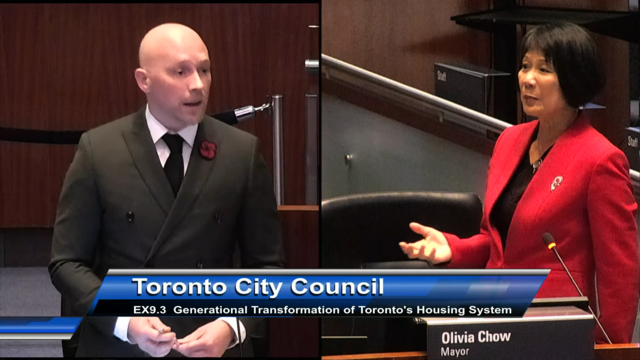
Mayor Olivia Chow is the first speaker on the next-gen housing plan.
“At council here, over the years, we’ve talked — and talked — about building housing … we’ve built condominiums, but are they affordable? No. Not to ordinary people.”
Chow says this new housing plan is about a change of focus. “It’s not just about market housing. It’s not just about market determination of what the rent is. It’s about being people-centred. It’s about government taking a role.”
Chow says she was up late last night talking to federal Housing Minister Sean Fraser. She says the feds are “making very positive noises” on housing and “hopefully there will be funds coming — it sounds very positive. We’ll see.”
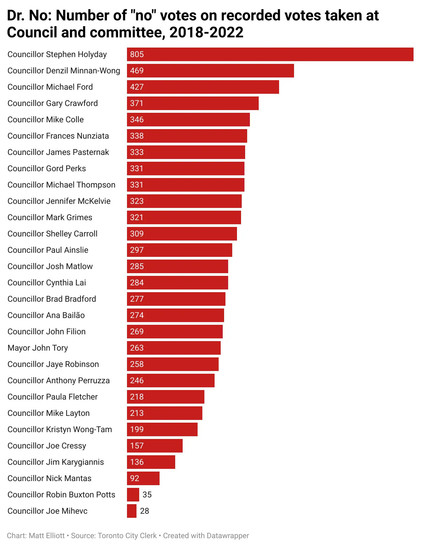
Holyday asks Chow where the city is supposed to find money for the housing plan. Chow says if the City can find money for things like the FIFA World Cup and rebuilding the St. Lawrence Centre for the Arts they can surely find money for housing.
“Knowing the constraints of the budget, what will be cut?” asks Holyday, arguing that City Hall will need to cut something from the budget to pay for housing plan.
Chow invites Holyday to upcoming budget consultations.
He says he just wants money for mechanical leaf collection.
Councillor Brad Bradford is now. He asks Chow what her model is for the public builder program. Chow refers to previous agencies dating back to the 1990s and earlier. She says the vision is NOT to be Ontario Housing, which was all RGI housing — she says mixed-income is important.
Bradford asks Chow if her public builder model could involve the private sector. She says she’s open to working with the private sector, but she’s wary of public-private partnerships, citing the Eglinton Crosstown — “in court, behind schedule, costs going up.”
With that, Council breaks for lunch. Back at 2 p.m. to put a roof on this housing debate.
Council is back and dealing with some quick items before returning to the Housing main event item.
Councillor Brad Bradford’s motion calling for a report on converting office space to residential CARRIES via show of hands. https://secure.toronto.ca/council/agenda-item.do?item=2023.PH7.9
Agenda Item History 2023.PH7.9
Agenda Item History 2023.PH7.9
Request for a report on the feasibility of adding a trail connection between York Mills Station and Earl Bales Park CARRIES via show of hands.
https://secure.toronto.ca/council/agenda-item.do?item=2023.IE7.8Agenda Item History 2023.IE7.8
Agenda Item History 2023.IE7.8
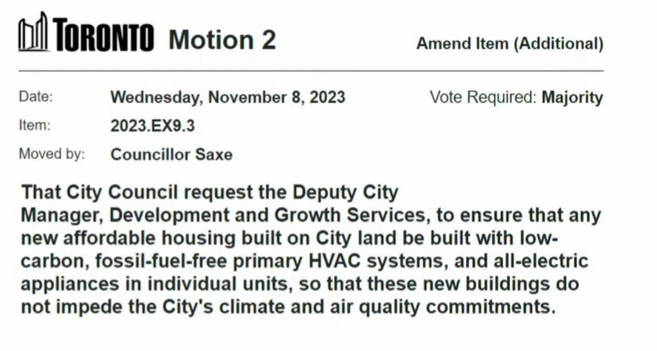
Back on housing now. Councillor Dianne Saxe moves to ensure that affordable housing built via this plan be built to environmental standards, with no gas appliances.
“There is no magical unicorn coming to build housing,” says Saxe, dashing the hopes and dreams of children everywhere who want to believe in Yimbee the Sparkle Dream Horse. She says it’s either public or private, and the private approach hasn’t delivered much affordable of late.
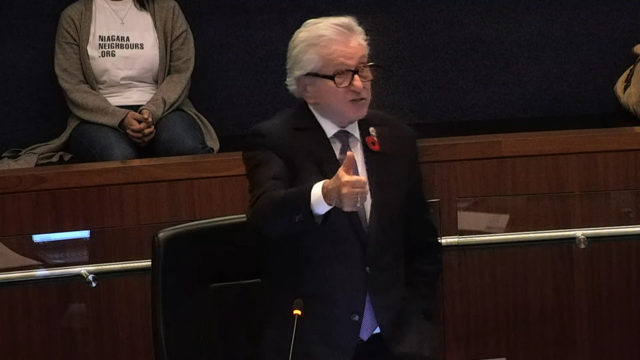
Person wearing a T-shirt in opposition to a proposed respite site for people without homes watches as Councillor Mike Colle speaks in favour of the affordable housing plan.
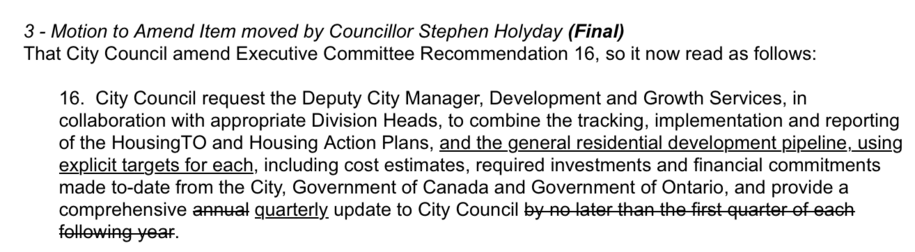
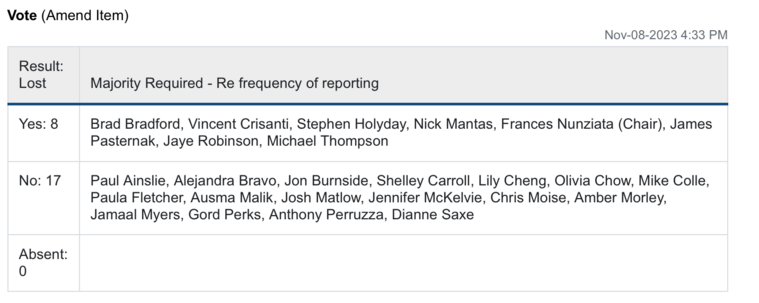
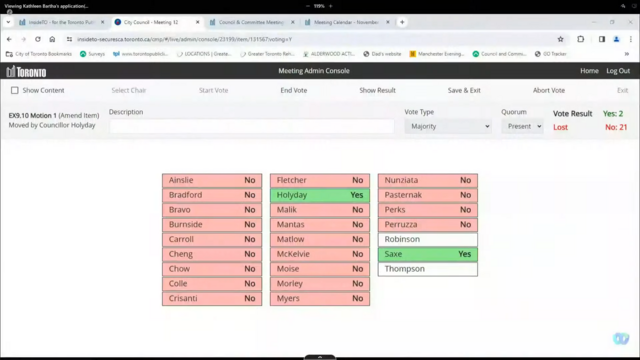
Councillor Stephen Holyday moves for quarterly updates on the progress of the affordable housing plan, with explicit targets.
But he also indicates he won’t support the plan as a whole, because the cost is too much for City Hall.
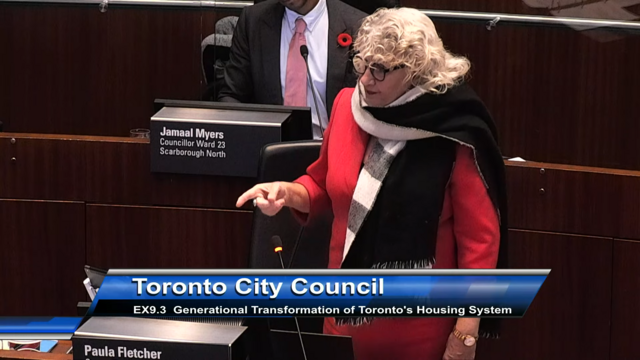
Councillor Paula Fletcher rises to ask Holyday how he voted on the decision to host the FIFA World Cup, at a cost of around $300 million. Holyday refuses to engage in that line of questioning. (But let the record show Holyday did vote for it.)
Without warning, council embarks on a digression wherein some worry that quarterly reports aren’t a great idea, because they’ll suck up a lot of staff time. “It seems to me that staff will spend most of their time writing reports!” notes Chow. Holyday refuses to change his motion
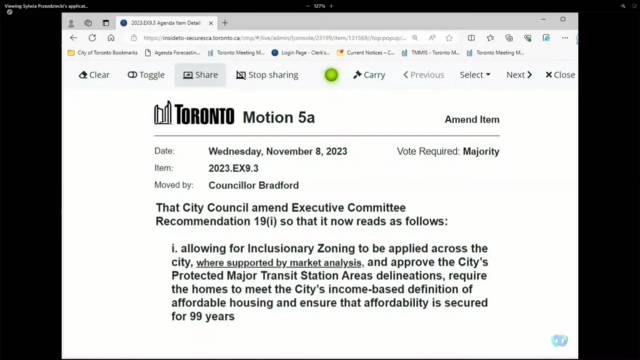
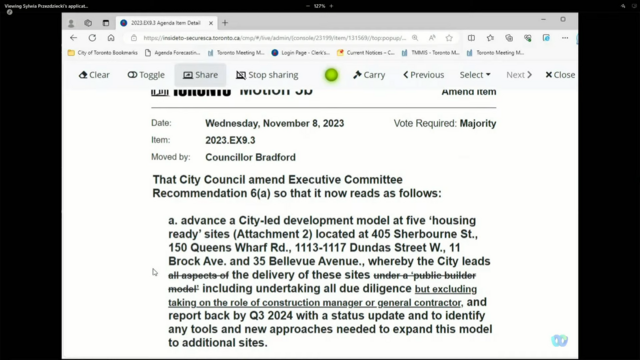
Councillor Brad Bradford moves a pair of motions:
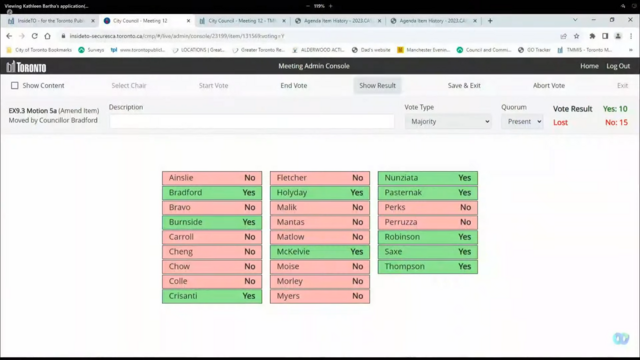
- Requesting inclusionary zoning only “where supported by market analysis"
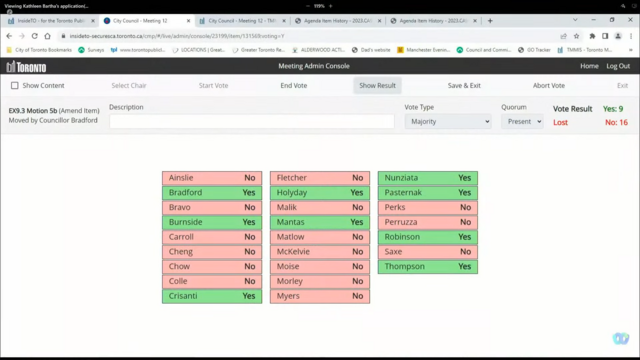
- Ruling out city taking on roles as construction manager or general contractor in housing projects.
Bradford is saying there’s no definition of “public builder” in the report, so he wants to set some guardrails. Councillor Gord Perks says every big city in Europe has a public builder. Bradford says he’s focused on this report, not cities in Europe.
Asking more questions about the motion, Councillor Shelley Carroll says Bradford seems “quite enamoured” with the private-sector model. Bradford complains that he’s being “badgered.”
Things get testier. “It’s not unreasonable to ask what’s MEANT and INTENDED by ‘public builder’ in this document,” protests Bradford.
“Do we need a time out here in the Council chamber?” wonders Speaker Nunziata.
Holyday steps in to help Bradford out, asking Bradford if construction is risky and if the city has ever directly built a high-rise building. Bradford says no. Holyday asks if the City has a history of cost overruns and delays on other projects. Bradford says yes.
Bravo asks if Bradford agrees that recent experience with P3s show that the private sector does not in fact take on the risk and build projects better.
Bradford responds by claiming the Eglinton Crosstown is a “government agency-led project” with Metrolinx in charge.
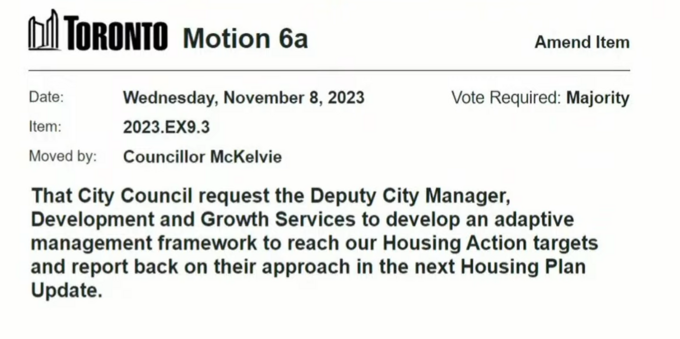
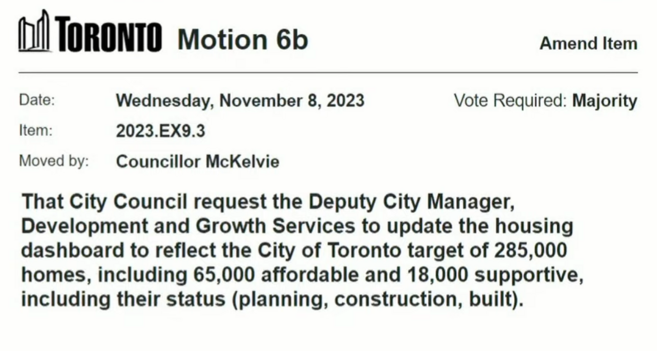
Councillor McKelvie has some motions too.
- To develop an “adaptive management framework” to meet the new housing targets.
- Update the housing dashboard with the new targets.
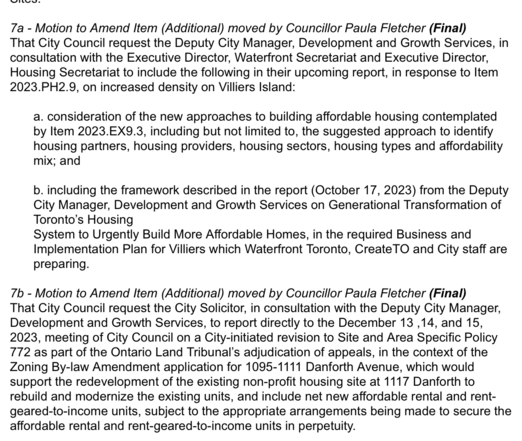
Councillor Paula Fletcher moves for staff to do analysis on approaches for building affordable housing on Villiers Island, and for a report on redeveloping a Danforth Ave site with additional affordable units.
Time to vote. Holyday’s motion to provide quarterly reports on the new Housing Plan FAILS 8-17. They’ll stick with annual reports.
Councillor Bradford’s motion to request inclusionary zoning be applied only in areas “where supported by market analysis” FAILS 10-15.
Councillor Bradford’s motion to delete the words “public builder model” and rule out the city serving as construction manager or general contractor on housing projects FAILS 9-16.
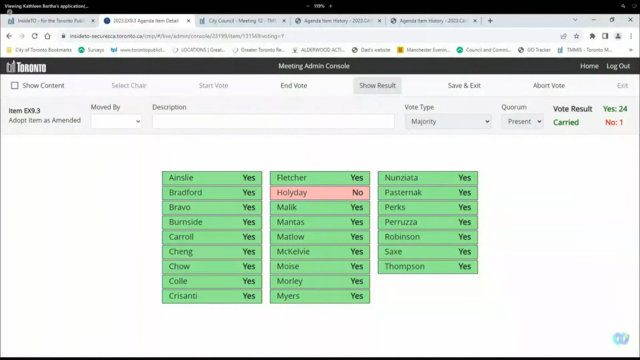
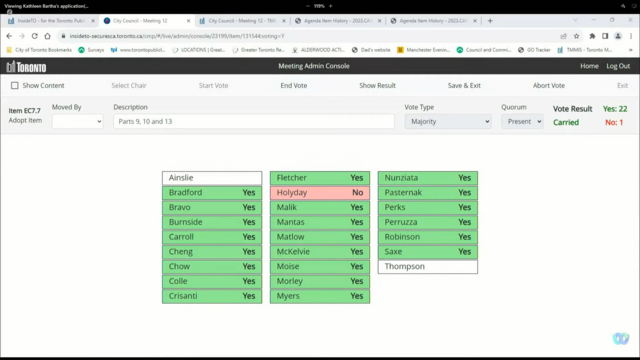
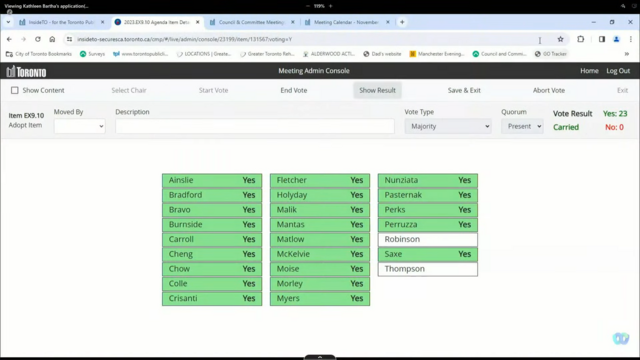
Mayor Olivia Chow’s new affordable housing plan, targeting 65K rent-controlled units by 2030, CARRIES 24-1.
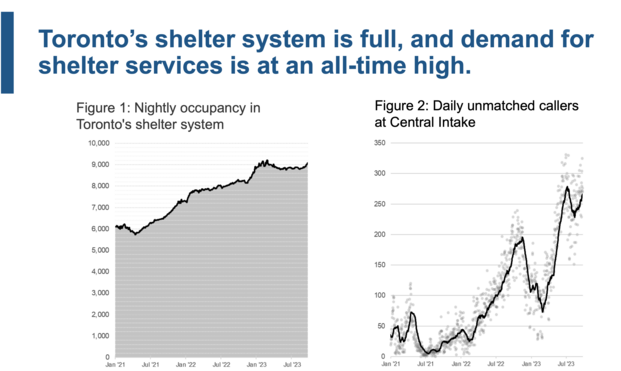
Up now: a debate on Toronto’s shelter system, and the readiness for the winter season. It all looks grim — the system is already at capacity, with hundreds of people unable to find beds each night.
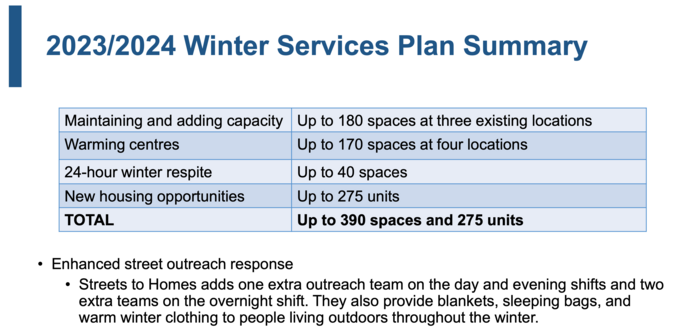
The city plans to add up to 390 indoor spaces (including a new 24-hour respite centre with 40 spaces) and offer up to 275 new housing opportunities this winter. (The inclusion of “up to” with numbers like these always makes me nervous.)
Deputy Mayor Ausma Malik asks about using the federal armouries in the city as shelters this winter. Shelter GM Gord Tanner says the inquiry has been made, and the city is waiting to get info from the federal government on whether they’ll be made available.
On the shelter plan, Mayor Chow notes the cold and wet weather outside right now. She says the fed gov must step up to help the ~40% of shelter users who are refugees. At same time, city must transition high-cost shelter hotels to lower-cost new purpose-built shelters, mayor says
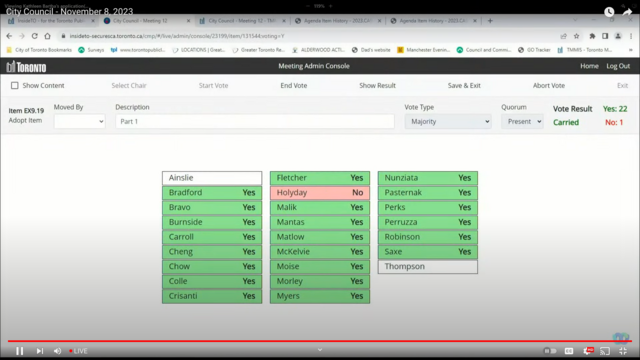
The request that the federal government open city armouries for use as shelter spaces CARRIES 22-1.
 Matt Elliott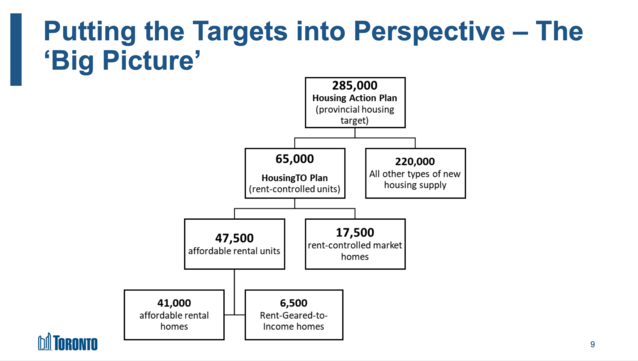



 Craig Saunders
 Henry Wilkinson