 Vagina Museum
OLD THREAD REPOST
As Halloween approaches, let's talk about spooky animals. 🦇 And blood. 🩸
Here's a run-down on the very unusual menstrual cycles of bats...
OLD THREAD REPOST
As Halloween approaches, let's talk about spooky animals. 🦇 And blood. 🩸
Here's a run-down on the very unusual menstrual cycles of bats...
The first unusual thing about bats having periods is that menstrual cycles are unusual in nature. Most mammals do not menstruate at all. Even if you notice your pet bleeding, it's not a period (it's oestrus, AKA "heat")
Menstruation is limited to a handful of species. Us, obviously, and more closely-related primates, as well as elephant shrews, spiny mice and some bats. It probably evolved a few times over, since not all the species that have periods are related.
Here's a lovely fact to brighten your day: bats are split into two main groups, know as microbats and megabats. As implied by the name, the microbats are the little squeaky ones, and the megabats are the big ones.
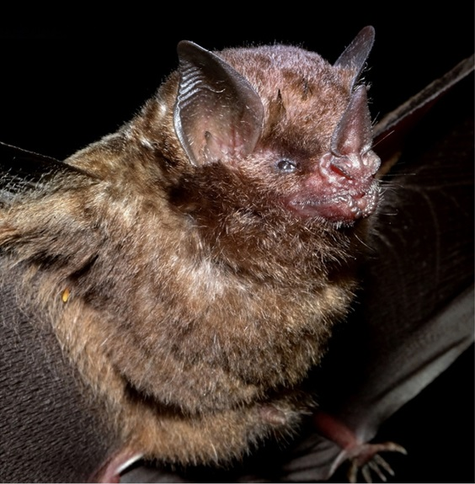
The first few research studies into bat menstruation focused on some microbat species, such as the gloriously grumpy-looking C. perspicillata. Of the species that have been studied, their menstrual cycles look a little different to ours.
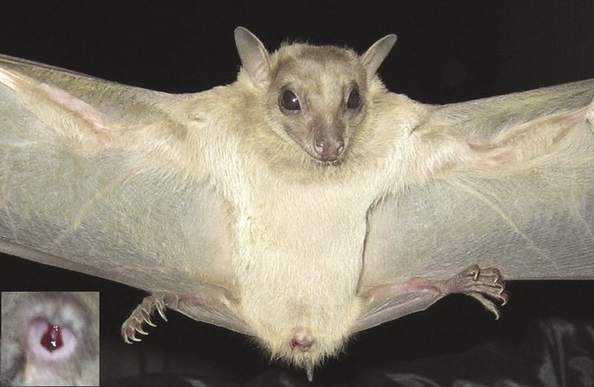
Then, a 2007 study examined a megabat species: the fulvous fruit bat. Here's a gratuitous cute bat picture, because we all need to look at cute animals sometimes.
This study looked at captured wild bats, and captive bats and found some remarkable characteristics of the fruit bats' menstrual cycles: they were really, really similar to human menstrual cycles.
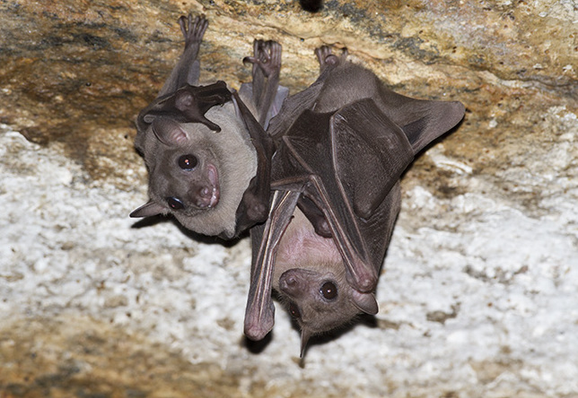
A fulvous fruit bat cycle has a follicular phase, where hormones encourage eggs to mature, and the endometrium thickens. The bat then ovulates. If pregnancy doesn't happen, the bat enters the luteal phase, which ultimately triggers menstruation.
For a full explanation of the menstrual cycle, Tara Costello explains the ins and outs in our podcast episode "Welcome To Your Period". The hormones secreted and the order of events is exactly the same in fulvous fruit bats https://www.vaginamuseum.co.uk/podcasts/welcome-to-your-period

 Maggie Maybe
 Eve, Go Listen to Dead Channel Sky
 SPICY EVIL CAET🍬🍭🎄